THE ADVENTURE COLLECTIVE® · Independent discovery and booking for outdoor travel

Spend a day leaving Marrakech for the High Atlas: camel rides, tea in Imlil, a Berber family visit in Ait Souka and sweeping views near Moulay Brahim. This private full‑day tour combines light walking with cultural stops and scenic drives.
Spend a day leaving Marrakech for the High Atlas: camel rides, tea in Imlil, a Berber family visit in Ait Souka and sweeping views near Moulay Brahim. This private full‑day tour combines light walking with cultural stops and scenic drives.
You roll out of Marrakech and the city’s ochre blocks blur into the palette of the High Atlas—the road climbs, olive groves thin, and the air grows cooler as the peaks assert themselves.
Verified experiences and guided adventures in the surrounding area.
Operated by Visit Marrakech Official · Marrakech, Marrakesh-Safi
You roll out of Marrakech and the city’s ochre blocks blur into the palette of the High Atlas—the road climbs, olive groves thin, and the air grows cooler as the peaks assert themselves.
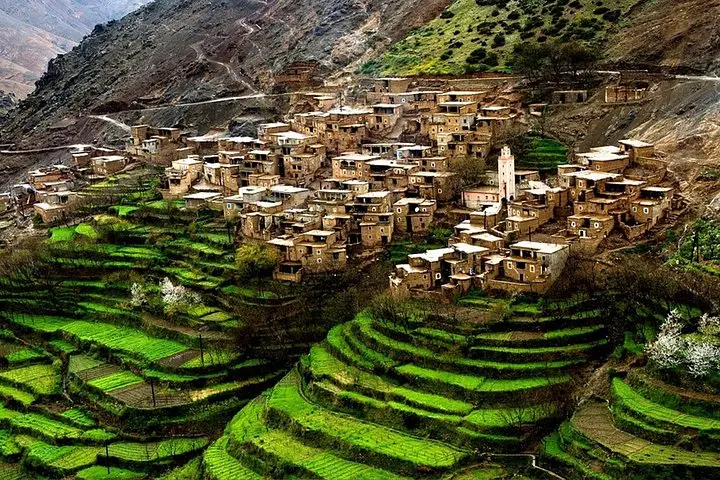
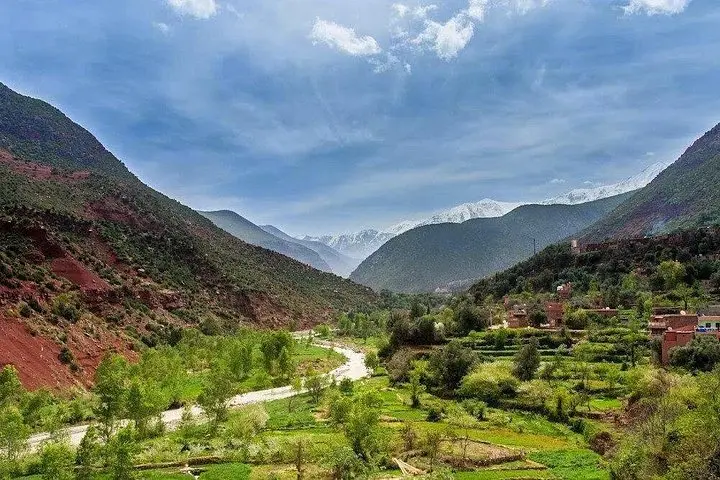
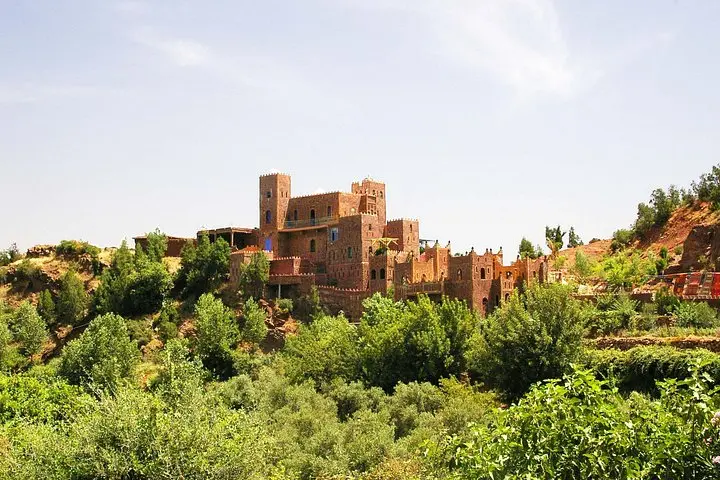
Across a full day you move through three distinct valleys: the fertile terraces of Ourika, the narrow, pine-sprigged approaches into Imlil, and the cedar-scented slopes near Asni and Moulay Brahim. Along the way a short camel ride punctuates the route, tea and cake in a sunlit Imlil caïd’s teahouse offer a familiar Moroccan pause, and a visit to a Berber home in Ait Souka opens a window on mountain life—simple meals, practical architecture and the cadence of daily chores.
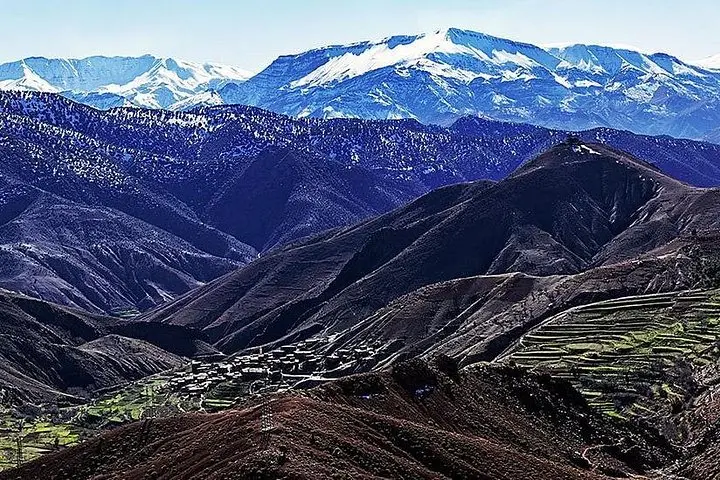
Geologically the High Atlas is young and rugged: uplifted by the collision of the African and Eurasian plates, its folds and corrugated ridgelines shed steep drainage channels and terraced fields. Culturally the region preserves Amazigh (Berber) traditions—language, crafts and hospitality that are woven into village life and seasonal farming.
Practical notes: expect a 6–8 hour day with periods of light walking on uneven paths, short vehicle transfers in an air‑conditioned minivan, and moderate altitude gain compared with Marrakech. Dress conservatively out of respect—cover shoulders and knees—and bring layered clothing for cool mountain breezes. Hydrate often, carry sunscreen and a small daypack for snacks. The itinerary is private and family-friendly, making it a manageable introduction to the Atlas if you want scenic views, cultural encounters and short, active moments without technical hiking.
Yes—this private day trip includes hotel pickup and drop-off in Marrakech, usually by air-conditioned minivan.
Walking is light to moderate: short village strolls, a camel ride, and brief viewpoints—no technical trekking required.
Yes; children 6–11 are permitted at the listed child rate and under 6 may join free—inform the operator at booking for infant seats if needed.
Guides commonly speak English and French; Arabic and Amazigh (Berber) are also spoken locally and by many guides.
Visit Marrakech Official operates guided outdoor trips and adventures with an emphasis on safety, stewardship, and memorable experiences.
You roll out of Marrakech and the city’s ochre blocks blur into the palette of the High Atlas—the road climbs, olive groves thin, and the air grows cooler as the peaks assert themselves.
You roll out of Marrakech and the city’s ochre blocks blur into the palette of the High Atlas—the road climbs, olive groves thin, and the air grows cooler as the peaks assert themselves.
Across a full day you move through three distinct valleys: the fertile terraces of Ourika, the narrow, pine-sprigged approaches into Imlil, and the cedar-scented slopes near Asni and Moulay Brahim. Along the way a short camel ride punctuates the route, tea and cake in a sunlit Imlil caïd’s teahouse offer a familiar Moroccan pause, and a visit to a Berber home in Ait Souka opens a window on mountain life—simple meals, practical architecture and the cadence of daily chores.
Geologically the High Atlas is young and rugged: uplifted by the collision of the African and Eurasian plates, its folds and corrugated ridgelines shed steep drainage channels and terraced fields. Culturally the region preserves Amazigh (Berber) traditions—language, crafts and hospitality that are woven into village life and seasonal farming.
Practical notes: expect a 6–8 hour day with periods of light walking on uneven paths, short vehicle transfers in an air‑conditioned minivan, and moderate altitude gain compared with Marrakech. Dress conservatively out of respect—cover shoulders and knees—and bring layered clothing for cool mountain breezes. Hydrate often, carry sunscreen and a small daypack for snacks. The itinerary is private and family-friendly, making it a manageable introduction to the Atlas if you want scenic views, cultural encounters and short, active moments without technical hiking.