THE ADVENTURE COLLECTIVE® · Independent discovery and booking for outdoor travel

A full-day trek from Marrakech into the High Atlas that combines mule tracks, Berber village hospitality, views of Mount Toubkal and a relaxed camel ride. Expect 8–12 km of walking across varied terrain with local guide support and a village lunch.
A full-day trek from Marrakech into the High Atlas that combines mule tracks, Berber village hospitality, views of Mount Toubkal and a relaxed camel ride. Expect 8–12 km of walking across varied terrain with local guide support and a village lunch.
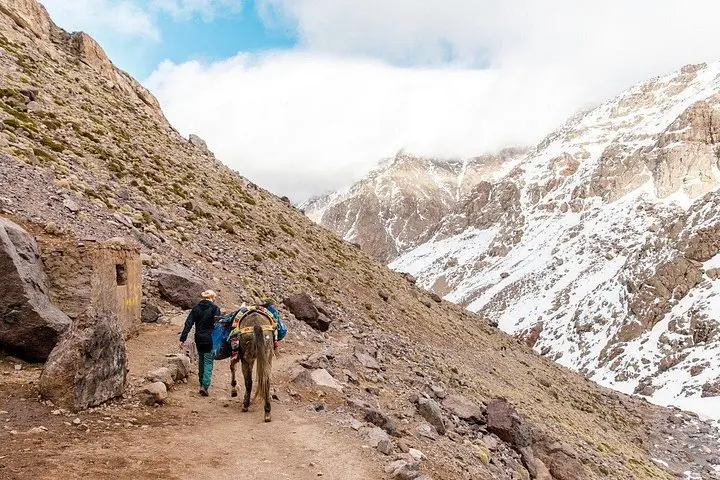
You step out of the air-conditioned minivan and the light sharpens—the High Atlas cuts the sky into planes of rock and shadow. Underfoot the trail follows a mosaic of scree, packed earth and mule tracks; smoke from village hearths curls through the terraces as local women tend vegetable beds. The day begins in Imlil and moves along narrow ridgelines and shaded gullies toward Aroumd, with a lunch stop in a village house and a short camel ride offered on gentler trails.
Verified experiences and guided adventures in the surrounding area.
Operated by Atlas Discovery Tours · Imlil, Marrakech-Safi
You step out of the air-conditioned minivan and the light sharpens—the High Atlas cuts the sky into planes of rock and shadow. Underfoot the trail follows a mosaic of scree, packed earth and mule tracks; smoke from village hearths curls through the terraces as local women tend vegetable beds. The day begins in Imlil and moves along narrow ridgelines and shaded gullies toward Aroumd, with a lunch stop in a village house and a short camel ride offered on gentler trails.
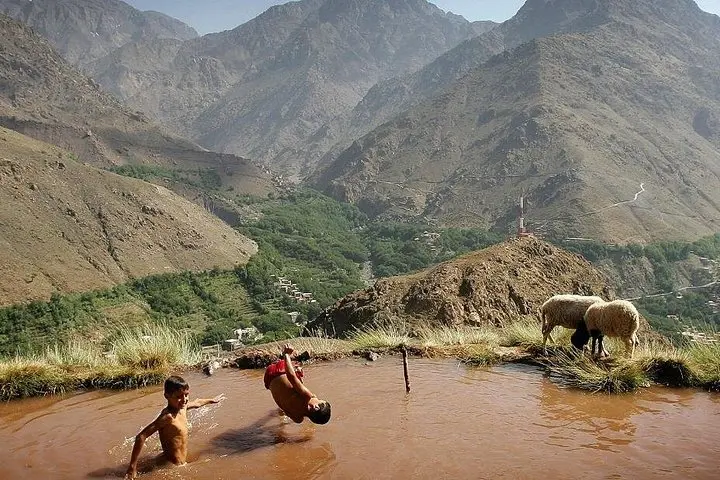
Geology here is compact granite sculpted by glacial and fluvial action; Toubkal, North Africa’s highest peak, looms as a granite massif etched with seasonal streams. The villages are Amazigh (Berber) communities with centuries-old terracing and stone houses — a living rural economy of goats, mules and small-scale farming. Cultural exchanges are straightforward: polite curiosity, offers of mint tea and mule drivers who know every switchback.
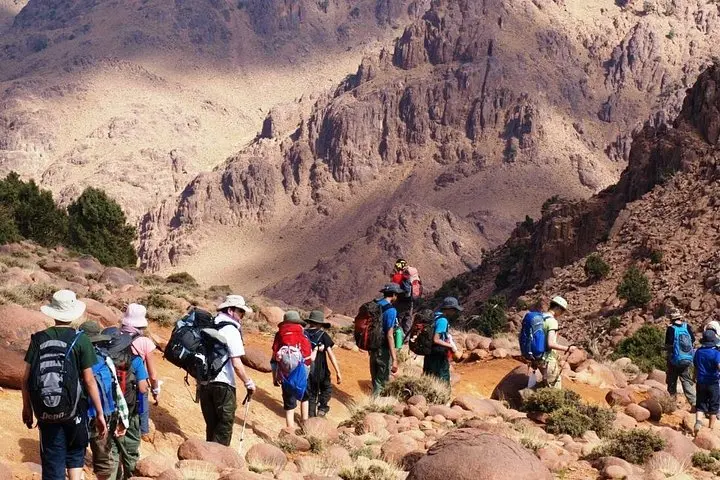
Expect roughly 8–12 km of walking over varied terrain with cumulative elevation change around 400–700 m depending on route choices. Trails alternate between firm valley tracks and short steep pitches; mules carry loads on narrow sections.
Practical: start early for cooler temperatures, bring 2–3 liters of water, sun protection and sturdy footwear with good grip. Plan for 8–9 hours including transfers from Marrakech. Respect private farm areas, tip guides and mule handlers locally, and keep waste out of the fragile alpine water courses — the mountains here reward curiosity but require basic preparedness.
Transfers take about 60–90 minutes depending on traffic and exact pickup location; the tour arranges round-trip transport.
The itinerary is marketed as suitable for all fitness levels, but families with very young children or travelers with mobility issues should note uneven terrain and some steep pitches; mule transport is available on narrow sections.
Yes — many viewpoints on the route frame Toubkal, though visibility depends on weather; mornings typically offer the clearest views.
The tour includes lunch (often a village-style meal) and a short camel experience; confirm specifics with the operator at booking as inclusions can vary.
Atlas Discovery Tours operates guided outdoor trips and adventures with an emphasis on safety, stewardship, and memorable experiences.
You step out of the air-conditioned minivan and the light sharpens—the High Atlas cuts the sky into planes of rock and shadow. Underfoot the trail follows a mosaic of scree, packed earth and mule tracks; smoke from village hearths curls through the terraces as local women tend vegetable beds. The day begins in Imlil and moves along narrow ridgelines and shaded gullies toward Aroumd, with a lunch stop in a village house and a short camel ride offered on gentler trails.
You step out of the air-conditioned minivan and the light sharpens—the High Atlas cuts the sky into planes of rock and shadow. Underfoot the trail follows a mosaic of scree, packed earth and mule tracks; smoke from village hearths curls through the terraces as local women tend vegetable beds. The day begins in Imlil and moves along narrow ridgelines and shaded gullies toward Aroumd, with a lunch stop in a village house and a short camel ride offered on gentler trails.
Geology here is compact granite sculpted by glacial and fluvial action; Toubkal, North Africa’s highest peak, looms as a granite massif etched with seasonal streams. The villages are Amazigh (Berber) communities with centuries-old terracing and stone houses — a living rural economy of goats, mules and small-scale farming. Cultural exchanges are straightforward: polite curiosity, offers of mint tea and mule drivers who know every switchback.
Expect roughly 8–12 km of walking over varied terrain with cumulative elevation change around 400–700 m depending on route choices. Trails alternate between firm valley tracks and short steep pitches; mules carry loads on narrow sections.
Practical: start early for cooler temperatures, bring 2–3 liters of water, sun protection and sturdy footwear with good grip. Plan for 8–9 hours including transfers from Marrakech. Respect private farm areas, tip guides and mule handlers locally, and keep waste out of the fragile alpine water courses — the mountains here reward curiosity but require basic preparedness.