THE ADVENTURE COLLECTIVE® · Independent discovery and booking for outdoor travel

Leave Marrakech for a six‑hour trek into the High Atlas — an accessible day journey through Imlil, terraced valleys, and Berber villages. Expect forested mule tracks, panoramic ridgelines, and a lunch in a family home that highlights local traditions.
Leave Marrakech for a six‑hour trek into the High Atlas — an accessible day journey through Imlil, terraced valleys, and Berber villages. Expect forested mule tracks, panoramic ridgelines, and a lunch in a family home that highlights local traditions.
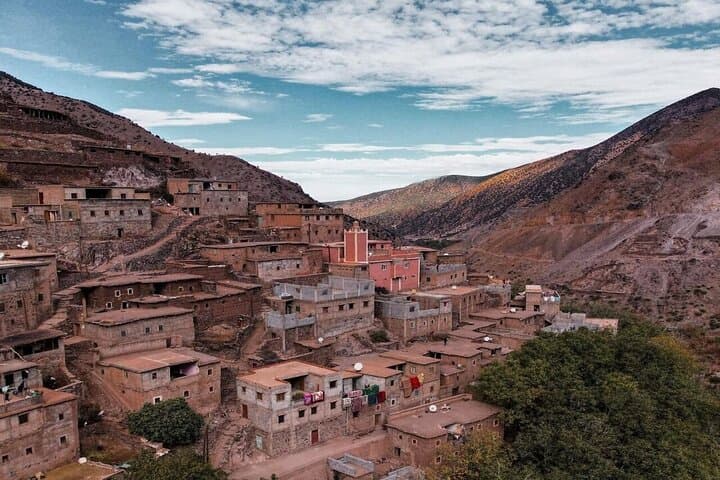
Steam rises from a cup of mint tea as the van peels away from Marrakech and the red city’s heat gives up to cooler air. The road climbs past olive groves and terraced fields, then narrows into the rugged folds of the High Atlas —Tahenaout and Asni valleys opening like pages in a well-worn map. By the time you step out in Imlil the world feels pared down to rock, sky, and the steady breath of the mountains.
Verified experiences and guided adventures in the surrounding area.
Operated by Morocco Luxe Tours · Marrakech, Marrakech-Safi
Steam rises from a cup of mint tea as the van peels away from Marrakech and the red city’s heat gives up to cooler air. The road climbs past olive groves and terraced fields, then narrows into the rugged folds of the High Atlas —Tahenaout and Asni valleys opening like pages in a well-worn map. By the time you step out in Imlil the world feels pared down to rock, sky, and the steady breath of the mountains.
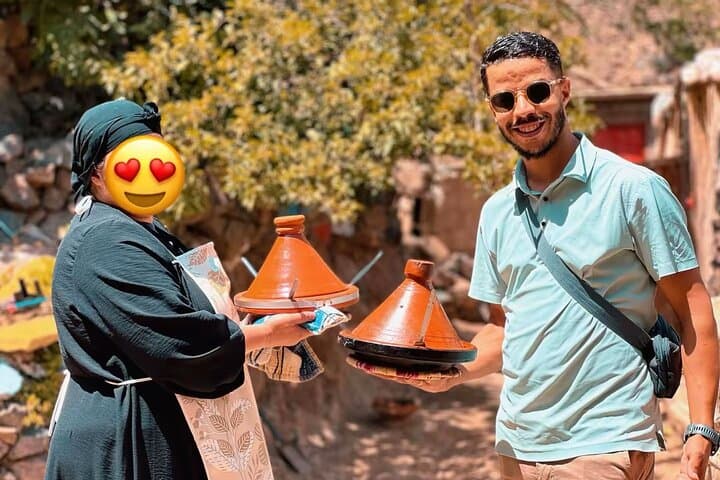
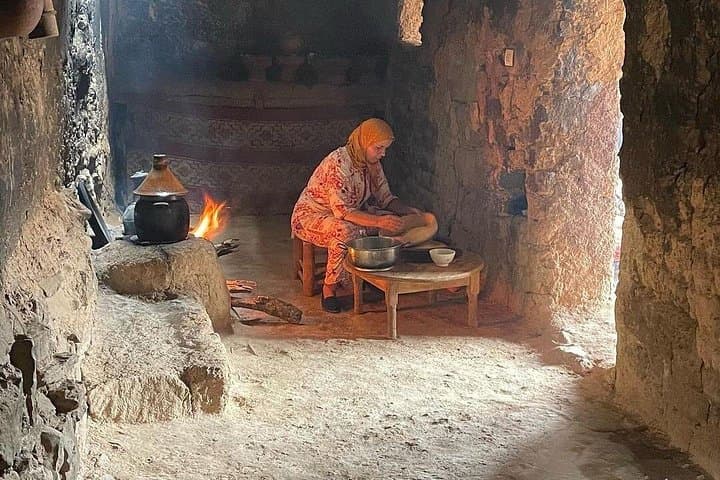
The High Atlas is geologically young, a jagged spine of schist and granite carved by glaciers and seasonal torrents. Its slopes have supported Amazigh (Berber) communities for centuries; villages here were waypoints on local trade and pilgrimage routes and still hold distinct weaving, farming, and hospitality traditions. Local guides often bring you to family-run homes where tagine and tea are both ritual and welcome.
Expect forested mule tracks, stone-pitched switchbacks, and wide viewpoints that frame distant peaks. The walk climbs gently through orchards and stands of juniper; you’ll encounter terraced fields and small chapels such as the Sidi Chamharouch shrine, a cultural marker between villages.
Practical notes: the full day is about six hours including transport, with moderate footing and short steep sections — good footwear and layered clothing matter more here than speed. Hydrate before you start, plan for strong sun between late spring and early fall, and respect private properties when visiting family homes. The return to Marrakech comes with the slow satisfaction of a day spent moving through living landscape — mountains that test little but give plenty.
Yes — small bills are appreciated for tea, tips, or small purchases; card facilities are uncommon in villages.
The itinerary is rated easy to moderate; families with older children or older adults who can manage uneven ground and short climbs should be fine with rest stops.
The transfer typically takes about 1 hour 15 minutes each way, depending on traffic and the pickup location in Marrakech.
Altitudes are moderate (valley floors under 2,000 m) but the operator advises that those with serious heart or spinal conditions avoid the hike; inform the provider of health concerns during booking.
Morocco Luxe Tours operates guided outdoor trips and adventures with an emphasis on safety, stewardship, and memorable experiences.

Steam rises from a cup of mint tea as the van peels away from Marrakech and the red city’s heat gives up to cooler air. The road climbs past olive groves and terraced fields, then narrows into the rugged folds of the High Atlas —Tahenaout and Asni valleys opening like pages in a well-worn map. By the time you step out in Imlil the world feels pared down to rock, sky, and the steady breath of the mountains.
Steam rises from a cup of mint tea as the van peels away from Marrakech and the red city’s heat gives up to cooler air. The road climbs past olive groves and terraced fields, then narrows into the rugged folds of the High Atlas —Tahenaout and Asni valleys opening like pages in a well-worn map. By the time you step out in Imlil the world feels pared down to rock, sky, and the steady breath of the mountains.
The High Atlas is geologically young, a jagged spine of schist and granite carved by glaciers and seasonal torrents. Its slopes have supported Amazigh (Berber) communities for centuries; villages here were waypoints on local trade and pilgrimage routes and still hold distinct weaving, farming, and hospitality traditions. Local guides often bring you to family-run homes where tagine and tea are both ritual and welcome.
Expect forested mule tracks, stone-pitched switchbacks, and wide viewpoints that frame distant peaks. The walk climbs gently through orchards and stands of juniper; you’ll encounter terraced fields and small chapels such as the Sidi Chamharouch shrine, a cultural marker between villages.
Practical notes: the full day is about six hours including transport, with moderate footing and short steep sections — good footwear and layered clothing matter more here than speed. Hydrate before you start, plan for strong sun between late spring and early fall, and respect private properties when visiting family homes. The return to Marrakech comes with the slow satisfaction of a day spent moving through living landscape — mountains that test little but give plenty.