THE ADVENTURE COLLECTIVE® · Independent discovery and booking for outdoor travel

Drive from Marrakech into the High Atlas, take a sunrise camel ride, then walk from Imlil to Aremd through walnut groves and waterfalls with views of Jbel Toubkal. This seven-hour day trip blends light hiking, Berber hospitality, and roadside cooperatives.
Drive from Marrakech into the High Atlas, take a sunrise camel ride, then walk from Imlil to Aremd through walnut groves and waterfalls with views of Jbel Toubkal. This seven-hour day trip blends light hiking, Berber hospitality, and roadside cooperatives.
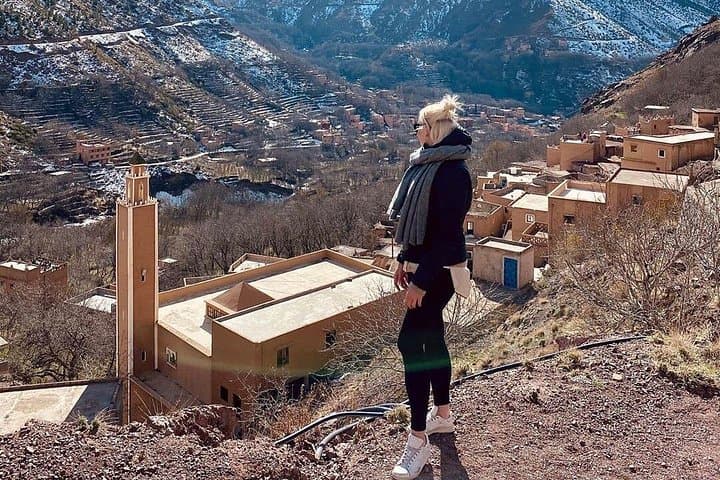
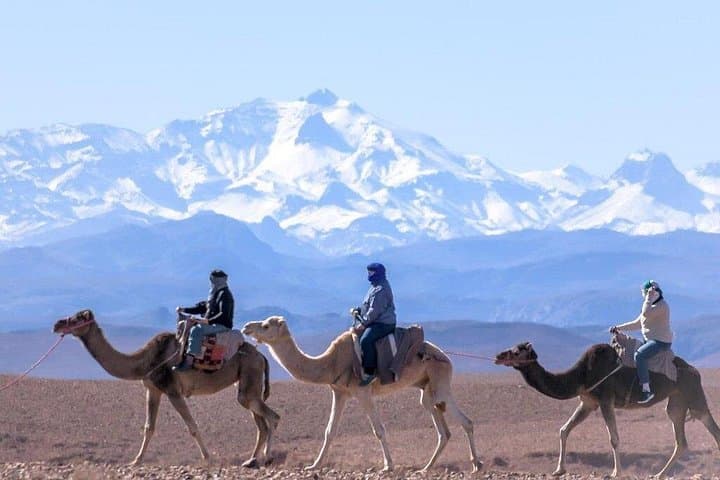
The sun lifts off Marrakech and the road threads up, river and almond orchards sliding past the window until the town of Imlil appears clinging to the valley like a map of terraces and paths. A short camel ride at sunrise sets a calm, unexpected rhythm before the group moves by air-conditioned vehicle deeper into the High Atlas.
Verified experiences and guided adventures in the surrounding area.
Operated by Trips From Marrakech · Imlil, Marrakesh-Safi
The sun lifts off Marrakech and the road threads up, river and almond orchards sliding past the window until the town of Imlil appears clinging to the valley like a map of terraces and paths. A short camel ride at sunrise sets a calm, unexpected rhythm before the group moves by air-conditioned vehicle deeper into the High Atlas.
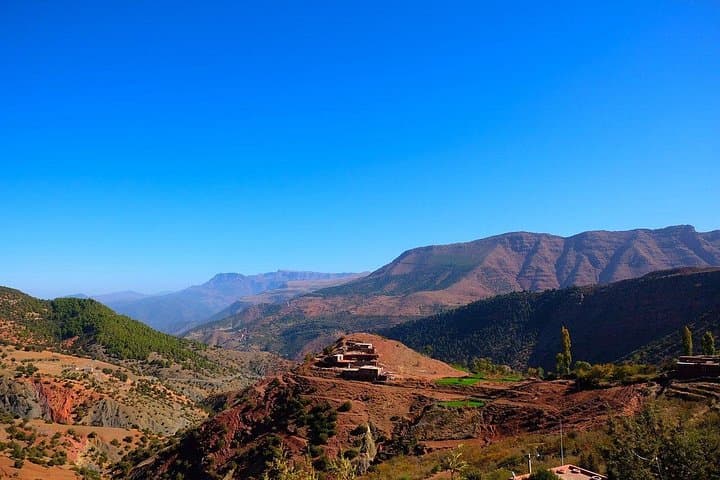
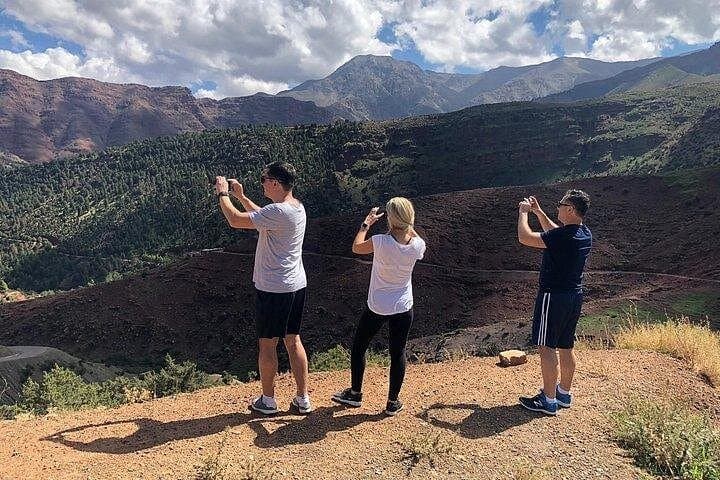
Geology here is blunt: folded, uplifted rock cut by seasonal rivers that have hollowed narrow valleys and created the terraces the Berber communities have farmed for centuries. The walk from Imlil to Aremd passes walnut groves, stone houses, and a waterfall whose spray cools the air and offers a popular photo stop. From Aremd the sweep of the valley points to Jbel Toubkal, North Africa’s highest peak at 4,167 m—a constant reference for local guides and a reminder of the mountains’ tectonic story.
Culturally the route is low-key and honest: local Berber households, argan cooperatives run by women, and simple lunches in family homes. Expect straightforward hospitality rather than polished tourism; this is a day that mixes light trekking with cultural exchanges.
Practical notes: the full excursion is about seven hours, with short climbs on rocky, sometimes loose trails—sturdy footwear matters. Sunscreen, a layered jacket for higher elevations, and 1–2 liters of water will keep you comfortable. Photography is rewarded at every turn; keep small change for co-ops and tip guides for local knowledge. The pace is suitable for most fit day-hikers, and the itinerary balances scenic walks, cultural stops, and transport time back to Marrakech by late afternoon.
Expect about 1–1.5 hours each way depending on traffic and route; the trip is built around a full seven-hour day including driving and activities.
The camel ride is a short, gentle sunrise experience suitable for most travelers; it’s not a replacement for trekking skills.
A traditional Berber lunch is typically arranged in a family house and is included on most organized tours—check the booking details for specifics.
Yes—routes are generally gentle, but uneven surfaces and modest climbs mean people should be comfortable walking on unpaved trails; notify operators of mobility concerns for pickup accommodations.
Trips From Marrakech operates guided outdoor trips and adventures with an emphasis on safety, stewardship, and memorable experiences.
The sun lifts off Marrakech and the road threads up, river and almond orchards sliding past the window until the town of Imlil appears clinging to the valley like a map of terraces and paths. A short camel ride at sunrise sets a calm, unexpected rhythm before the group moves by air-conditioned vehicle deeper into the High Atlas.
The sun lifts off Marrakech and the road threads up, river and almond orchards sliding past the window until the town of Imlil appears clinging to the valley like a map of terraces and paths. A short camel ride at sunrise sets a calm, unexpected rhythm before the group moves by air-conditioned vehicle deeper into the High Atlas.
Geology here is blunt: folded, uplifted rock cut by seasonal rivers that have hollowed narrow valleys and created the terraces the Berber communities have farmed for centuries. The walk from Imlil to Aremd passes walnut groves, stone houses, and a waterfall whose spray cools the air and offers a popular photo stop. From Aremd the sweep of the valley points to Jbel Toubkal, North Africa’s highest peak at 4,167 m—a constant reference for local guides and a reminder of the mountains’ tectonic story.
Culturally the route is low-key and honest: local Berber households, argan cooperatives run by women, and simple lunches in family homes. Expect straightforward hospitality rather than polished tourism; this is a day that mixes light trekking with cultural exchanges.
Practical notes: the full excursion is about seven hours, with short climbs on rocky, sometimes loose trails—sturdy footwear matters. Sunscreen, a layered jacket for higher elevations, and 1–2 liters of water will keep you comfortable. Photography is rewarded at every turn; keep small change for co-ops and tip guides for local knowledge. The pace is suitable for most fit day-hikers, and the itinerary balances scenic walks, cultural stops, and transport time back to Marrakech by late afternoon.