THE ADVENTURE COLLECTIVE® · Independent discovery and booking for outdoor travel

Spend a day leaving Marrakech for the High Atlas: a camel ride on valley terraces, a choice of short hikes or mule rides into Imlil, and a traditional Berber lunch in Ait Souka. This accessible, small-group trip blends cultural insight with crisp mountain scenery.
Spend a day leaving Marrakech for the High Atlas: a camel ride on valley terraces, a choice of short hikes or mule rides into Imlil, and a traditional Berber lunch in Ait Souka. This accessible, small-group trip blends cultural insight with crisp mountain scenery.
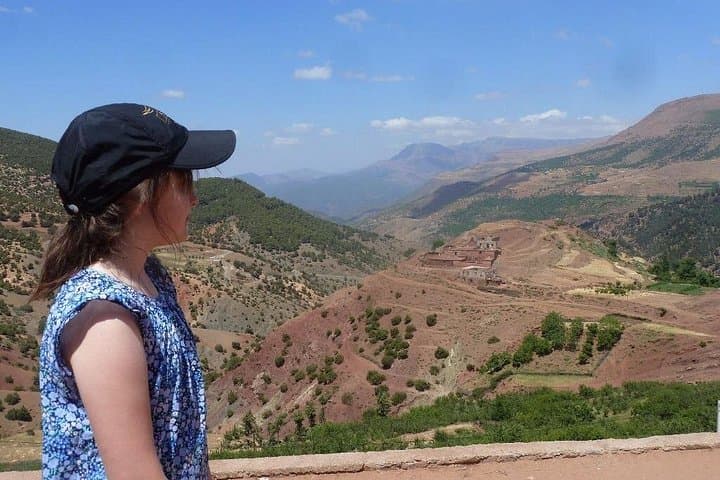
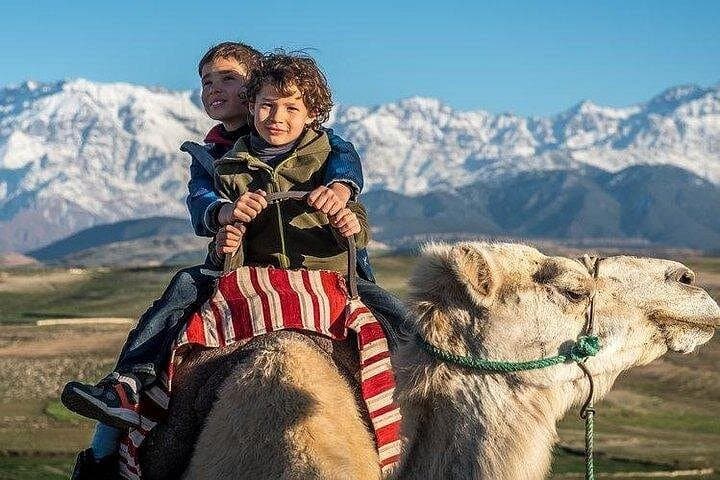
You leave dawn-lit Marrakech behind and drive south into the High Atlas, the city’s tile roofs shrinking as the road climbs toward craggy ridgelines. Orchards appear—apple and walnut trees clinging to terraces—while peaks darken above, daring you to trade the paved road for a scree track. A camel waits near a sun-baked terrace; its steady gait and patient eyes set the tempo for a day spent between local rhythms and mountain air.
Verified experiences and guided adventures in the surrounding area.
Operated by Atlas Mountains Day Trip · Marrakech, Marrakech-Safi
You leave dawn-lit Marrakech behind and drive south into the High Atlas, the city’s tile roofs shrinking as the road climbs toward craggy ridgelines. Orchards appear—apple and walnut trees clinging to terraces—while peaks darken above, daring you to trade the paved road for a scree track. A camel waits near a sun-baked terrace; its steady gait and patient eyes set the tempo for a day spent between local rhythms and mountain air.
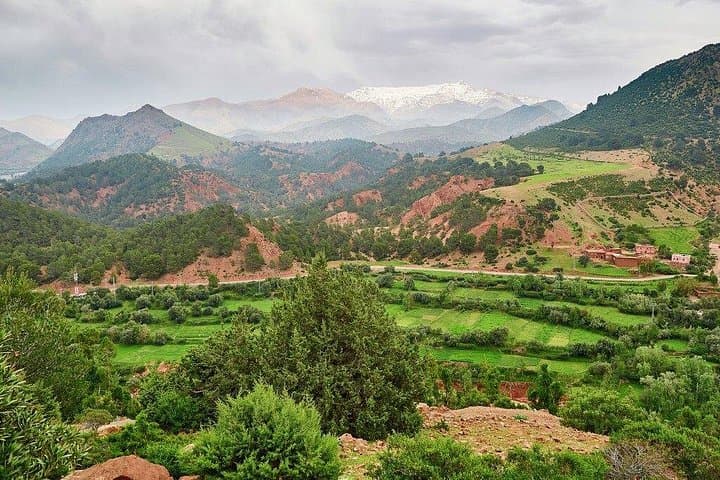
The route threads through valley farms and small Berber villages. The High Atlas is geologically young—folded from African and Eurasian plate collisions—and its peaks are composed of metamorphic and volcanic rock that fracture into steep gullies and broad talus slopes. Culturally, the region is heartland for Amazigh (Berber) communities whose mountain agriculture and stone homes have changed little in generations; your Berber lunch—tagine and couscous—reflects that continuity.
This is a service-heavy, accessible outing: hotel pickup in Marrakech, air-conditioned minivan, and a small-group pace that lets you choose a short hike, mule ride, or scenic drive into Imlil and Ait Souka. Expect uneven, sometimes rocky trails if you hike, sun exposure on terraces, and brief altitude gain as you move from Marrakech’s plains to valley floors around 1,600–1,800 m.
Practical guidance: travel light, carry water, wear sturdy shoes with traction, and bring a sun layer. Plan for roughly nine hours round-trip, and leave room in your schedule for a relaxed tea break on a terrace—those quiet minutes are the clearest way to understand this landscape and the people who live in it.
Travel time is typically 1–1.5 hours each way depending on traffic and exact pickup point, covering winding mountain roads into the Imlil valley.
Yes—camel rides on this trip are short and supervised; operators provide basic instruction, but children should be accompanied by adults.
Yes—guides offer options to hike, drive, or ride a mule between stops so you can tailor exertion to your comfort level.
A traditional Berber lunch (tagine and couscous) is included; bring your own drinking water for the day or a refillable bottle for convenience.
Atlas Mountains Day Trip operates guided outdoor trips and adventures with an emphasis on safety, stewardship, and memorable experiences.
You leave dawn-lit Marrakech behind and drive south into the High Atlas, the city’s tile roofs shrinking as the road climbs toward craggy ridgelines. Orchards appear—apple and walnut trees clinging to terraces—while peaks darken above, daring you to trade the paved road for a scree track. A camel waits near a sun-baked terrace; its steady gait and patient eyes set the tempo for a day spent between local rhythms and mountain air.
You leave dawn-lit Marrakech behind and drive south into the High Atlas, the city’s tile roofs shrinking as the road climbs toward craggy ridgelines. Orchards appear—apple and walnut trees clinging to terraces—while peaks darken above, daring you to trade the paved road for a scree track. A camel waits near a sun-baked terrace; its steady gait and patient eyes set the tempo for a day spent between local rhythms and mountain air.
The route threads through valley farms and small Berber villages. The High Atlas is geologically young—folded from African and Eurasian plate collisions—and its peaks are composed of metamorphic and volcanic rock that fracture into steep gullies and broad talus slopes. Culturally, the region is heartland for Amazigh (Berber) communities whose mountain agriculture and stone homes have changed little in generations; your Berber lunch—tagine and couscous—reflects that continuity.
This is a service-heavy, accessible outing: hotel pickup in Marrakech, air-conditioned minivan, and a small-group pace that lets you choose a short hike, mule ride, or scenic drive into Imlil and Ait Souka. Expect uneven, sometimes rocky trails if you hike, sun exposure on terraces, and brief altitude gain as you move from Marrakech’s plains to valley floors around 1,600–1,800 m.
Practical guidance: travel light, carry water, wear sturdy shoes with traction, and bring a sun layer. Plan for roughly nine hours round-trip, and leave room in your schedule for a relaxed tea break on a terrace—those quiet minutes are the clearest way to understand this landscape and the people who live in it.