THE ADVENTURE COLLECTIVE® · Independent discovery and booking for outdoor travel

Swap Marrakech’s bustle for a day among cedar slopes, Berber villages and the soaring High Atlas. This guided day trip delivers short walks, local culture, and mountain views with practical, all-ages access.
Swap Marrakech’s bustle for a day among cedar slopes, Berber villages and the soaring High Atlas. This guided day trip delivers short walks, local culture, and mountain views with practical, all-ages access.
The minivan peels away from Jemaa el-Fnaa and the city noise thins: ochre walls give way to olive terraces and slopes that push the road upward. By midmorning you are breathing cooler air, cedar and thyme scenting the breeze, while the Atlas range looms like a folding of earth daring you to look closer.
Verified experiences and guided adventures in the surrounding area.
Operated by Toubkal Trekking · Marrakech, Marrakesh-Safi
The minivan peels away from Jemaa el-Fnaa and the city noise thins: ochre walls give way to olive terraces and slopes that push the road upward. By midmorning you are breathing cooler air, cedar and thyme scenting the breeze, while the Atlas range looms like a folding of earth daring you to look closer.
The High Atlas is the spine of North Africa, built by tectonic compression and worn into steep valleys and terraced fields. Peaks such as Toubkal (4,167 m) dominate the skyline; lower plateaus host small Berber villages where dry stone houses and mule tracks mark centuries of local life. Guides on these day trips are often local Berber residents who share stories of seasonal migration, irrigation techniques and the role of argan and olive harvests in village economies.
Expect short, unhurried walks from village to viewpoint, photo stops at mountain streams and a midday lunch—usually tagine—served in a guesthouse. The terrain is a mix of paved roads, dirt tracks and rocky footpaths; altitude and sun are the two real factors to manage. Plan for early starts to avoid midday heat in summer and for chillier temperatures if you travel in winter when higher passes may hold snow.
Practical notes: confirm pickup time, carry a refillable water bottle, wear grippy footwear for uneven trails and bring layered clothing. Respect private properties, tip local guides if service is good, and leave only footprints—these valleys depend on low-impact visitors to stay resilient.
Most day trips reach Atlas foothills in about 45–90 minutes each way depending on traffic and your exact itinerary.
Yes; the trip involves short, easy walks and private transport, but notify the operator of mobility concerns and check vehicle accessibility.
Yes—this tour typically includes a hosted lunch (often a tagine) at a local guesthouse; vegetarian options are usually available if requested in advance.
Operators require passport name, number, expiry and nationality at time of booking for identification and pickup arrangements—have this information ready.
Toubkal Trekking operates guided outdoor trips and adventures with an emphasis on safety, stewardship, and memorable experiences.
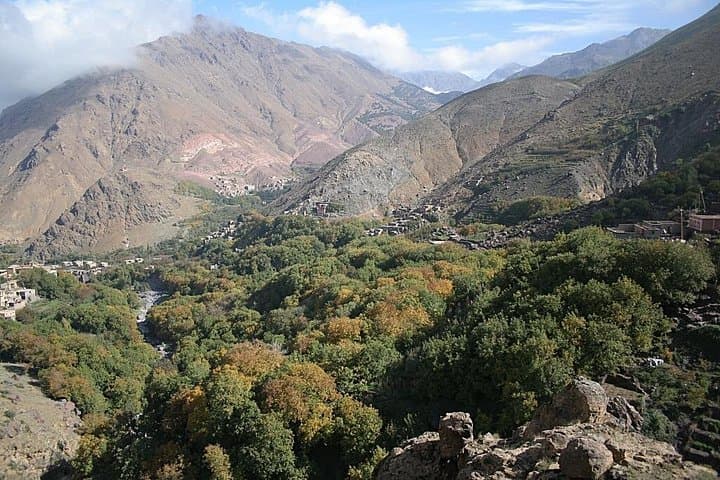

The minivan peels away from Jemaa el-Fnaa and the city noise thins: ochre walls give way to olive terraces and slopes that push the road upward. By midmorning you are breathing cooler air, cedar and thyme scenting the breeze, while the Atlas range looms like a folding of earth daring you to look closer.
The minivan peels away from Jemaa el-Fnaa and the city noise thins: ochre walls give way to olive terraces and slopes that push the road upward. By midmorning you are breathing cooler air, cedar and thyme scenting the breeze, while the Atlas range looms like a folding of earth daring you to look closer.
The High Atlas is the spine of North Africa, built by tectonic compression and worn into steep valleys and terraced fields. Peaks such as Toubkal (4,167 m) dominate the skyline; lower plateaus host small Berber villages where dry stone houses and mule tracks mark centuries of local life. Guides on these day trips are often local Berber residents who share stories of seasonal migration, irrigation techniques and the role of argan and olive harvests in village economies.
Expect short, unhurried walks from village to viewpoint, photo stops at mountain streams and a midday lunch—usually tagine—served in a guesthouse. The terrain is a mix of paved roads, dirt tracks and rocky footpaths; altitude and sun are the two real factors to manage. Plan for early starts to avoid midday heat in summer and for chillier temperatures if you travel in winter when higher passes may hold snow.
Practical notes: confirm pickup time, carry a refillable water bottle, wear grippy footwear for uneven trails and bring layered clothing. Respect private properties, tip local guides if service is good, and leave only footprints—these valleys depend on low-impact visitors to stay resilient.