THE ADVENTURE COLLECTIVE® · Independent discovery and booking for outdoor travel

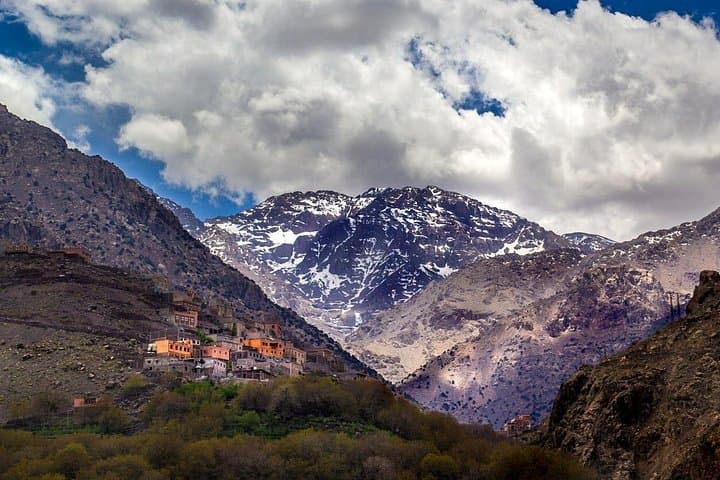
Swap Marrakech’s bustle for orchard-lined valleys and mountain air on an eight-hour day trip into the High Atlas. Hike or ride to village viewpoints, share mint tea with a Berber family, and glimpse Jebel Toubkal from the terraces above Imlil.
Swap Marrakech’s bustle for orchard-lined valleys and mountain air on an eight-hour day trip into the High Atlas. Hike or ride to village viewpoints, share mint tea with a Berber family, and glimpse Jebel Toubkal from the terraces above Imlil.
You leave Marrakech before sunrise and the city’s ochre walls shrink behind the minivan as the road climbs toward the High Atlas. Low scrub gives way to terraced orchards; the air cools and the peaks ahead loom like patient giants. By the time you step off in a riverside village, the valley’s scent of mint tea and woodsmoke is unmistakable.
Verified experiences and guided adventures in the surrounding area.
Operated by Atlas Morocco Tour · Marrakech, Marrakech-Safi
You leave Marrakech before sunrise and the city’s ochre walls shrink behind the minivan as the road climbs toward the High Atlas. Low scrub gives way to terraced orchards; the air cools and the peaks ahead loom like patient giants. By the time you step off in a riverside village, the valley’s scent of mint tea and woodsmoke is unmistakable.
The route threads through three valleys shaped by glacial and river erosion over millennia, with views toward Jebel Toubkal — North Africa’s highest summit. This region has long been home to Amazigh (Berber) communities whose stone houses and terraced fields reflect centuries of mountain agriculture and seasonal movement of flocks.
On a typical day trip you’ll pause at an argan cooperative, try a short camel ride on the foothills, then move into Imlil or Ait Souka for a closer walk. Trails here are a mix of dirt tracks, stone staircases and mule paths; short hikes range from 2–6 km with 150–500 m of elevation gain depending on your choice. Expect panoramic viewpoints over the Asni and Moulay Brahim valleys and a chance to visit a Berber family for tajine and conversation.
Practical guidance: bring layered clothing for rapid temperature shifts between Marrakech (≈466 m) and valley villages (≈1,500–1,800 m), solid shoes for uneven terrain and at least 1–1.5 liters of water for a half-day hike. Plan for an 8-hour excursion with hotel pickup and drop-off; communicate mobility limits in advance if you prefer to ride a mule instead of hiking.
This is a culturally rich, accessible mountain day that balances short walking, scenic stops and direct contact with local life.
Expect a roughly 60–90 minute drive each way depending on traffic and stops; the full tour lasts about 8 hours including pickup and drop-off.
Yes — a short camel ride is typically included at a foothill stop or palmeraie-style area before you move higher into the mountain valleys.
Hikes are generally short to moderate; most operators offer mule or vehicle options for those who prefer not to walk uphill.
Altitudes reach roughly 1,500–1,800 m in valley villages; most travelers experience no serious effects, but take it easy, hydrate, and inform the operator of heart issues.
Atlas Morocco Tour operates guided outdoor trips and adventures with an emphasis on safety, stewardship, and memorable experiences.
You leave Marrakech before sunrise and the city’s ochre walls shrink behind the minivan as the road climbs toward the High Atlas. Low scrub gives way to terraced orchards; the air cools and the peaks ahead loom like patient giants. By the time you step off in a riverside village, the valley’s scent of mint tea and woodsmoke is unmistakable.
You leave Marrakech before sunrise and the city’s ochre walls shrink behind the minivan as the road climbs toward the High Atlas. Low scrub gives way to terraced orchards; the air cools and the peaks ahead loom like patient giants. By the time you step off in a riverside village, the valley’s scent of mint tea and woodsmoke is unmistakable.
The route threads through three valleys shaped by glacial and river erosion over millennia, with views toward Jebel Toubkal — North Africa’s highest summit. This region has long been home to Amazigh (Berber) communities whose stone houses and terraced fields reflect centuries of mountain agriculture and seasonal movement of flocks.
On a typical day trip you’ll pause at an argan cooperative, try a short camel ride on the foothills, then move into Imlil or Ait Souka for a closer walk. Trails here are a mix of dirt tracks, stone staircases and mule paths; short hikes range from 2–6 km with 150–500 m of elevation gain depending on your choice. Expect panoramic viewpoints over the Asni and Moulay Brahim valleys and a chance to visit a Berber family for tajine and conversation.
Practical guidance: bring layered clothing for rapid temperature shifts between Marrakech (≈466 m) and valley villages (≈1,500–1,800 m), solid shoes for uneven terrain and at least 1–1.5 liters of water for a half-day hike. Plan for an 8-hour excursion with hotel pickup and drop-off; communicate mobility limits in advance if you prefer to ride a mule instead of hiking.
This is a culturally rich, accessible mountain day that balances short walking, scenic stops and direct contact with local life.