THE ADVENTURE COLLECTIVE® · Independent discovery and booking for outdoor travel

Escape Marrakech for a day among the High Atlas: hike to waterfalls above Imlil, visit Berber households and cooperatives, and finish with a short camel trek across the Agafay plateau. Expect carved valleys, working mountain culture, and practical, moderate hiking.
Escape Marrakech for a day among the High Atlas: hike to waterfalls above Imlil, visit Berber households and cooperatives, and finish with a short camel trek across the Agafay plateau. Expect carved valleys, working mountain culture, and practical, moderate hiking.
Morning light from Marrakech thins as the city gives way to ochre fields and the High Atlas carving the skyline. By the time you reach Imlil valley, stone terraces and flat-roofed Berber houses puncture the slope; a 90-minute trail threads upward to a cascade, with a view that opens like a slow exhale.
Verified experiences and guided adventures in the surrounding area.
Operated by Atlas Mountains Guided Tour · Imlil, Marrakesh-Safi
Morning light from Marrakech thins as the city gives way to ochre fields and the High Atlas carving the skyline. By the time you reach Imlil valley, stone terraces and flat-roofed Berber houses puncture the slope; a 90-minute trail threads upward to a cascade, with a view that opens like a slow exhale.
The route crosses centuries of Amazigh (Berber) life—mud-brick homesteads, mule tracks, and cooperative argan presses where women still extract oil by hand. Geologically the High Atlas is young, uplifted by African-Eurasian plate collision; granite and schist cliffs frame intermittent riverbeds that swell in winter and dare you with sudden currents in spring runoff.
Culture here is practical and open: expect invitations for mint tea, conversations about transhumance, and a glimpse into seasonal pasture use. The nearby Agafay “desert” reads differently—an earthen plateau of sandstone and scrub that feels like a compact desert alternative to the Sahara and is where short camel treks graze the horizon.
Practical guidance: plan for a full day (about 7–8 hours), wear grippy trail shoes for uneven rocky paths, and bring 1.5–2 liters of water; shade is limited on the Agafay plateau. Mornings are best for cooler hiking and clearer light; afternoons can be hot and dusty. Local guides lead visits and arrange hotel pickup, making logistics straightforward for travelers short on time but eager for mountain walking, cultural exchange, and a brief camel ride.
No—trails are non-technical; the hike to the waterfall is a steady, sometimes rocky walk suitable for most active travelers.
Yes—most operators include pickup and drop-off in Marrakech; confirm exact pickup location and time when booking.
Camels used on Agafay rides are brought in for tourism; the ride is short (15–20 minutes) and suited to first-time riders.
Imlil sits around 1,700–1,800 m; altitude effects are minimal for day visitors but hydrate and move at a steady pace if you feel short of breath.
Atlas Mountains Guided Tour operates guided outdoor trips and adventures with an emphasis on safety, stewardship, and memorable experiences.
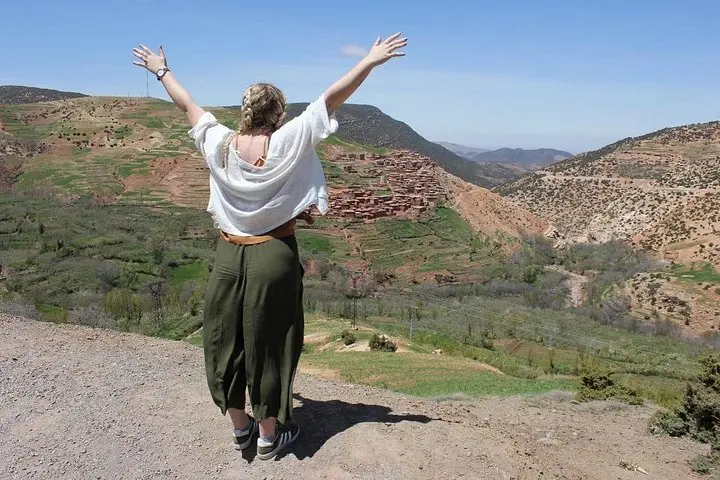
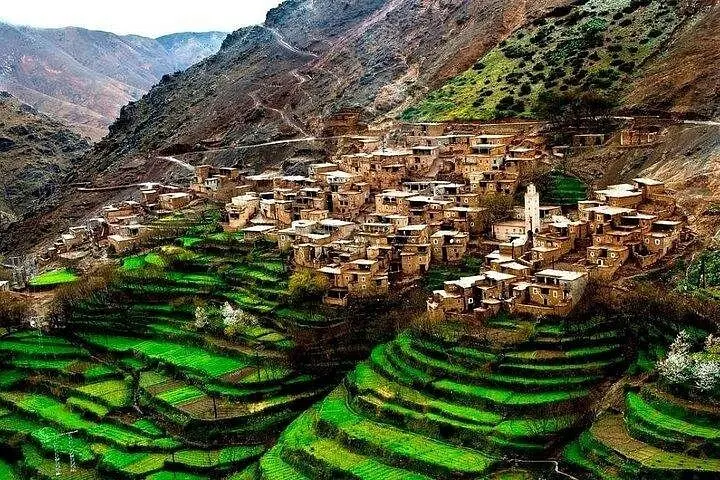
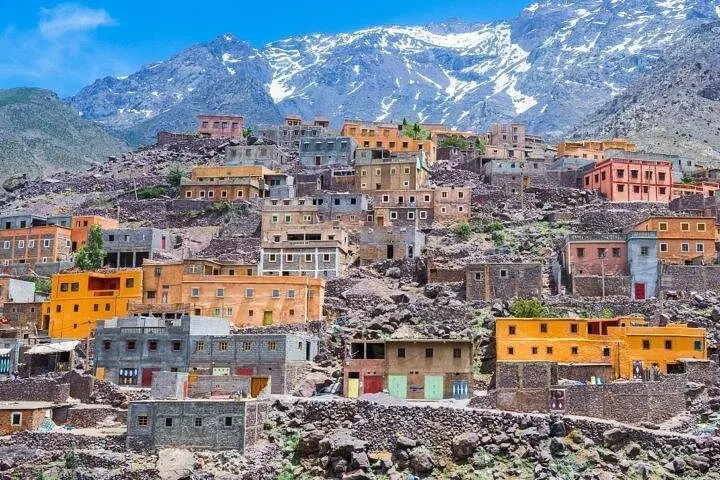
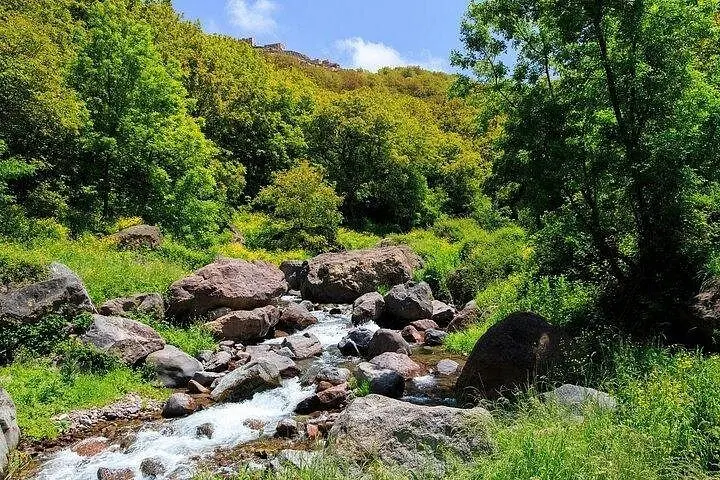
Morning light from Marrakech thins as the city gives way to ochre fields and the High Atlas carving the skyline. By the time you reach Imlil valley, stone terraces and flat-roofed Berber houses puncture the slope; a 90-minute trail threads upward to a cascade, with a view that opens like a slow exhale.
Morning light from Marrakech thins as the city gives way to ochre fields and the High Atlas carving the skyline. By the time you reach Imlil valley, stone terraces and flat-roofed Berber houses puncture the slope; a 90-minute trail threads upward to a cascade, with a view that opens like a slow exhale.
The route crosses centuries of Amazigh (Berber) life—mud-brick homesteads, mule tracks, and cooperative argan presses where women still extract oil by hand. Geologically the High Atlas is young, uplifted by African-Eurasian plate collision; granite and schist cliffs frame intermittent riverbeds that swell in winter and dare you with sudden currents in spring runoff.
Culture here is practical and open: expect invitations for mint tea, conversations about transhumance, and a glimpse into seasonal pasture use. The nearby Agafay “desert” reads differently—an earthen plateau of sandstone and scrub that feels like a compact desert alternative to the Sahara and is where short camel treks graze the horizon.
Practical guidance: plan for a full day (about 7–8 hours), wear grippy trail shoes for uneven rocky paths, and bring 1.5–2 liters of water; shade is limited on the Agafay plateau. Mornings are best for cooler hiking and clearer light; afternoons can be hot and dusty. Local guides lead visits and arrange hotel pickup, making logistics straightforward for travelers short on time but eager for mountain walking, cultural exchange, and a brief camel ride.