THE ADVENTURE COLLECTIVE® · Independent discovery and booking for outdoor travel

Escape Marrakech for a six-hour journey into the Valley of Imlil: short walks, a one-hour camel ride, visits with Berber families, and a tagine lunch beneath views of North Africa’s highest peak, Mount Toubkal.
Escape Marrakech for a six-hour journey into the Valley of Imlil: short walks, a one-hour camel ride, visits with Berber families, and a tagine lunch beneath views of North Africa’s highest peak, Mount Toubkal.
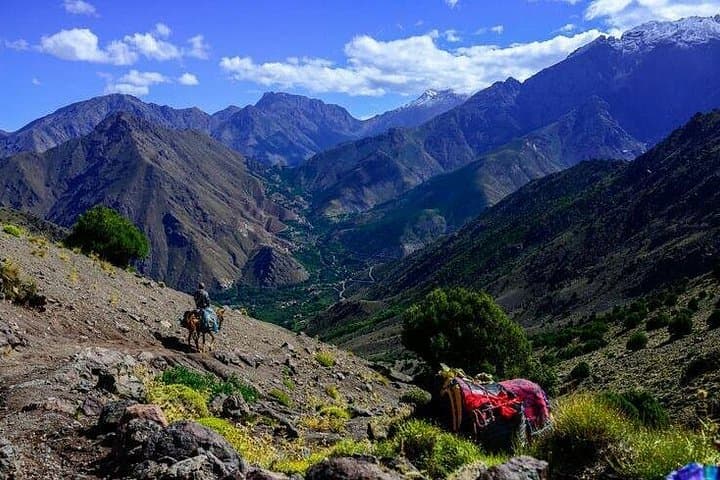
You step out of Marrakech’s dust and noise into a cool ribbon of mountain road; the High Atlas rises like a wall that slows the world. In the Valley of Imlil the air tightens with pine and thyme, and Mount Toubkal’s snow-capped profile watches from above, demanding notice.
Verified experiences and guided adventures in the surrounding area.
Operated by Atlas mountains tours · Imlil, Marrakech-Safi
You step out of Marrakech’s dust and noise into a cool ribbon of mountain road; the High Atlas rises like a wall that slows the world. In the Valley of Imlil the air tightens with pine and thyme, and Mount Toubkal’s snow-capped profile watches from above, demanding notice.
The valley has been shaped by glaciers and rivers—steep gulleys, terraces, and scree slopes tell a geological story of uplift and erosion. Human history here is equally plain: Berber villages cling to slopes, stone houses stacked in practical steps where centuries of shepherding and small-scale agriculture persist. Local cooperatives—especially argan and women-run guest houses—offer a direct line into contemporary village life; expect mint tea and tajine served in family compounds.
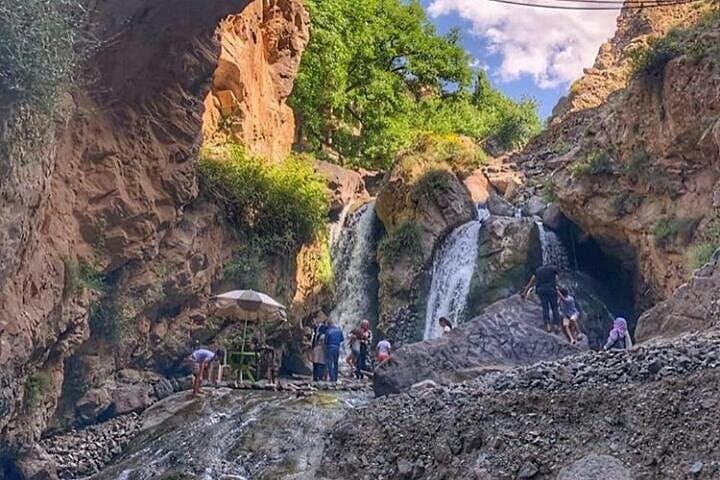
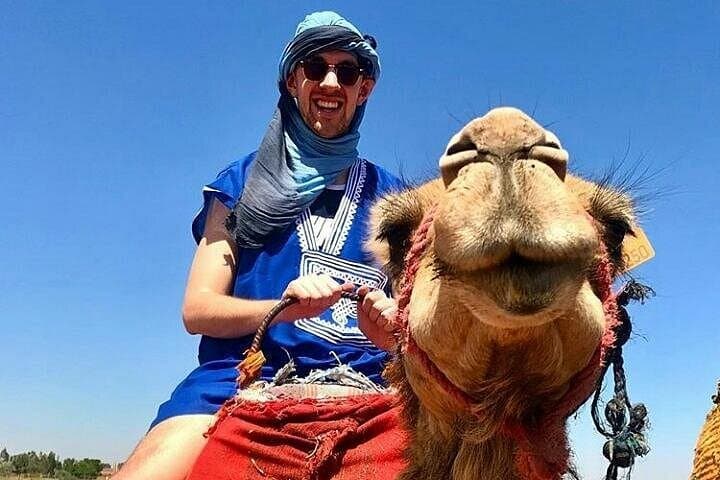
The day trip balances short walks with cultural stops: a one-hour camel ride across lower plains near the villages, a visit to a women’s argan co-op, a walk to nearby waterfalls, and a family-style lunch in a guest house. Nature has agency here—the river pushes, gullies channel wind, and the slopes both invite and resist exploration.
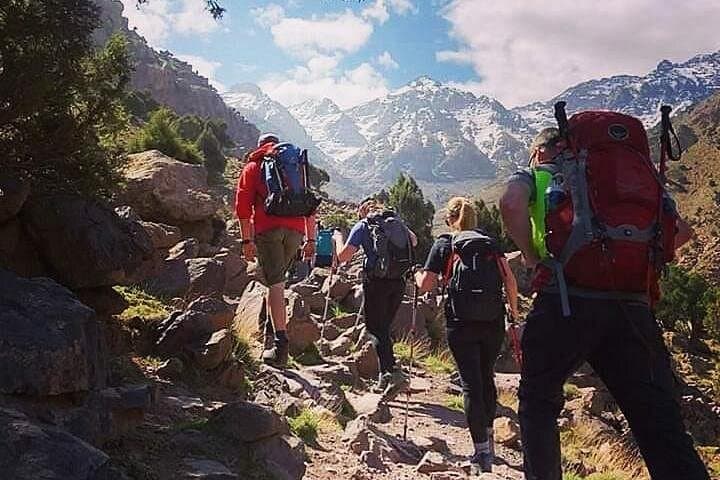
Practical guidance: plan for altitude (Imlil sits around 1,700–1,800 m), bring layered clothing for cool mornings and warm afternoons, and wear sturdy walking shoes for uneven farm tracks. Hydrate, carry cash for small purchases at cooperatives, and time your visit for morning light on Toubkal. The route is accessible and suits a wide range of fitness levels, but expect rocky paths and short steep sections. Engage a local guide, respect private property, and leave no trace to keep the valley intact for the next group of travelers.
Yes—pickup from hotels and riads in Marrakech is typically included and done by air-conditioned minibus.
The camel ride included on this trip is about one hour, usually on lower, flatter terrain near the villages.
The operator notes accessibility for infants and wheelchair access for some areas, but certain village paths and short uphill sections require mobility—check specific pickup/drop-off logistics in advance.
Imlil sits around 1,700–1,800 m—most visitors adapt quickly, but drink water and move at a comfortable pace; those sensitive to altitude should plan accordingly.
Atlas mountains tours operates guided outdoor trips and adventures with an emphasis on safety, stewardship, and memorable experiences.
You step out of Marrakech’s dust and noise into a cool ribbon of mountain road; the High Atlas rises like a wall that slows the world. In the Valley of Imlil the air tightens with pine and thyme, and Mount Toubkal’s snow-capped profile watches from above, demanding notice.
You step out of Marrakech’s dust and noise into a cool ribbon of mountain road; the High Atlas rises like a wall that slows the world. In the Valley of Imlil the air tightens with pine and thyme, and Mount Toubkal’s snow-capped profile watches from above, demanding notice.
The valley has been shaped by glaciers and rivers—steep gulleys, terraces, and scree slopes tell a geological story of uplift and erosion. Human history here is equally plain: Berber villages cling to slopes, stone houses stacked in practical steps where centuries of shepherding and small-scale agriculture persist. Local cooperatives—especially argan and women-run guest houses—offer a direct line into contemporary village life; expect mint tea and tajine served in family compounds.
The day trip balances short walks with cultural stops: a one-hour camel ride across lower plains near the villages, a visit to a women’s argan co-op, a walk to nearby waterfalls, and a family-style lunch in a guest house. Nature has agency here—the river pushes, gullies channel wind, and the slopes both invite and resist exploration.
Practical guidance: plan for altitude (Imlil sits around 1,700–1,800 m), bring layered clothing for cool mornings and warm afternoons, and wear sturdy walking shoes for uneven farm tracks. Hydrate, carry cash for small purchases at cooperatives, and time your visit for morning light on Toubkal. The route is accessible and suits a wide range of fitness levels, but expect rocky paths and short steep sections. Engage a local guide, respect private property, and leave no trace to keep the valley intact for the next group of travelers.