THE ADVENTURE COLLECTIVE® · Independent discovery and booking for outdoor travel
Drive from Marrakech into the High Atlas for a gentle day of village walks, a hidden waterfall and a family-cooked tagine. This six‑hour tour blends easy hikes with cultural stops in Imlil and Asni.
Drive from Marrakech into the High Atlas for a gentle day of village walks, a hidden waterfall and a family-cooked tagine. This six‑hour tour blends easy hikes with cultural stops in Imlil and Asni.
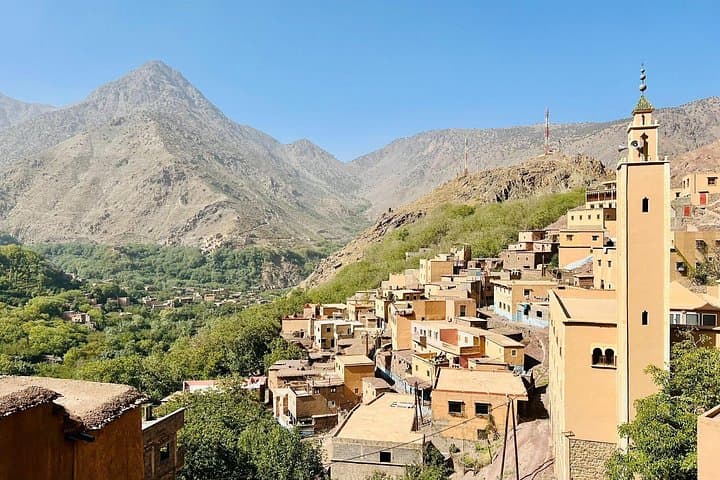
The convoy peels away from Marrakech at first light and the city’s red-walled silhouette gives way to olive groves and scrub as the High Atlas climbs into view. From the road the mountains loom like folded maps, terraces cut into steep slopes and white houses perched where gravity and craft meet.
Verified experiences and guided adventures in the surrounding area.
Operated by Marrakesh Travel Guide · Marrakech, Marrakech-Safi
The convoy peels away from Marrakech at first light and the city’s red-walled silhouette gives way to olive groves and scrub as the High Atlas climbs into view. From the road the mountains loom like folded maps, terraces cut into steep slopes and white houses perched where gravity and craft meet.
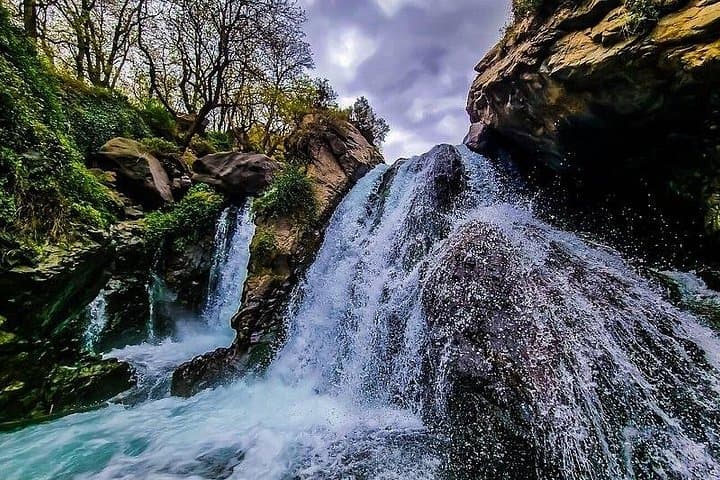
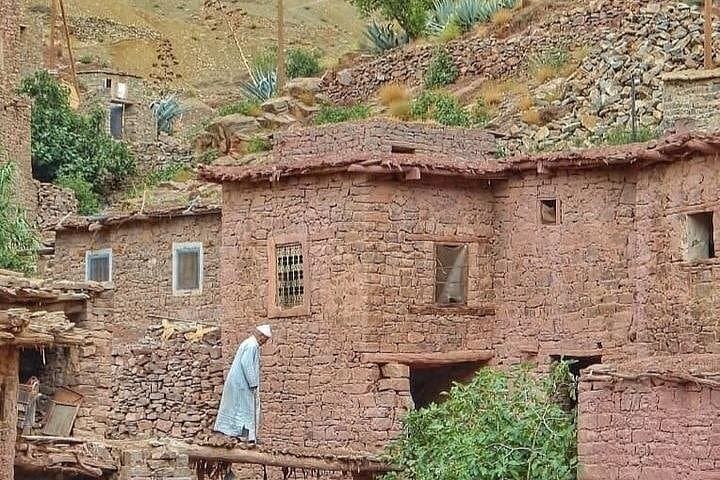
Geology here is blunt: the High Atlas rose as Africa shoved north against Eurasia, pushing volcanic rock and limestone into ragged ridges. The human history is older—Amazigh (Berber) communities have farmed these valleys for centuries, keeping goat herds, growing apples and building cooperative crafts. On this six‑hour loop you’ll pause at roadside villages, watch women in cooperatives prepare argan and textiles, and follow a gentle footpath from Imlil into a narrow valley where a small river tugs you toward a tucked waterfall.
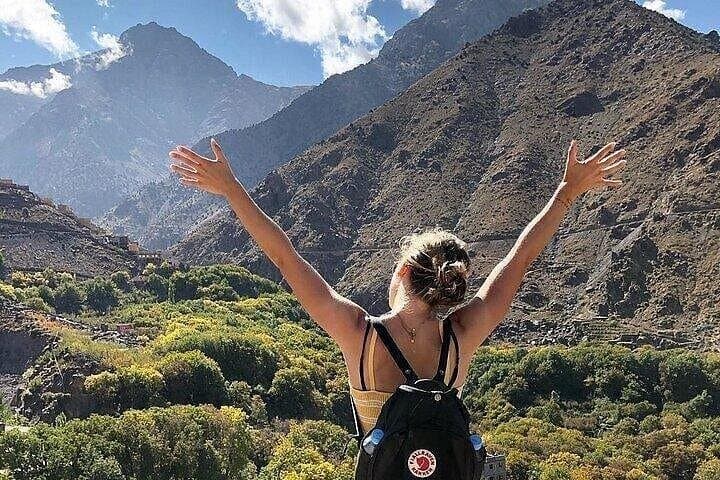
Expect unpaved village tracks, short uphill strolls on rocky soil and generous viewpoints of Jbel Toubkal, the highest peak in North Africa. Lunch in a family home gives a direct cultural exchange: tagine, mint tea and conversation about seasonal life at altitude.
Practical edge: the day starts around 8:30 a.m. and returns mid‑afternoon; vehicle transport is air‑conditioned but wear sturdy shoes for uneven ground. Carry cash for markets, a sun layer and water—bottled water is provided, but refilling is limited on trails. Respect private spaces, ask before photographing people, and pace yourself for short climbs: the terrain rewards attention with broad valley views and the steady, living pulse of mountain village life.
The tour runs about six hours, typically starting around 8:30 a.m. with return to Marrakech mid‑afternoon.
Walks are gentle and suitable for most ages; kids comfortable with short walks on uneven ground should be fine.
A family-cooked lunch is included; guides can often accommodate common dietary preferences with advance notice.
Elevation is moderate; those with serious respiratory or mobility issues should consult the operator, but most visitors experience no problems.
Marrakesh Travel Guide operates guided outdoor trips and adventures with an emphasis on safety, stewardship, and memorable experiences.
The convoy peels away from Marrakech at first light and the city’s red-walled silhouette gives way to olive groves and scrub as the High Atlas climbs into view. From the road the mountains loom like folded maps, terraces cut into steep slopes and white houses perched where gravity and craft meet.
The convoy peels away from Marrakech at first light and the city’s red-walled silhouette gives way to olive groves and scrub as the High Atlas climbs into view. From the road the mountains loom like folded maps, terraces cut into steep slopes and white houses perched where gravity and craft meet.
Geology here is blunt: the High Atlas rose as Africa shoved north against Eurasia, pushing volcanic rock and limestone into ragged ridges. The human history is older—Amazigh (Berber) communities have farmed these valleys for centuries, keeping goat herds, growing apples and building cooperative crafts. On this six‑hour loop you’ll pause at roadside villages, watch women in cooperatives prepare argan and textiles, and follow a gentle footpath from Imlil into a narrow valley where a small river tugs you toward a tucked waterfall.
Expect unpaved village tracks, short uphill strolls on rocky soil and generous viewpoints of Jbel Toubkal, the highest peak in North Africa. Lunch in a family home gives a direct cultural exchange: tagine, mint tea and conversation about seasonal life at altitude.
Practical edge: the day starts around 8:30 a.m. and returns mid‑afternoon; vehicle transport is air‑conditioned but wear sturdy shoes for uneven ground. Carry cash for markets, a sun layer and water—bottled water is provided, but refilling is limited on trails. Respect private spaces, ask before photographing people, and pace yourself for short climbs: the terrain rewards attention with broad valley views and the steady, living pulse of mountain village life.
