THE ADVENTURE COLLECTIVE® · Independent discovery and booking for outdoor travel

Escape Marrakech for a full-day in the High Atlas: ride a camel through a gorge, hike valley paths to a secluded Berber village, and share lunch with a local family amid terraced orchards and sweeping views of Mount Toubkal.
Escape Marrakech for a full-day in the High Atlas: ride a camel through a gorge, hike valley paths to a secluded Berber village, and share lunch with a local family amid terraced orchards and sweeping views of Mount Toubkal.
Sunlight hits red-earth cliffs as you leave Marrakech and climb into cooler air; olive groves thin into terraces, and the road narrows into a valley threaded with streams. By midmorning the Imlil Valley opens like a green scarp, with Mount Toubkal rising blunt and stone-streaked to the south — a daily landmark for locals and trekkers alike.
Verified experiences and guided adventures in the surrounding area.
Operated by Daily trips · Marrakech, Marrakech-Safi
Sunlight hits red-earth cliffs as you leave Marrakech and climb into cooler air; olive groves thin into terraces, and the road narrows into a valley threaded with streams. By midmorning the Imlil Valley opens like a green scarp, with Mount Toubkal rising blunt and stone-streaked to the south — a daily landmark for locals and trekkers alike.
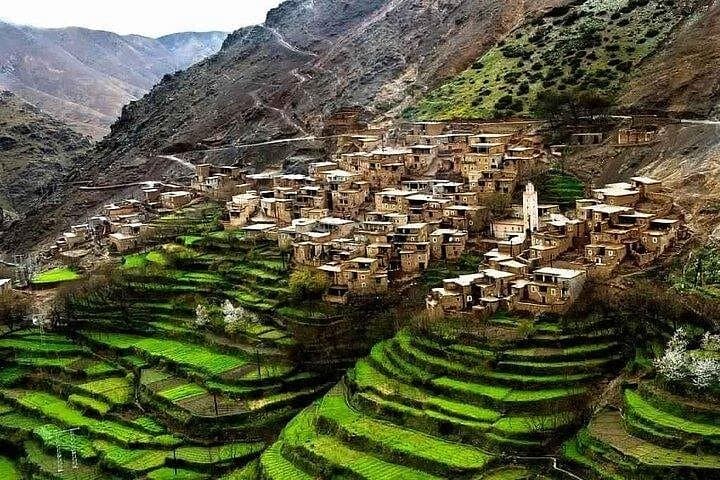
The High Atlas are young mountains in geological terms, pushed up by the collision of the African and Eurasian plates. Human history here runs deep: Amazigh (Berber) villages like Ait Souka occupy centuries-old terraces and kasbahs, where irrigation channels and stone houses reflect a mountain agriculture adapted to steep slopes and sparse rain.
On this full-day outing expect a blend of light walking, a short camel ride through a broad gorge, and an invited meal with a Berber family — practical cultural exchange rather than a staged show. The route passes terraced gardens, small waterfalls after rains, and an alpine-style kasbah that signals the shift from valley floor to high-mountain terrain. Guides point out local plants, village life, and views of Toubkal, the highest peak in North Africa.
Practical guidance: the trip is a full day (about 6–7 hours) with vehicle transfers from Marrakech, so wear sturdy shoes for uneven village paths, bring sun protection and layers for temperature swings, and carry water for hiking segments. Respect private homes when visiting, tip the host family if you share a meal, and follow your guide’s advice on footing and local customs. This tour is ideal for travelers seeking cultural context with manageable walking and memorable mountain scenery.
The tour lasts about 6–7 hours (approx. 390 minutes) and includes free hotel pickup and drop-off in Marrakech.
Camel rides on this trip are short and guided; they are generally suitable for most ages but confirm with the operator about child safety rules.
Yes — the itinerary includes a visit to Ait Souka and a shared meal in a Berber family’s home to experience local hospitality.
Physical requirements are light; expect short village walks on uneven ground but no technical hiking is necessary.
Daily trips operates guided outdoor trips and adventures with an emphasis on safety, stewardship, and memorable experiences.

Sunlight hits red-earth cliffs as you leave Marrakech and climb into cooler air; olive groves thin into terraces, and the road narrows into a valley threaded with streams. By midmorning the Imlil Valley opens like a green scarp, with Mount Toubkal rising blunt and stone-streaked to the south — a daily landmark for locals and trekkers alike.
Sunlight hits red-earth cliffs as you leave Marrakech and climb into cooler air; olive groves thin into terraces, and the road narrows into a valley threaded with streams. By midmorning the Imlil Valley opens like a green scarp, with Mount Toubkal rising blunt and stone-streaked to the south — a daily landmark for locals and trekkers alike.
The High Atlas are young mountains in geological terms, pushed up by the collision of the African and Eurasian plates. Human history here runs deep: Amazigh (Berber) villages like Ait Souka occupy centuries-old terraces and kasbahs, where irrigation channels and stone houses reflect a mountain agriculture adapted to steep slopes and sparse rain.
On this full-day outing expect a blend of light walking, a short camel ride through a broad gorge, and an invited meal with a Berber family — practical cultural exchange rather than a staged show. The route passes terraced gardens, small waterfalls after rains, and an alpine-style kasbah that signals the shift from valley floor to high-mountain terrain. Guides point out local plants, village life, and views of Toubkal, the highest peak in North Africa.
Practical guidance: the trip is a full day (about 6–7 hours) with vehicle transfers from Marrakech, so wear sturdy shoes for uneven village paths, bring sun protection and layers for temperature swings, and carry water for hiking segments. Respect private homes when visiting, tip the host family if you share a meal, and follow your guide’s advice on footing and local customs. This tour is ideal for travelers seeking cultural context with manageable walking and memorable mountain scenery.