THE ADVENTURE COLLECTIVE® · Independent discovery and booking for outdoor travel

Escape Marrakech for a day in the High Atlas: three valleys, a short camel ride, a guided walk to the Imlil waterfall and lunch with a Berber family. Expect mixed terrain, panoramic viewpoints and authentic cultural encounters.
Escape Marrakech for a day in the High Atlas: three valleys, a short camel ride, a guided walk to the Imlil waterfall and lunch with a Berber family. Expect mixed terrain, panoramic viewpoints and authentic cultural encounters.
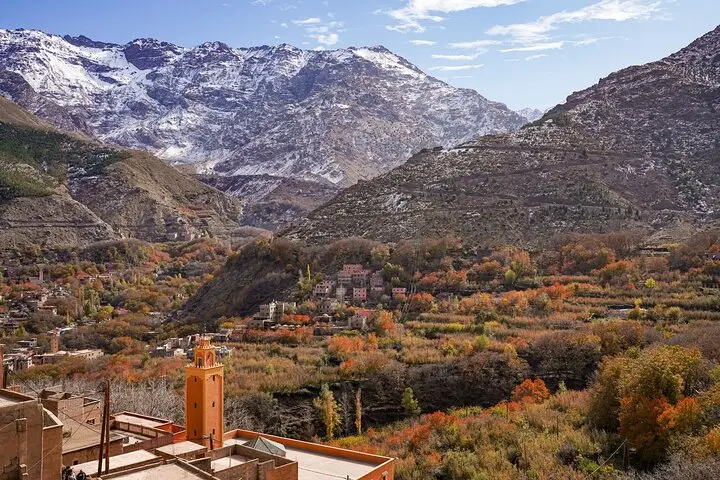
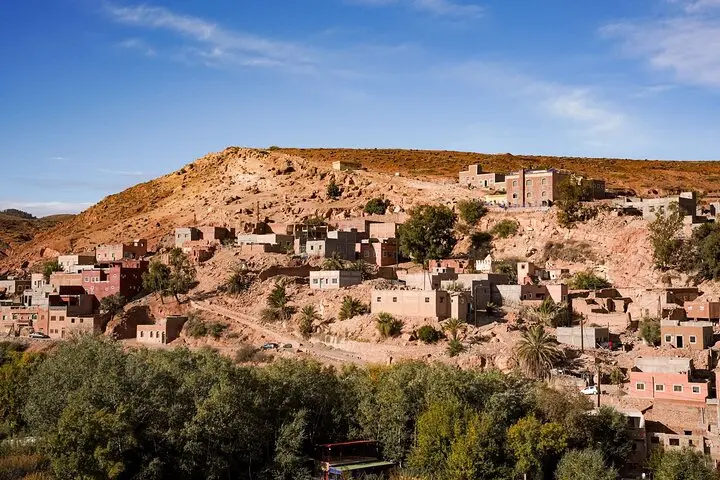
A cool mountain wind cuts through the bus window as Marrakech’s ochre roofs shrink behind you; within an hour the road climbs into the High Atlas and the city noise gives way to terraced fields, dry stone walls and villages clinging to sunlit slopes.
Verified experiences and guided adventures in the surrounding area.
Operated by Atlas Pathway Journeys · Imlil, Marrakech-Safi
A cool mountain wind cuts through the bus window as Marrakech’s ochre roofs shrink behind you; within an hour the road climbs into the High Atlas and the city noise gives way to terraced fields, dry stone walls and villages clinging to sunlit slopes.
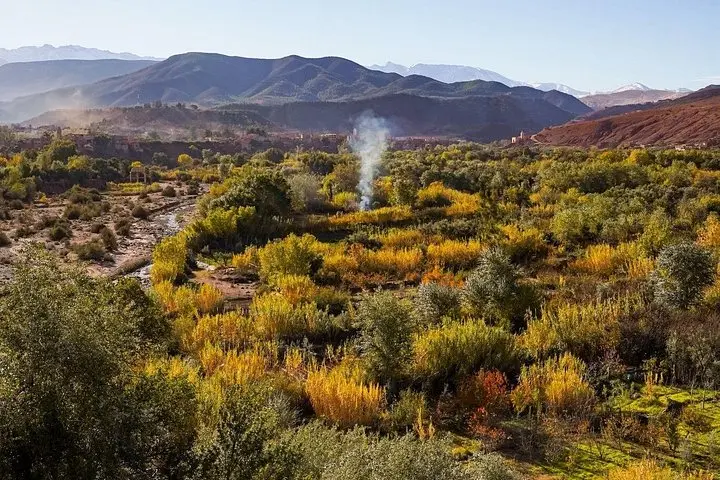
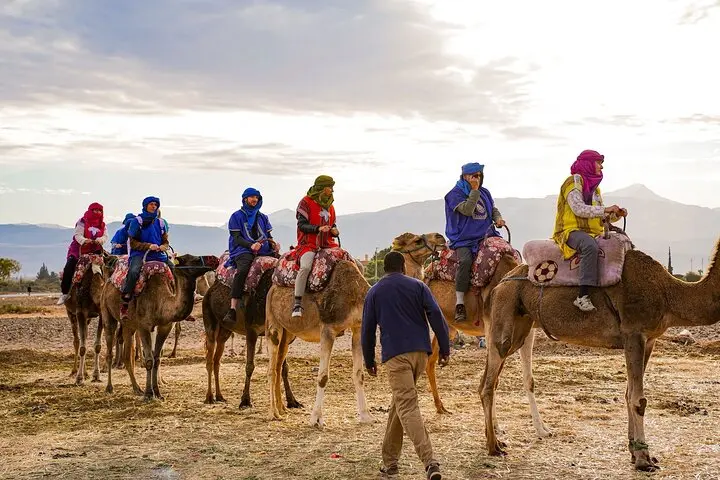
The tour threads through three distinct valleys — Ourika, Tahanaout/Azrou and Imlil — each shaped by the Atlas range’s uplift where African and Eurasian plates pushed rock into jagged ridgelines. You’ll step off for a short camel ride on a stony plain, then follow a guided walk toward Imlil’s waterfall across mule tracks and paved village lanes. Local Berber families maintain irrigation channels and small farms; expect to share mint tea and a home-cooked lunch in a family house that reflects centuries of mountain agriculture and hospitality.
Terrain is mixed: paved village paths, loose scree on steeper approaches and compact dirt trails; typical walking sections for visitors are 2–6 km with 100–300 m of elevation change depending on how far you go. The route offers panoramic viewpoints, irrigation terraces, and a chance to see birds of prey circling thermal currents.
Practical notes: plan an early start to avoid midday heat, bring layers for alpine winds, and wear sturdy shoes for uneven ground. Hydrate and carry cash for small purchases or tips; photography is excellent—aim for late afternoon light if you return by then. The day trip blends moderate hiking, cultural exchange and short animal-handling moments (camel rides), making it a compact, practical introduction to the High Atlas.
Typical transfer time is 45–90 minutes each way depending on traffic and which valley is visited.
Yes — a short camel experience is included, usually 10–20 minutes for photos and a brief ride on a prepared area.
The guided walk is moderate: uneven paths and some short climbs; many visitors complete it in 30–90 minutes round-trip depending on pace.
Lunch and bottled water are included; tea or coffee is typically offered during the village visit—inform your guide about dietary needs in advance.
Atlas Pathway Journeys operates guided outdoor trips and adventures with an emphasis on safety, stewardship, and memorable experiences.
A cool mountain wind cuts through the bus window as Marrakech’s ochre roofs shrink behind you; within an hour the road climbs into the High Atlas and the city noise gives way to terraced fields, dry stone walls and villages clinging to sunlit slopes.
A cool mountain wind cuts through the bus window as Marrakech’s ochre roofs shrink behind you; within an hour the road climbs into the High Atlas and the city noise gives way to terraced fields, dry stone walls and villages clinging to sunlit slopes.
The tour threads through three distinct valleys — Ourika, Tahanaout/Azrou and Imlil — each shaped by the Atlas range’s uplift where African and Eurasian plates pushed rock into jagged ridgelines. You’ll step off for a short camel ride on a stony plain, then follow a guided walk toward Imlil’s waterfall across mule tracks and paved village lanes. Local Berber families maintain irrigation channels and small farms; expect to share mint tea and a home-cooked lunch in a family house that reflects centuries of mountain agriculture and hospitality.
Terrain is mixed: paved village paths, loose scree on steeper approaches and compact dirt trails; typical walking sections for visitors are 2–6 km with 100–300 m of elevation change depending on how far you go. The route offers panoramic viewpoints, irrigation terraces, and a chance to see birds of prey circling thermal currents.
Practical notes: plan an early start to avoid midday heat, bring layers for alpine winds, and wear sturdy shoes for uneven ground. Hydrate and carry cash for small purchases or tips; photography is excellent—aim for late afternoon light if you return by then. The day trip blends moderate hiking, cultural exchange and short animal-handling moments (camel rides), making it a compact, practical introduction to the High Atlas.