THE ADVENTURE COLLECTIVE® · Independent discovery and booking for outdoor travel

A full-day transfer from Marrakech to the High Atlas that pairs cultural stops—an argan co-op and Berber tea—with a four-hour walk in the Imlil valley below Toubkal. Expect dirt tracks, steady climbs, and a rooftop lunch with valley views.
A full-day transfer from Marrakech to the High Atlas that pairs cultural stops—an argan co-op and Berber tea—with a four-hour walk in the Imlil valley below Toubkal. Expect dirt tracks, steady climbs, and a rooftop lunch with valley views.
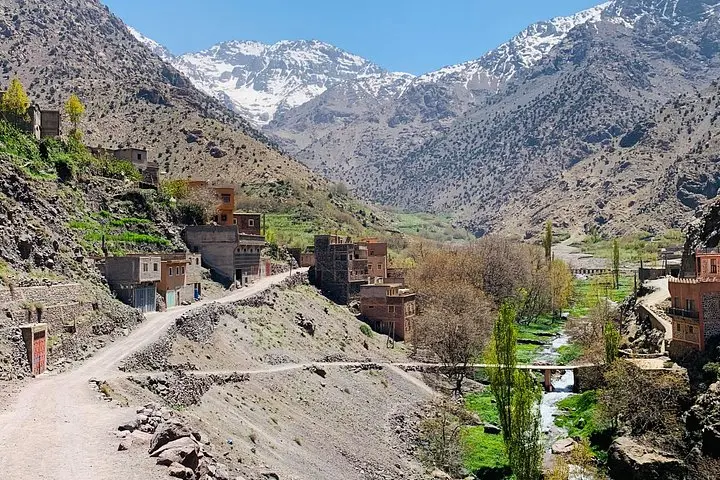
You leave Marrakech as the city cools and the road pushes south, the Atlas rising like a bank of slow motion on the horizon. The drive threads through argan groves and small towns until the air thins and terraces begin to climb; by the time you reach Imlil the valley opens, stone houses clinging to slopes, and a welcome cup of mint tea waits on a rooftop that looks over the Toubkal massif.
Verified experiences and guided adventures in the surrounding area.
Operated by Morocco Tours With Locals · Imlil, Marrakesh-Safi
You leave Marrakech as the city cools and the road pushes south, the Atlas rising like a bank of slow motion on the horizon. The drive threads through argan groves and small towns until the air thins and terraces begin to climb; by the time you reach Imlil the valley opens, stone houses clinging to slopes, and a welcome cup of mint tea waits on a rooftop that looks over the Toubkal massif.
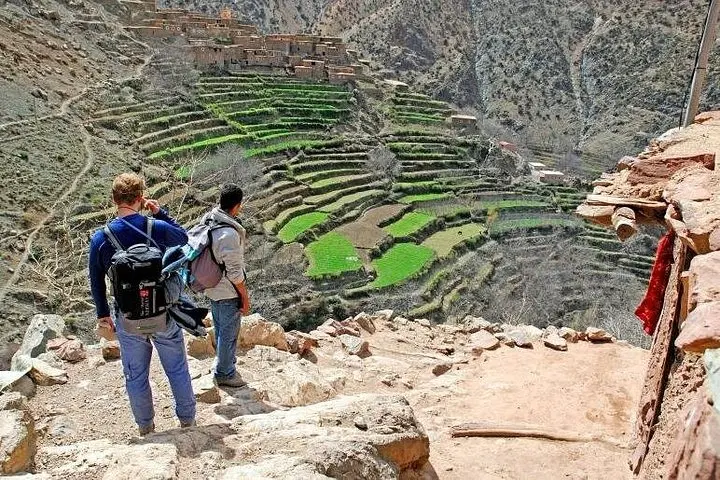
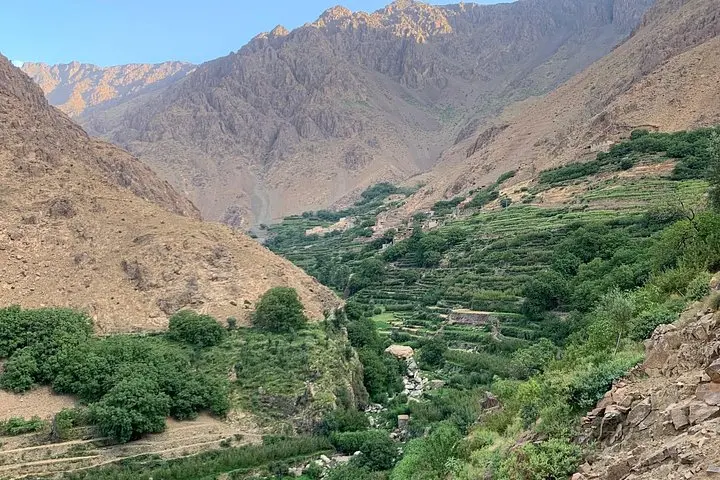
The High Atlas is young, tectonically folded terrain born of collision between the African and Eurasian plates; peaks here are rugged, composed of schist and limestone, with gullies carved by seasonal runoff. Berber (Amazigh) villages dot the ridges—each mud-brick home and stacked field a practical response to steep land and thin soil. A stop at an argan co-operative and the chance to photograph narrow gorges give a quick cultural primer before the walk.
Expect a roughly four-hour walk through the Imlil valley and lower Toubkal foothills: packed-earth mule tracks, occasional loose scree, and short steep pitches that test calves more than technique. Elevation changes are steady rather than technical; the route favors endurance and sensible footwear over climbing skill. Along the way your guide opens conversation about local life and farming; lunch on a rooftop brings time to trade questions and stories.
Practical edge: start early for cooler morning air, carry 1–2 liters of water, wear sturdy hiking shoes and layered clothing for sharp temperature swings, and respect private property—ask before photographing people. This is a manageable day that blends moderate walking, cultural exchange, and broad Atlas views.
The drive typically takes about 1–1.5 hours each way depending on traffic and chosen stops along the route.
Yes; the walk is non-technical but involves steady uphill sections—basic fitness and comfortable shoes are sufficient.
Hosts commonly provide simple local dishes and tea; notify the operator in advance of dietary needs so they can prepare alternatives.
Basic restroom options exist at villages and some roadside stops, but facilities are limited compared with urban standards.
Morocco Tours With Locals operates guided outdoor trips and adventures with an emphasis on safety, stewardship, and memorable experiences.
You leave Marrakech as the city cools and the road pushes south, the Atlas rising like a bank of slow motion on the horizon. The drive threads through argan groves and small towns until the air thins and terraces begin to climb; by the time you reach Imlil the valley opens, stone houses clinging to slopes, and a welcome cup of mint tea waits on a rooftop that looks over the Toubkal massif.
You leave Marrakech as the city cools and the road pushes south, the Atlas rising like a bank of slow motion on the horizon. The drive threads through argan groves and small towns until the air thins and terraces begin to climb; by the time you reach Imlil the valley opens, stone houses clinging to slopes, and a welcome cup of mint tea waits on a rooftop that looks over the Toubkal massif.
The High Atlas is young, tectonically folded terrain born of collision between the African and Eurasian plates; peaks here are rugged, composed of schist and limestone, with gullies carved by seasonal runoff. Berber (Amazigh) villages dot the ridges—each mud-brick home and stacked field a practical response to steep land and thin soil. A stop at an argan co-operative and the chance to photograph narrow gorges give a quick cultural primer before the walk.
Expect a roughly four-hour walk through the Imlil valley and lower Toubkal foothills: packed-earth mule tracks, occasional loose scree, and short steep pitches that test calves more than technique. Elevation changes are steady rather than technical; the route favors endurance and sensible footwear over climbing skill. Along the way your guide opens conversation about local life and farming; lunch on a rooftop brings time to trade questions and stories.
Practical edge: start early for cooler morning air, carry 1–2 liters of water, wear sturdy hiking shoes and layered clothing for sharp temperature swings, and respect private property—ask before photographing people. This is a manageable day that blends moderate walking, cultural exchange, and broad Atlas views.