THE ADVENTURE COLLECTIVE® · Independent discovery and booking for outdoor travel

Leave Marrakech before dawn for a full-day drive over Tizi n'Tichka into the High Atlas, ending at the film-famous town of Ouarzazate and the mud-brick ksar of Ait Benhaddou. Expect dramatic mountain roads, brief guided walks, and hands-on cultural stops.
Leave Marrakech before dawn for a full-day drive over Tizi n'Tichka into the High Atlas, ending at the film-famous town of Ouarzazate and the mud-brick ksar of Ait Benhaddou. Expect dramatic mountain roads, brief guided walks, and hands-on cultural stops.
The minivan peels away from Marrakech at dawn and the road climbs, folding into rock and light as the High Atlas takes shape. Tizi n'Tichka, the mountain pass above 2,000 meters, opens vistas of serrated ridges and ochre villages; winds push at the van as if testing your resolve to keep looking out the window.
Verified experiences and guided adventures in the surrounding area.
Operated by Marrakesh Travel Services · Ait Benhaddou, Drâa-Tafilalet
The minivan peels away from Marrakech at dawn and the road climbs, folding into rock and light as the High Atlas takes shape. Tizi n'Tichka, the mountain pass above 2,000 meters, opens vistas of serrated ridges and ochre villages; winds push at the van as if testing your resolve to keep looking out the window.
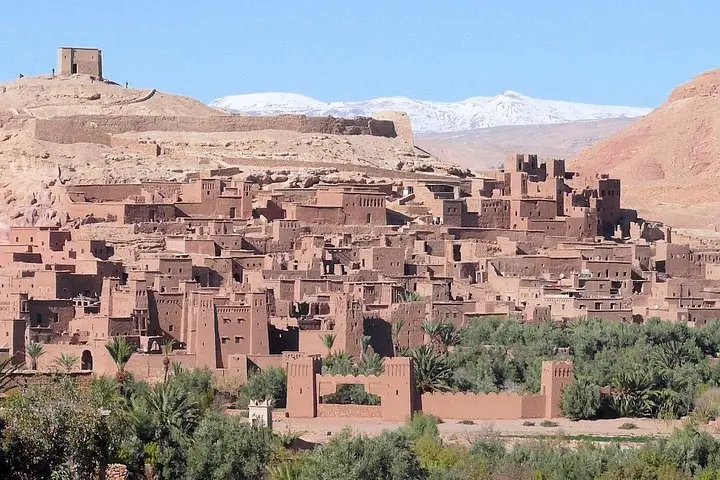
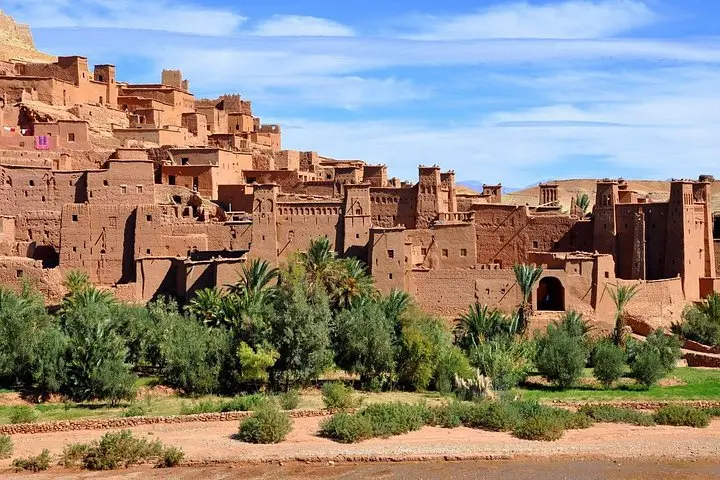
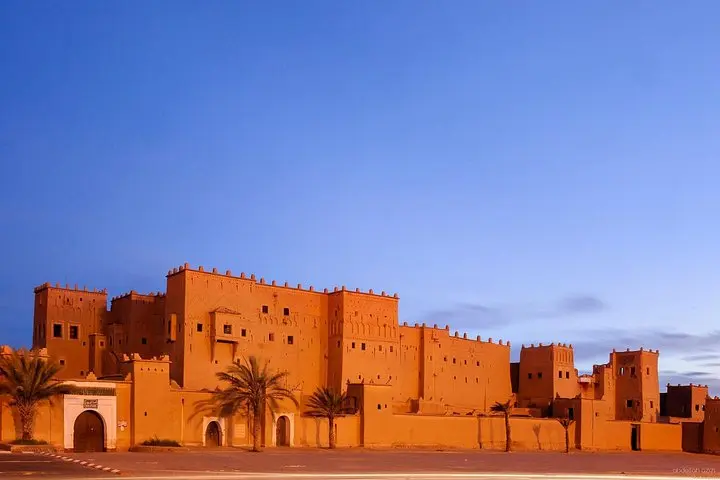
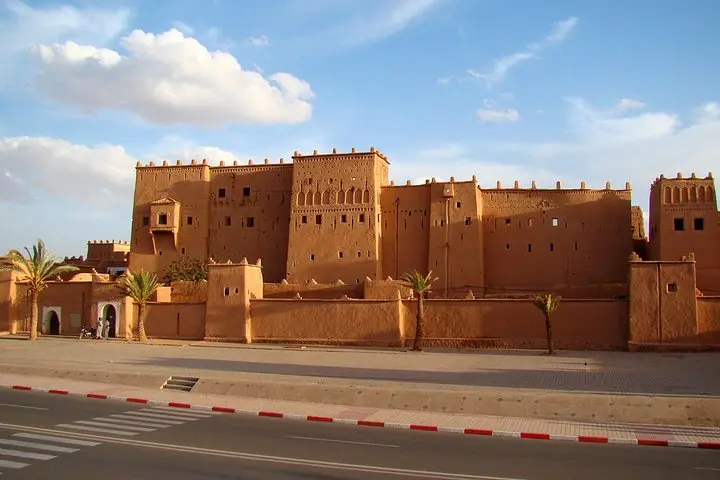
Ait Benhaddou’s ksar—a cluster of mud-brick towers—was once a caravan stop on the trans-Saharan route. Nearby Ouarzazate grew where palm groves meet desert, later turning to celluloid: studios here doubled for ancient cities in international films. Geologically, the pass cuts through uplifted crystalline rock; erosion sculpts dry riverbeds that flare into seasonal palm oases below.
On the ground you’ll trade long stretches in an air-conditioned vehicle for short guided walks: through alleys of the ksar, beside riverine palms, and past kasbah ruins. Local guides explain Berber building techniques and the role of irrigation in these arid valleys; shopkeepers sell handmade carpets and argan oil at modest prices.
Practical edge: this is a long day—expect 12–14 hours door-to-door from Marrakech with multiple photo stops and a couple of 30–60 minute guided visits. Dress in layers for temperature swings over the pass, bring sunscreen, a refillable water bottle, and small-change cash for entrance or snacks. The route is paved but winding; if you’re prone to motion sickness, take precautions. For photographers and culture-minded hikers, the payoff is clear: dramatic light on ancient mudbrick façades and the compact, human-scale view of High Atlas life.
Expect roughly 3.5–4 hours each way to Ouarzazate depending on traffic and stops; the full tour is typically a 12–14 hour day.
Most day-trip listings exclude official entrance fees or museum charges—bring small dirham cash in case they are required.
Yes; the itinerary is physically easy with short guided walks, but the length of the day and vehicle time should be considered for young children or those with mobility limits.
Many tours include a stop at the exterior of studios and a short guided visit; full studio tours may require separate tickets or schedules.
Marrakesh Travel Services operates guided outdoor trips and adventures with an emphasis on safety, stewardship, and memorable experiences.
The minivan peels away from Marrakech at dawn and the road climbs, folding into rock and light as the High Atlas takes shape. Tizi n'Tichka, the mountain pass above 2,000 meters, opens vistas of serrated ridges and ochre villages; winds push at the van as if testing your resolve to keep looking out the window.
The minivan peels away from Marrakech at dawn and the road climbs, folding into rock and light as the High Atlas takes shape. Tizi n'Tichka, the mountain pass above 2,000 meters, opens vistas of serrated ridges and ochre villages; winds push at the van as if testing your resolve to keep looking out the window.
Ait Benhaddou’s ksar—a cluster of mud-brick towers—was once a caravan stop on the trans-Saharan route. Nearby Ouarzazate grew where palm groves meet desert, later turning to celluloid: studios here doubled for ancient cities in international films. Geologically, the pass cuts through uplifted crystalline rock; erosion sculpts dry riverbeds that flare into seasonal palm oases below.
On the ground you’ll trade long stretches in an air-conditioned vehicle for short guided walks: through alleys of the ksar, beside riverine palms, and past kasbah ruins. Local guides explain Berber building techniques and the role of irrigation in these arid valleys; shopkeepers sell handmade carpets and argan oil at modest prices.
Practical edge: this is a long day—expect 12–14 hours door-to-door from Marrakech with multiple photo stops and a couple of 30–60 minute guided visits. Dress in layers for temperature swings over the pass, bring sunscreen, a refillable water bottle, and small-change cash for entrance or snacks. The route is paved but winding; if you’re prone to motion sickness, take precautions. For photographers and culture-minded hikers, the payoff is clear: dramatic light on ancient mudbrick façades and the compact, human-scale view of High Atlas life.