THE ADVENTURE COLLECTIVE® · Independent discovery and booking for outdoor travel

Escape Marrakech for a seven-hour drive into the High Atlas to walk orchard-lined paths, visit Berber family homes, and hike to a local waterfall. This guided day trip mixes short hikes with cultural stops—perfect for travelers who want mountain scenery without technical climbing.
Escape Marrakech for a seven-hour drive into the High Atlas to walk orchard-lined paths, visit Berber family homes, and hike to a local waterfall. This guided day trip mixes short hikes with cultural stops—perfect for travelers who want mountain scenery without technical climbing.
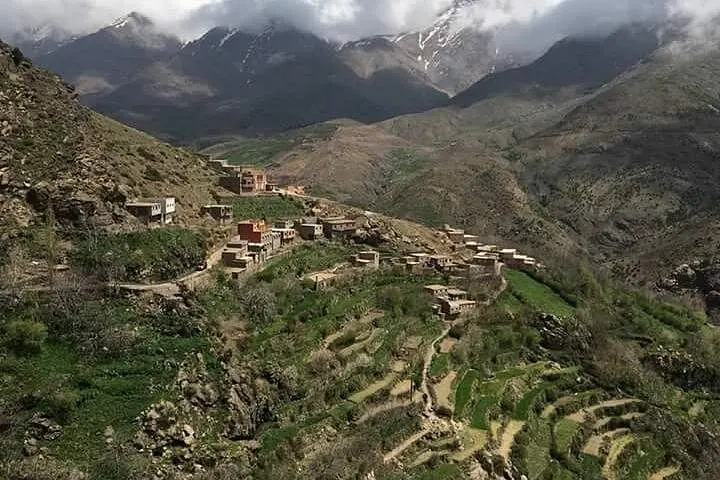
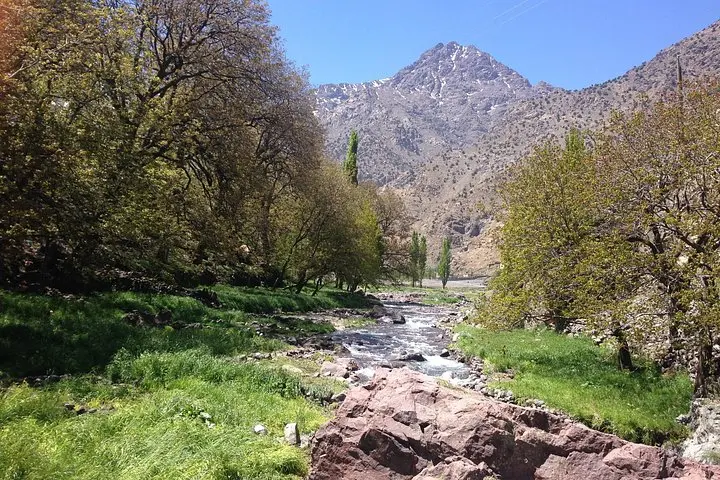
A cool mountain wind greets you as the road peels away from Marrakech and the city’s noise shrinks behind low ridgelines. By midmorning you’re threading narrow tracks between terraced orchards where apple and walnut trees shoulder ancient stone houses; children in school uniforms wave as you pass. Small rivers chatter down steep gullies, daring you to follow the scent of thyme and wood smoke toward a nearby waterfall.
Verified experiences and guided adventures in the surrounding area.
Operated by Atlas Pathfinders · Imlil, Marrakesh-Safi
A cool mountain wind greets you as the road peels away from Marrakech and the city’s noise shrinks behind low ridgelines. By midmorning you’re threading narrow tracks between terraced orchards where apple and walnut trees shoulder ancient stone houses; children in school uniforms wave as you pass. Small rivers chatter down steep gullies, daring you to follow the scent of thyme and wood smoke toward a nearby waterfall.
The High Atlas here is young, rugged folded rock shaped by North African tectonics and carved by seasonal streams. Villages like Aroumd and Aremd sit on ancestral paths that have linked villages and souks for centuries; Berber (Amazigh) families still make argan oil and prepare tajine in communal kitchens. The region blends pastoral life with a mountaineering legacy—the valley below is the traditional approach to Toubkal, Morocco’s highest peak.
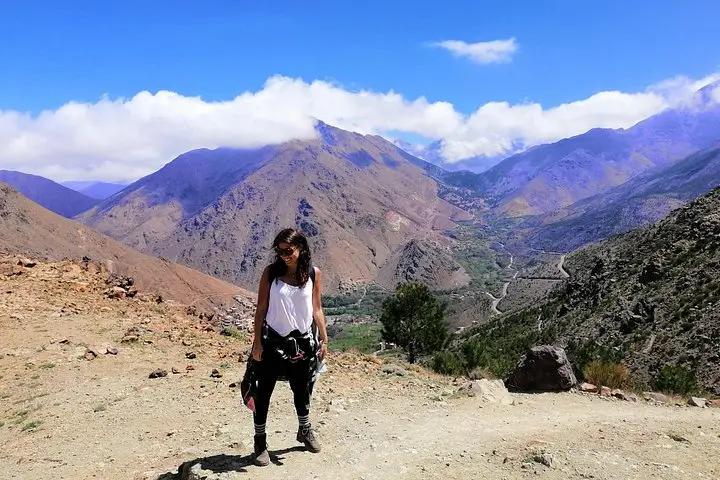
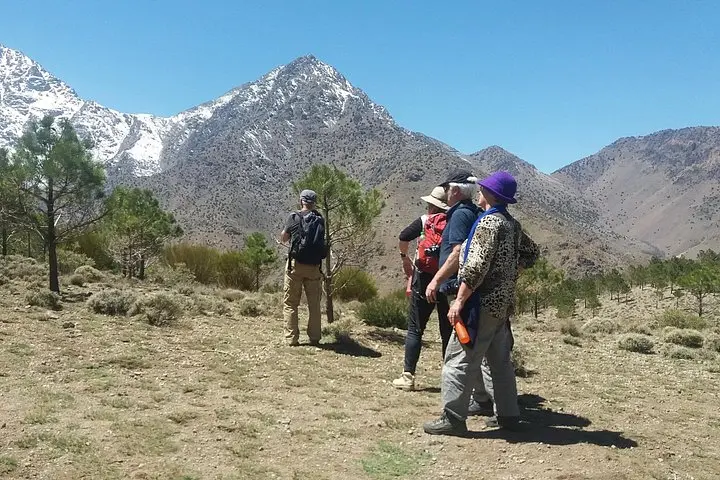
Expect short, steep walks rather than long summit pushes: a 30–40 minute hiking option to the Imlil waterfall, photo stops at panoramic viewpoints, and a home-cooked meal in a family guesthouse. Guides mediate language and custom—tea is an invitation to sit and listen.
Practical edge: wear sturdy walking shoes and layers for sharp temperature shifts, carry 1–2 liters of water, and plan for dust on unpaved sections. Morning departures avoid the heat and give softer light for photos; bring cash for small co-ops and souvenirs. The day balances gentle hiking with cultural time—an accessible window into mountain life and landscape without technical skills required.
Most departures are from Marrakech with pickup options; the tour returns to Marrakech at the end of the day.
Hikes are short and non-technical (typically 30–40 minutes to a waterfall); participants should be comfortable on uneven terrain.
A traditional home-cooked meal in a family guesthouse is usually included; snacks and water are provided but carrying extras is recommended.
Children age 3+ are permitted; service animals are allowed but confirm any specific needs with the operator in advance.
Atlas Pathfinders operates guided outdoor trips and adventures with an emphasis on safety, stewardship, and memorable experiences.
A cool mountain wind greets you as the road peels away from Marrakech and the city’s noise shrinks behind low ridgelines. By midmorning you’re threading narrow tracks between terraced orchards where apple and walnut trees shoulder ancient stone houses; children in school uniforms wave as you pass. Small rivers chatter down steep gullies, daring you to follow the scent of thyme and wood smoke toward a nearby waterfall.
A cool mountain wind greets you as the road peels away from Marrakech and the city’s noise shrinks behind low ridgelines. By midmorning you’re threading narrow tracks between terraced orchards where apple and walnut trees shoulder ancient stone houses; children in school uniforms wave as you pass. Small rivers chatter down steep gullies, daring you to follow the scent of thyme and wood smoke toward a nearby waterfall.
The High Atlas here is young, rugged folded rock shaped by North African tectonics and carved by seasonal streams. Villages like Aroumd and Aremd sit on ancestral paths that have linked villages and souks for centuries; Berber (Amazigh) families still make argan oil and prepare tajine in communal kitchens. The region blends pastoral life with a mountaineering legacy—the valley below is the traditional approach to Toubkal, Morocco’s highest peak.
Expect short, steep walks rather than long summit pushes: a 30–40 minute hiking option to the Imlil waterfall, photo stops at panoramic viewpoints, and a home-cooked meal in a family guesthouse. Guides mediate language and custom—tea is an invitation to sit and listen.
Practical edge: wear sturdy walking shoes and layers for sharp temperature shifts, carry 1–2 liters of water, and plan for dust on unpaved sections. Morning departures avoid the heat and give softer light for photos; bring cash for small co-ops and souvenirs. The day balances gentle hiking with cultural time—an accessible window into mountain life and landscape without technical skills required.