THE ADVENTURE COLLECTIVE® · Independent discovery and booking for outdoor travel

Spend a full day leaving Marrakech to cross three distinct Atlas valleys—visit Imlil and Ait Souka, walk to a waterfall, share a Berber family lunch, and finish with a camel ride on the Agafay plateau. Practical, culture-rich, and landscape-driven, the trip mixes gentle hikes with short drives.
Spend a full day leaving Marrakech to cross three distinct Atlas valleys—visit Imlil and Ait Souka, walk to a waterfall, share a Berber family lunch, and finish with a camel ride on the Agafay plateau. Practical, culture-rich, and landscape-driven, the trip mixes gentle hikes with short drives.
Morning light leaves Marrakech and the road climbs, trading ochre city walls for stony ridgelines that seem to push the sky aside.
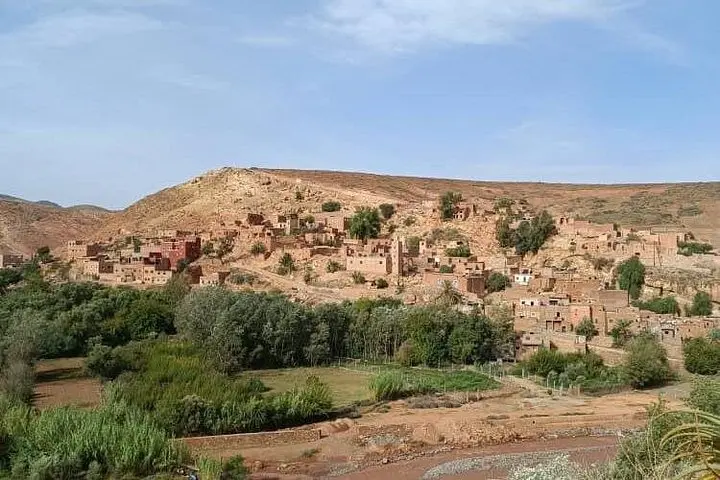
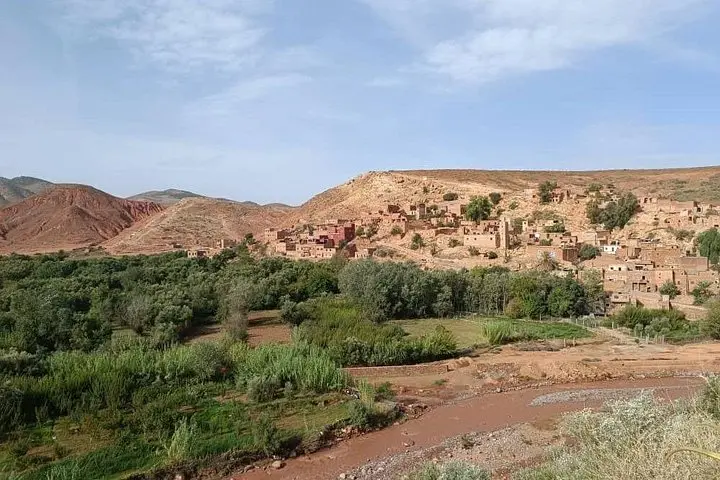
You follow a ribbon of asphalt into the High Atlas; terraces and scatterings of flat-roofed Berber houses appear on slopes, and the guide points out Ait Souka and the gullied shoulders of Imlil valley where villagers still tend goats and barley.
The geology here is blunt and honest—folded Mesozoic limestone capped by volcanic outcrops—creating steep gullies, scattered scree, and narrow paths that lead to a short waterfall above Imlil.
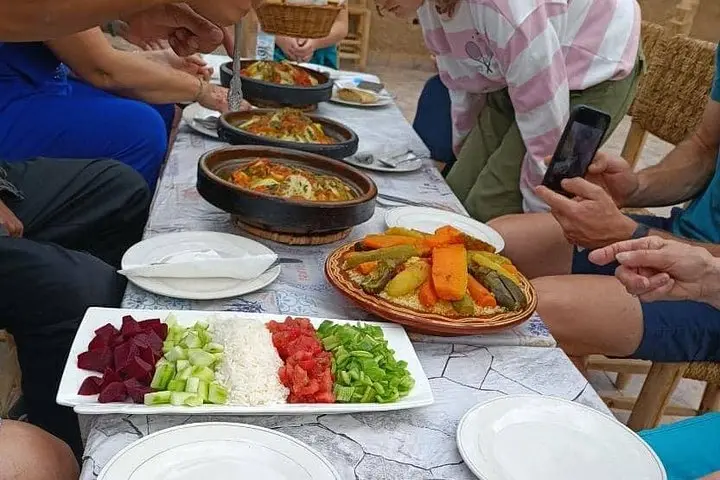
Culturally, this is Amazigh country: families host you for mint tea and a three-course Berber lunch cooked over a wood fire, and an argan cooperative stop near Asni gives a practical window into women-led local enterprise.
The tour ends with a taste of desert at the Agafay plains where camels negotiate the rocky dunes and the late light flattens the landscape into long shadows.
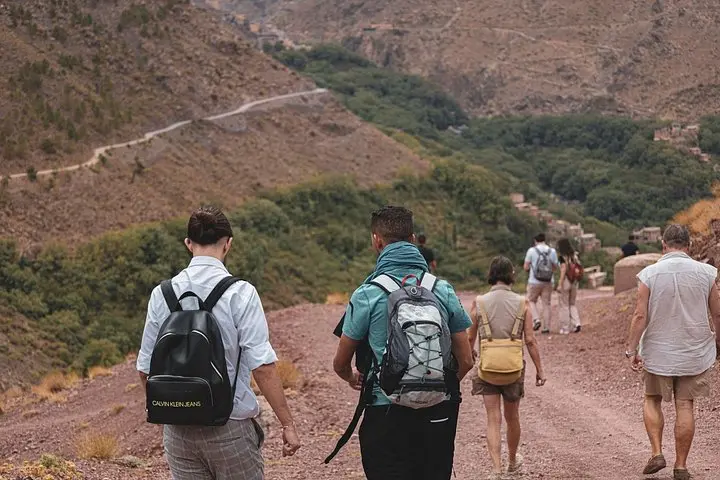
Expect a day of mixed walking and short drives—gentle village walks to a waterfall, brief uphill sections at 1,700–1,800 m, and uneven terrain around villages.
Bring layered clothing for cool mountain mornings, sun protection for exposed plateaus, and comfortable, grippy shoes for rocky footpaths.
Plan for a 7–8 hour outing with multiple short stops: photo points, tea with locals, and a camel ride—each is part of the rhythm of this full-day cultural and landscape loop from Marrakech.
Verified experiences and guided adventures in the surrounding area.
Operated by Adrar Trips From Marrakech · Marrakech, Marrakech-Safi
Morning light leaves Marrakech and the road climbs, trading ochre city walls for stony ridgelines that seem to push the sky aside.
You follow a ribbon of asphalt into the High Atlas; terraces and scatterings of flat-roofed Berber houses appear on slopes, and the guide points out Ait Souka and the gullied shoulders of Imlil valley where villagers still tend goats and barley.
The geology here is blunt and honest—folded Mesozoic limestone capped by volcanic outcrops—creating steep gullies, scattered scree, and narrow paths that lead to a short waterfall above Imlil.
Culturally, this is Amazigh country: families host you for mint tea and a three-course Berber lunch cooked over a wood fire, and an argan cooperative stop near Asni gives a practical window into women-led local enterprise.
The tour ends with a taste of desert at the Agafay plains where camels negotiate the rocky dunes and the late light flattens the landscape into long shadows.
Expect a day of mixed walking and short drives—gentle village walks to a waterfall, brief uphill sections at 1,700–1,800 m, and uneven terrain around villages.
Bring layered clothing for cool mountain mornings, sun protection for exposed plateaus, and comfortable, grippy shoes for rocky footpaths.
Plan for a 7–8 hour outing with multiple short stops: photo points, tea with locals, and a camel ride—each is part of the rhythm of this full-day cultural and landscape loop from Marrakech.
Pick-up is offered from Marrakech accommodations or Café de France in Jemaa el-Fna; the tour returns to Marrakech in the early evening.
Yes—camel rides on Agafay are short and guided; staff provide basic instructions and assistance mounting and dismounting.
Infant seats are available and the tour accepts children, but it's not recommended for travelers with severe back or heart problems.
Yes—this tour includes a traditional three-dish Berber lunch in a local family's home and refreshments like mint tea.
Adrar Trips From Marrakech operates guided outdoor trips and adventures with an emphasis on safety, stewardship, and memorable experiences.
Morning light leaves Marrakech and the road climbs, trading ochre city walls for stony ridgelines that seem to push the sky aside.
You follow a ribbon of asphalt into the High Atlas; terraces and scatterings of flat-roofed Berber houses appear on slopes, and the guide points out Ait Souka and the gullied shoulders of Imlil valley where villagers still tend goats and barley.
The geology here is blunt and honest—folded Mesozoic limestone capped by volcanic outcrops—creating steep gullies, scattered scree, and narrow paths that lead to a short waterfall above Imlil.
Culturally, this is Amazigh country: families host you for mint tea and a three-course Berber lunch cooked over a wood fire, and an argan cooperative stop near Asni gives a practical window into women-led local enterprise.
The tour ends with a taste of desert at the Agafay plains where camels negotiate the rocky dunes and the late light flattens the landscape into long shadows.
Expect a day of mixed walking and short drives—gentle village walks to a waterfall, brief uphill sections at 1,700–1,800 m, and uneven terrain around villages.
Bring layered clothing for cool mountain mornings, sun protection for exposed plateaus, and comfortable, grippy shoes for rocky footpaths.
Plan for a 7–8 hour outing with multiple short stops: photo points, tea with locals, and a camel ride—each is part of the rhythm of this full-day cultural and landscape loop from Marrakech.