THE ADVENTURE COLLECTIVE® · Independent discovery and booking for outdoor travel

A full-day drive from Marrakech through the High Atlas, this trip links Asni’s mountain market, the Kik plateau and the Ourika waterfalls with Berber culture, panoramic ridgelines and short guided hikes.
A full-day drive from Marrakech through the High Atlas, this trip links Asni’s mountain market, the Kik plateau and the Ourika waterfalls with Berber culture, panoramic ridgelines and short guided hikes.
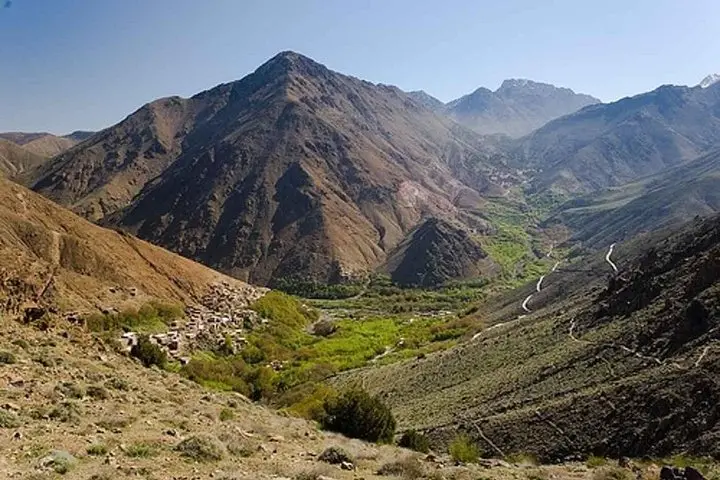
You leave Marrakech before sunrise and the red city thins behind you as the road climbs toward the High Atlas. Stone villages appear like punctuation marks on the hills; the air gets cooler and the dammed silhouette of Takerkoust glints below. By midmorning the van threads a narrow valley and the river seems to dare you to follow it upstream toward the Ourika waterfalls.
Verified experiences and guided adventures in the surrounding area.
Operated by BOOKING LINKS · Marrakech, Marrakesh-Safi
You leave Marrakech before sunrise and the red city thins behind you as the road climbs toward the High Atlas. Stone villages appear like punctuation marks on the hills; the air gets cooler and the dammed silhouette of Takerkoust glints below. By midmorning the van threads a narrow valley and the river seems to dare you to follow it upstream toward the Ourika waterfalls.
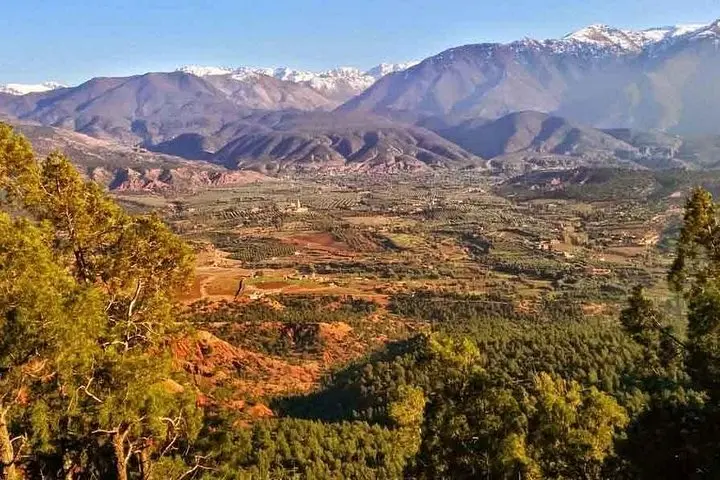
This full-day route moves between geology and culture: eroded volcanic and metamorphic ridges rise to snow-capped peaks of the High Atlas, while terraced slopes and adobe houses reflect centuries of Berber farming. Asni’s market—if your day hits Tuesday—still hums with local trade; pottery workshops keep traditional kilns and hand-turned wares in circulation. Aromatic gardens along the Ourika showcase medicinal plants used in daily life here.
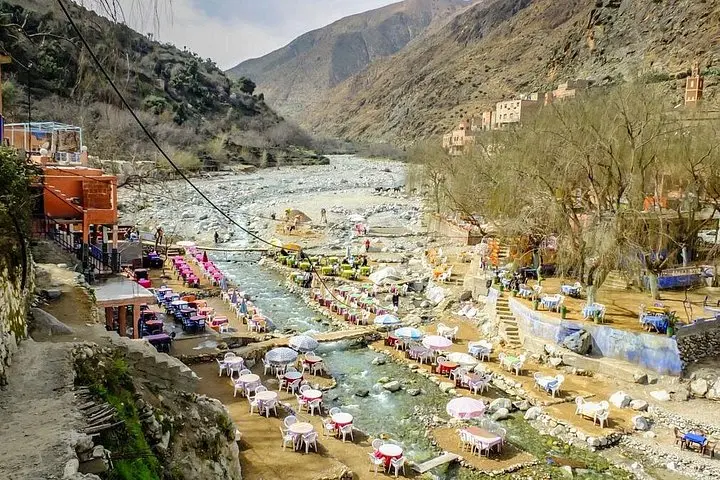
Expect three hours of guided walking and light scrambling around Setti Fatma’s cascades: steep stone tracks, slippery rock near falls, and short ascents with panoramic payoff. Lunch is typically riverside or on a terrace above the valley, offering clear views of Mount Toubkal on the horizon.
Practical edge: start with good footwear, bring at least 1.5–2 liters of water, and layer for temperature swings—sun on the plateau can feel hot while shaded ravines stay cool. Respect private homes if you visit a Berber household and ask before photographing people. The day is paced for varied fitness levels but includes uneven terrain; a local guide keeps transitions steady and points out geology, plants, and cultural details that otherwise disappear from view.
Expect a full day—roughly 7 to 9 hours door-to-door depending on traffic and time spent at stops.
The guided walk to the Ourika waterfalls involves uneven stone tracks and short climbs; it’s moderate and suitable for most people in reasonable shape.
Lunch is typically included at a riverside or terrace restaurant; vegetarian options are commonly available if requested in advance.
Yes—most itineraries include a short visit to a Berber family for mint tea, but always ask before photographing or entering private spaces.
BOOKING LINKS operates guided outdoor trips and adventures with an emphasis on safety, stewardship, and memorable experiences.
You leave Marrakech before sunrise and the red city thins behind you as the road climbs toward the High Atlas. Stone villages appear like punctuation marks on the hills; the air gets cooler and the dammed silhouette of Takerkoust glints below. By midmorning the van threads a narrow valley and the river seems to dare you to follow it upstream toward the Ourika waterfalls.
You leave Marrakech before sunrise and the red city thins behind you as the road climbs toward the High Atlas. Stone villages appear like punctuation marks on the hills; the air gets cooler and the dammed silhouette of Takerkoust glints below. By midmorning the van threads a narrow valley and the river seems to dare you to follow it upstream toward the Ourika waterfalls.
This full-day route moves between geology and culture: eroded volcanic and metamorphic ridges rise to snow-capped peaks of the High Atlas, while terraced slopes and adobe houses reflect centuries of Berber farming. Asni’s market—if your day hits Tuesday—still hums with local trade; pottery workshops keep traditional kilns and hand-turned wares in circulation. Aromatic gardens along the Ourika showcase medicinal plants used in daily life here.
Expect three hours of guided walking and light scrambling around Setti Fatma’s cascades: steep stone tracks, slippery rock near falls, and short ascents with panoramic payoff. Lunch is typically riverside or on a terrace above the valley, offering clear views of Mount Toubkal on the horizon.
Practical edge: start with good footwear, bring at least 1.5–2 liters of water, and layer for temperature swings—sun on the plateau can feel hot while shaded ravines stay cool. Respect private homes if you visit a Berber household and ask before photographing people. The day is paced for varied fitness levels but includes uneven terrain; a local guide keeps transitions steady and points out geology, plants, and cultural details that otherwise disappear from view.