THE ADVENTURE COLLECTIVE® · Independent discovery and booking for outdoor travel

Fly four ziplines and cross two hanging bridges above oak and argan groves, then sit down to a home-cooked Berber lunch and a hands-on argan-oil demo. This seven-hour Atlas Mountains day trip pairs adrenaline with cultural insight, all within an hour’s drive of Marrakech.
Fly four ziplines and cross two hanging bridges above oak and argan groves, then sit down to a home-cooked Berber lunch and a hands-on argan-oil demo. This seven-hour Atlas Mountains day trip pairs adrenaline with cultural insight, all within an hour’s drive of Marrakech.
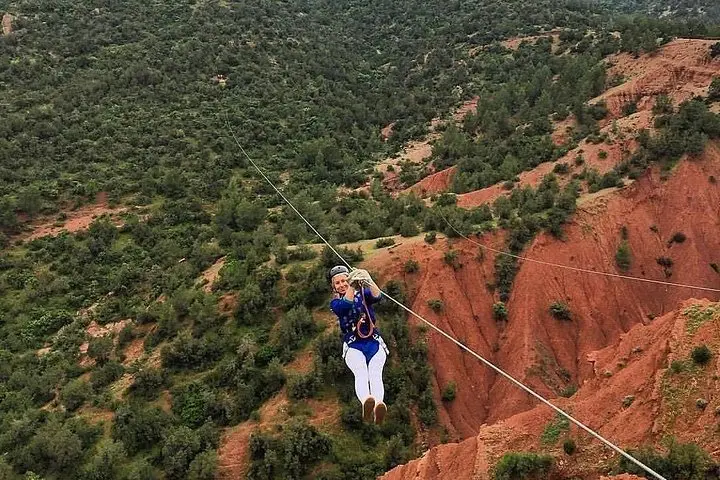
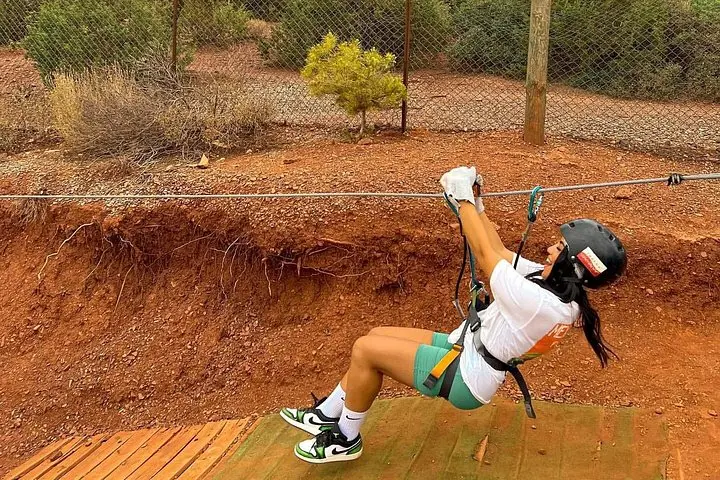
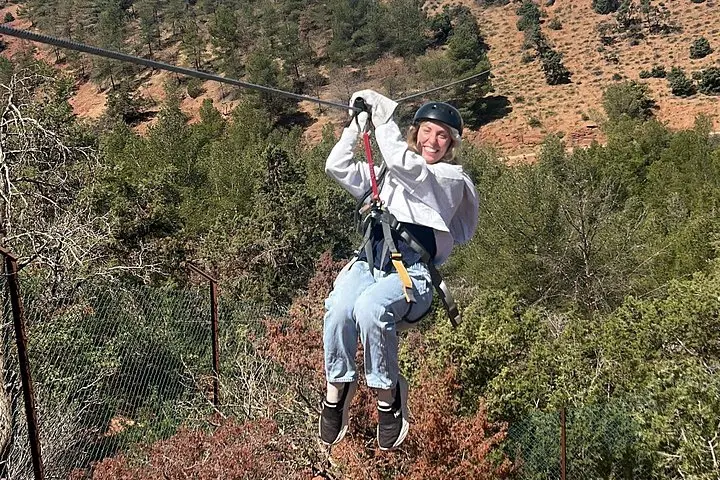
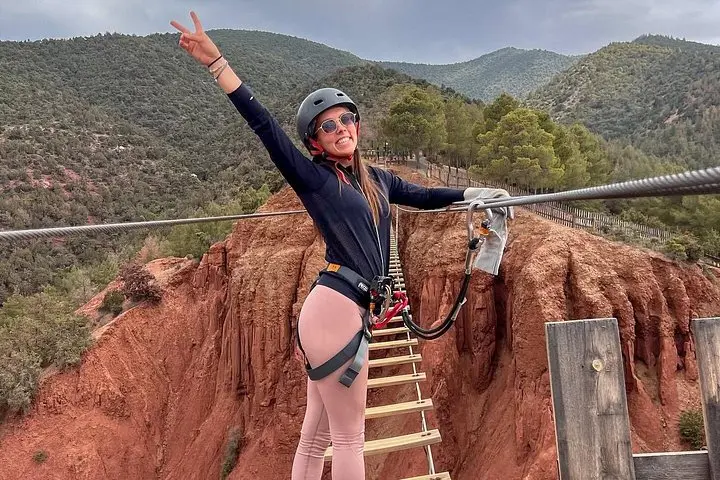
The rope hums before you do. On the platform a guide clips your harness and the valley opens: terraced slopes cutting down toward a narrow ribbon of olive-green, villages clinging to rocky shoulders, and the High Atlas rising like an irregular skyline. You launch — four ziplines stitched together with two swaying hanging bridges — and the wind becomes a conversational partner, pulling at sleeves and daring you forward.
Verified experiences and guided adventures in the surrounding area.
Operated by Atlas Epic Trek · Marrakech, Marrakech-Safi
The rope hums before you do. On the platform a guide clips your harness and the valley opens: terraced slopes cutting down toward a narrow ribbon of olive-green, villages clinging to rocky shoulders, and the High Atlas rising like an irregular skyline. You launch — four ziplines stitched together with two swaying hanging bridges — and the wind becomes a conversational partner, pulling at sleeves and daring you forward.
This seven-hour outing leaves Marrakech behind and climbs into foothills shaped by millennia of erosion and human hands. The geology here is mostly uplifted limestone and schist; winters scoured the ridges into sharp profiles and summers smear the valleys with dry grass. The route threads through lower Atlas oak and argan groves, trees that define both the landscape and local economy.
More than adrenaline, the trip is a cultural cross-section. After the ziplines you’ll travel about an hour to a small Berber village where a family prepares a home-cooked lunch—tagine, fresh bread, seasonal vegetables or meat—served simply and with an unhurried pace that emphasizes hospitality. Nearby, a women’s cooperative demonstrates the old method of hand-cracking argan kernels and pressing oil, an artisanal practice that supports households and preserves a unique ecosystem.
The course itself is approachable but dramatic: four ziplines (the longest stretches 316 meters and glides roughly 120 meters above the ground) plus two hanging bridges that let you feel the valley sway beneath your feet. Professional guides provide a full safety briefing and all equipment; groups are kept small for personal attention.
Practical notes: the full experience runs about seven hours door-to-door with pickup available from most Marrakech hotels; travel time to the base is roughly 45–60 minutes depending on traffic. Wear sturdy closed-toe shoes and layered clothing—mountain mornings are cool, afternoons warm. Bring 1–2 liters of water, sunscreen, and a camera secured with a wrist or chest strap. The operator asks for passenger weight at booking to calibrate safety settings, and the course is not recommended for guests with serious back, heart, or pregnancy-related restrictions.
Timing matters: mornings offer the clearest air and softer light for photos; late afternoon rides return to town as the mountains turn copper. Weather can cancel the activity for safety; check forecasts and have flexible plans. For travelers who want speed and context, combine the zipline with visits to nearby cooperatives and viewpoints that showcase both the raw topography of the Atlas and the quiet, working life of its communities.
On balance the Atlas zipline is a compact, well-rounded mountain day: a physical thrill, a taste of rural Moroccan life, and a window into landscapes that have shaped culture for centuries.
The zipline course includes four lines and two hanging bridges; the longest individual zipline is about 316 meters and sits roughly 120 meters above ground. Expect the full adventure, including transport and village visits, to take about seven hours.
Children and lighter riders are allowed, but operators collect weight at booking to set safety equipment; specific minimums/maximums can vary—check during reservation.
No — a traditional Berber lunch is included after the zipline; bring snacks if you have specific dietary needs, and note vegetarian options when booking.
Yes, professional guides provide a full safety briefing and all harnesses, helmets, and gear used on the course.
The operator may cancel for safety in poor weather; the booking offers a full refund if canceled at least 24 hours in advance or if the operator cancels due to weather.
Yes — pickup from most Marrakech hotels is available; drive time to the zipline base is roughly 45–60 minutes depending on traffic.
Atlas Epic Trek operates guided outdoor trips and adventures with an emphasis on safety, stewardship, and memorable experiences.
The rope hums before you do. On the platform a guide clips your harness and the valley opens: terraced slopes cutting down toward a narrow ribbon of olive-green, villages clinging to rocky shoulders, and the High Atlas rising like an irregular skyline. You launch — four ziplines stitched together with two swaying hanging bridges — and the wind becomes a conversational partner, pulling at sleeves and daring you forward.
The rope hums before you do. On the platform a guide clips your harness and the valley opens: terraced slopes cutting down toward a narrow ribbon of olive-green, villages clinging to rocky shoulders, and the High Atlas rising like an irregular skyline. You launch — four ziplines stitched together with two swaying hanging bridges — and the wind becomes a conversational partner, pulling at sleeves and daring you forward.
This seven-hour outing leaves Marrakech behind and climbs into foothills shaped by millennia of erosion and human hands. The geology here is mostly uplifted limestone and schist; winters scoured the ridges into sharp profiles and summers smear the valleys with dry grass. The route threads through lower Atlas oak and argan groves, trees that define both the landscape and local economy.
More than adrenaline, the trip is a cultural cross-section. After the ziplines you’ll travel about an hour to a small Berber village where a family prepares a home-cooked lunch—tagine, fresh bread, seasonal vegetables or meat—served simply and with an unhurried pace that emphasizes hospitality. Nearby, a women’s cooperative demonstrates the old method of hand-cracking argan kernels and pressing oil, an artisanal practice that supports households and preserves a unique ecosystem.
The course itself is approachable but dramatic: four ziplines (the longest stretches 316 meters and glides roughly 120 meters above the ground) plus two hanging bridges that let you feel the valley sway beneath your feet. Professional guides provide a full safety briefing and all equipment; groups are kept small for personal attention.
Practical notes: the full experience runs about seven hours door-to-door with pickup available from most Marrakech hotels; travel time to the base is roughly 45–60 minutes depending on traffic. Wear sturdy closed-toe shoes and layered clothing—mountain mornings are cool, afternoons warm. Bring 1–2 liters of water, sunscreen, and a camera secured with a wrist or chest strap. The operator asks for passenger weight at booking to calibrate safety settings, and the course is not recommended for guests with serious back, heart, or pregnancy-related restrictions.
Timing matters: mornings offer the clearest air and softer light for photos; late afternoon rides return to town as the mountains turn copper. Weather can cancel the activity for safety; check forecasts and have flexible plans. For travelers who want speed and context, combine the zipline with visits to nearby cooperatives and viewpoints that showcase both the raw topography of the Atlas and the quiet, working life of its communities.
On balance the Atlas zipline is a compact, well-rounded mountain day: a physical thrill, a taste of rural Moroccan life, and a window into landscapes that have shaped culture for centuries.