THE ADVENTURE COLLECTIVE® · Independent discovery and booking for outdoor travel

Leave Marrakech at first light and follow the High Atlas to Telouet’s carved kasbahs and the mud-brick majesty of Ait Ben Haddou. This full-day route mixes dramatic mountain driving with short walks through UNESCO-listed streets and centuries of trade-route history.
Leave Marrakech at first light and follow the High Atlas to Telouet’s carved kasbahs and the mud-brick majesty of Ait Ben Haddou. This full-day route mixes dramatic mountain driving with short walks through UNESCO-listed streets and centuries of trade-route history.
You leave Marrakech before dawn and the road climbs—first through scrub and olive terraces, then into a high, wind-swept world where the Tizi n’Tichka pass dares you to look back. The Atlas unfurls in stony folds; small villages cling to the slopes and the air sharpens as you rise.
Verified experiences and guided adventures in the surrounding area.
Operated by Arwa-Travel · Ait Ben Haddou, Ouarzazate Province
You leave Marrakech before dawn and the road climbs—first through scrub and olive terraces, then into a high, wind-swept world where the Tizi n’Tichka pass dares you to look back. The Atlas unfurls in stony folds; small villages cling to the slopes and the air sharpens as you rise.
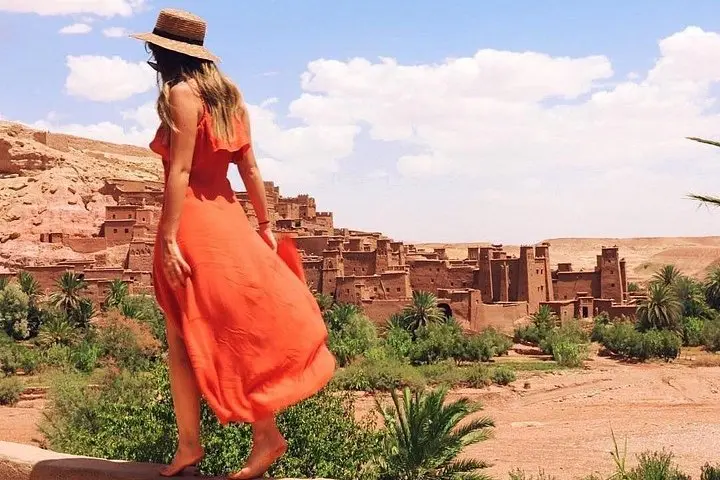
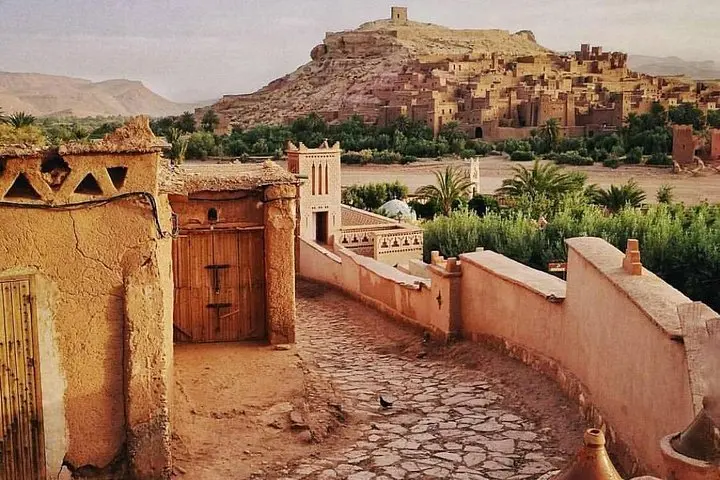
Telouet Kasbah appears like a carved memory: ornate cedar ceilings, stucco details and the history of the Glaoui pashas who once controlled these routes. Geologically, this corridor slices the High Atlas where exposed Jurassic limestone and red sedimentary valleys frame the approach to Ait Ben Haddou. The ksar itself stands on a river terrace of compacted clay—mud-brick houses stacked like stages—and UNESCO protection recognizes its role as a caravan stop between Sahara and the Atlantic.
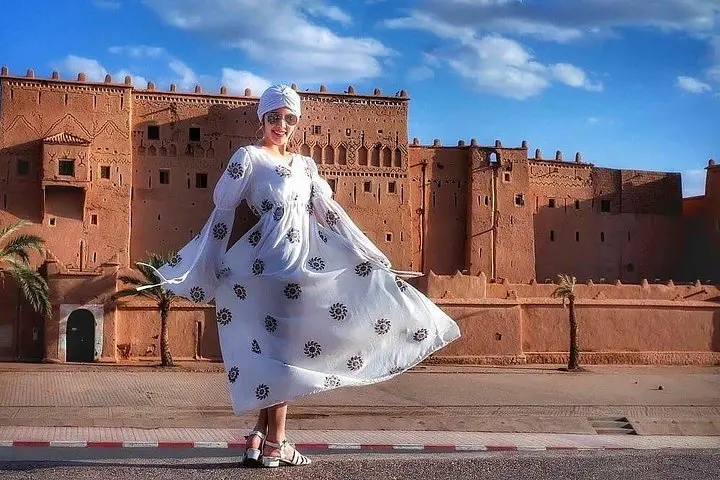
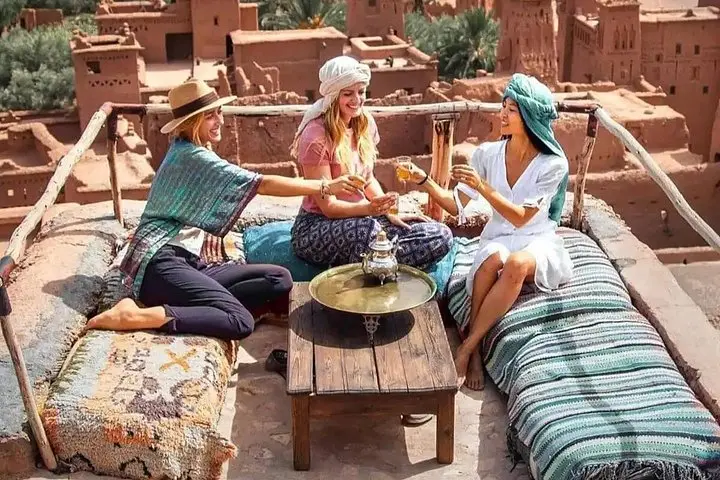
Culture is tactile here: rugs hung to dry, archways scored by centuries of wind, and guides who read old trade routes as easily as maps. Expect narrow alleys, steep stairways and cinematic vistas (the site has doubled for many films).
Practical guidance: wear sturdy shoes for uneven mud-brick paths and bring layers—the pass is cooler than Marrakech. Carry cash for small purchases; local restaurants accept dirham. Hydration matters on long drives; refill a reusable bottle when you stop. Timing is everything: an early departure avoids midday heat and gives better light for photos.
This day tour balances road travel with short, interpretive walks—an efficient way to see high-Atlas geology, living kasbah architecture and the dramatic ksar of Ait Ben Haddou.
The round trip covers roughly 200–250 km and takes about 3–4 hours one way including stops, depending on traffic and weather.
Admission is typically included during guided visits, but small fees for certain sites or optional museum entries may apply—confirm with the operator.
Yes—walks are short but on uneven surfaces; anyone with basic mobility can participate though some narrow steps are involved.
Yes—most itineraries include a sit-down lunch with views over the ksar and time afterward to explore local stalls for crafts and textiles.
Arwa-Travel operates guided outdoor trips and adventures with an emphasis on safety, stewardship, and memorable experiences.
You leave Marrakech before dawn and the road climbs—first through scrub and olive terraces, then into a high, wind-swept world where the Tizi n’Tichka pass dares you to look back. The Atlas unfurls in stony folds; small villages cling to the slopes and the air sharpens as you rise.
You leave Marrakech before dawn and the road climbs—first through scrub and olive terraces, then into a high, wind-swept world where the Tizi n’Tichka pass dares you to look back. The Atlas unfurls in stony folds; small villages cling to the slopes and the air sharpens as you rise.
Telouet Kasbah appears like a carved memory: ornate cedar ceilings, stucco details and the history of the Glaoui pashas who once controlled these routes. Geologically, this corridor slices the High Atlas where exposed Jurassic limestone and red sedimentary valleys frame the approach to Ait Ben Haddou. The ksar itself stands on a river terrace of compacted clay—mud-brick houses stacked like stages—and UNESCO protection recognizes its role as a caravan stop between Sahara and the Atlantic.
Culture is tactile here: rugs hung to dry, archways scored by centuries of wind, and guides who read old trade routes as easily as maps. Expect narrow alleys, steep stairways and cinematic vistas (the site has doubled for many films).
Practical guidance: wear sturdy shoes for uneven mud-brick paths and bring layers—the pass is cooler than Marrakech. Carry cash for small purchases; local restaurants accept dirham. Hydration matters on long drives; refill a reusable bottle when you stop. Timing is everything: an early departure avoids midday heat and gives better light for photos.
This day tour balances road travel with short, interpretive walks—an efficient way to see high-Atlas geology, living kasbah architecture and the dramatic ksar of Ait Ben Haddou.