THE ADVENTURE COLLECTIVE® · Independent discovery and booking for outdoor travel
Move beyond the jungle edge into the ATM Cave — a river-carved cathedral of stalactites and Mayan sacrifice. This guided trip from San Ignacio combines three hours of cave exploration with archaeological storytelling and practical wilderness travel.
Move beyond the jungle edge into the ATM Cave — a river-carved cathedral of stalactites and Mayan sacrifice. This guided trip from San Ignacio combines three hours of cave exploration with archaeological storytelling and practical wilderness travel.
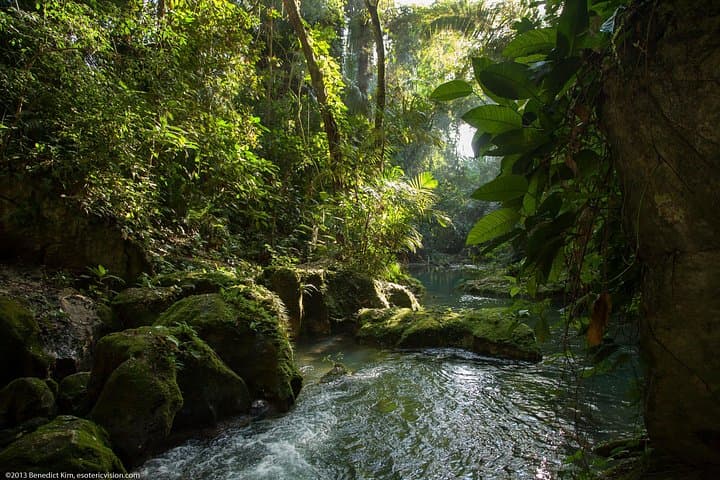
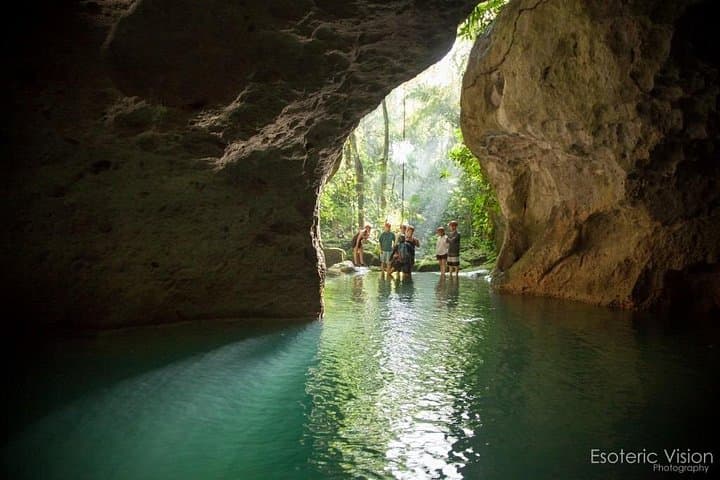
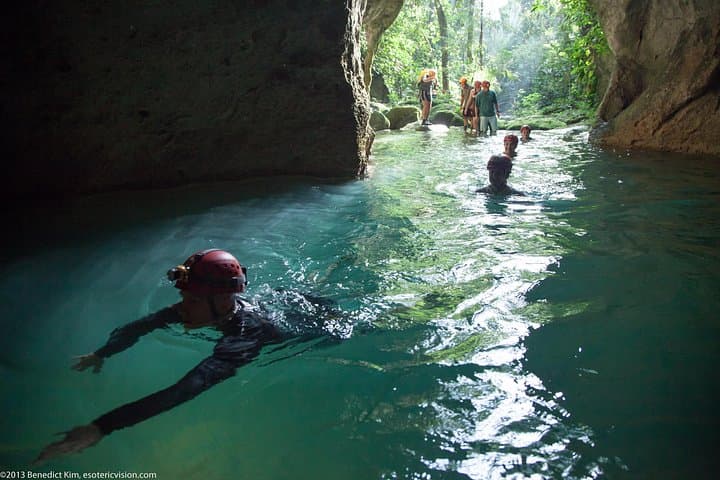
You step through an hourglass of limestone and cool air and the jungle closes behind you like a handshake. A narrow trail drops into a sun-splashed sinkhole, then a stream ushers you into the throat of Actun Tunichil Muknal — the ATM Cave — where the sound of water becomes the cave's language and the passage narrows to the width of your shoulders.
Verified experiences and guided adventures in the surrounding area.
Operated by Tukan Shuttles & Adventures · San Ignacio, Cayo District
You step through an hourglass of limestone and cool air and the jungle closes behind you like a handshake. A narrow trail drops into a sun-splashed sinkhole, then a stream ushers you into the throat of Actun Tunichil Muknal — the ATM Cave — where the sound of water becomes the cave's language and the passage narrows to the width of your shoulders.
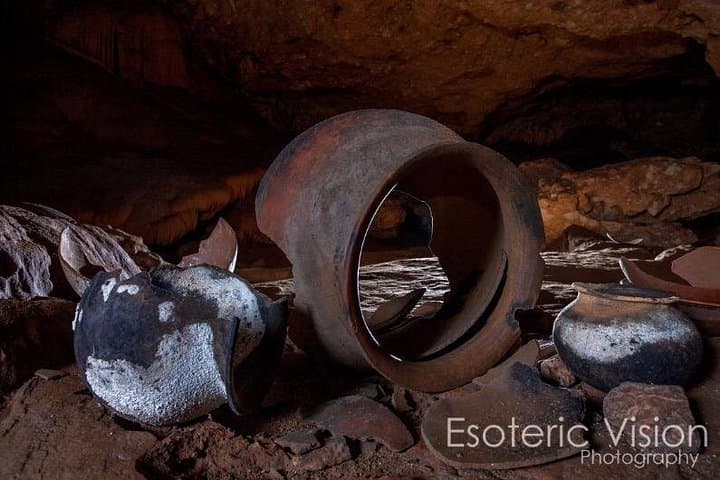
The cave was a place of ceremony for Classic Maya communities. Clay pots, polished stone tools and the skeletal remains of men, women and children lie where they were offered to Chaak, the rain god. Discovered by cavers in 1989, ATM is not only a geological gallery of glittering stalactites and flowstone but an archaeological archive; mineral deposits have crystallized over bone and pottery, creating rooms that feel more like time capsules than tourist stops.
Geologically, ATM is a solution cave carved by a perennial stream. Expect river crossings, waist-deep wades in parts, and chambers where calcite has grown slow and deliberate — fingers of stone reaching from floor to ceiling. Culturally, the cave illustrates how drought and ritual intersected with social collapse: Maya rites shifted deeper into the cave as communities sought rain, leaving behind offerings that now help researchers piece together past belief systems.
Local guides double as stewards and storytellers. They read the cave’s features — pottery sherds near low ceilings, offering platforms beside dry galleries — and orient visitors to the rules: no touching artifacts, no flash photography in sensitive chambers, and move deliberately to preserve fragile formations.
Practical guidance: the full experience takes most of the day (allow 6–8 hours including transport from San Ignacio). The cave section itself lasts roughly three hours and requires moderate fitness, good balance and comfort with confined, wet environments. You’ll be wading, climbing over slick rock and occasionally crawling through low passages. Guides provide helmets and headlamps; a life vest is optional but recommended for weaker swimmers.
Plan for humidity and mud: quick-dry clothing, water shoes with ankle support, and a small dry bag for electronics are essential. Bring water and expect to get wet — phones in pockets will not survive unless stashed in waterproof cases.
Conservation is part of the visit. ATM is a protected site with limitations on group size to reduce impact; follow your guide’s instructions and photography rules. Outside the cave, consider pairing the trip with nearby Cahal Pech ruins or a canoe trip on Barton Creek to round out a day steeped in Belizean history and limestone country.
By the time you emerge, the light feels different — the jungle's green sharpened after the cave’s monochrome hush. The trip is physically exacting, quietly solemn and unmistakably memorable: a walk through water and time that asks only for respect in return.
The guided cave exploration is about three hours; the full tour including transport from San Ignacio typically takes 6–8 hours.
You’ll wade and float in a perennial stream; full swimming is rare but comfort in waist-deep water is necessary.
Children can participate if they are steady walkers and comfortable with water and confined spaces; minimum age and fitness requirements vary by operator — check when booking.
Photography is allowed in most areas but flash or tripods may be restricted in sensitive chambers to protect artifacts and calcite deposits — follow your guide’s instructions.
Yes — helmets and headlamps are provided; life vests may be available on request for weaker swimmers.
Bring water and a light snack; lunch is often included on full-day tours, but packing water and electrolytes is recommended for the humid trek.
Tukan Shuttles & Adventures operates guided outdoor trips and adventures with an emphasis on safety, stewardship, and memorable experiences.
You step through an hourglass of limestone and cool air and the jungle closes behind you like a handshake. A narrow trail drops into a sun-splashed sinkhole, then a stream ushers you into the throat of Actun Tunichil Muknal — the ATM Cave — where the sound of water becomes the cave's language and the passage narrows to the width of your shoulders.
You step through an hourglass of limestone and cool air and the jungle closes behind you like a handshake. A narrow trail drops into a sun-splashed sinkhole, then a stream ushers you into the throat of Actun Tunichil Muknal — the ATM Cave — where the sound of water becomes the cave's language and the passage narrows to the width of your shoulders.
The cave was a place of ceremony for Classic Maya communities. Clay pots, polished stone tools and the skeletal remains of men, women and children lie where they were offered to Chaak, the rain god. Discovered by cavers in 1989, ATM is not only a geological gallery of glittering stalactites and flowstone but an archaeological archive; mineral deposits have crystallized over bone and pottery, creating rooms that feel more like time capsules than tourist stops.
Geologically, ATM is a solution cave carved by a perennial stream. Expect river crossings, waist-deep wades in parts, and chambers where calcite has grown slow and deliberate — fingers of stone reaching from floor to ceiling. Culturally, the cave illustrates how drought and ritual intersected with social collapse: Maya rites shifted deeper into the cave as communities sought rain, leaving behind offerings that now help researchers piece together past belief systems.
Local guides double as stewards and storytellers. They read the cave’s features — pottery sherds near low ceilings, offering platforms beside dry galleries — and orient visitors to the rules: no touching artifacts, no flash photography in sensitive chambers, and move deliberately to preserve fragile formations.
Practical guidance: the full experience takes most of the day (allow 6–8 hours including transport from San Ignacio). The cave section itself lasts roughly three hours and requires moderate fitness, good balance and comfort with confined, wet environments. You’ll be wading, climbing over slick rock and occasionally crawling through low passages. Guides provide helmets and headlamps; a life vest is optional but recommended for weaker swimmers.
Plan for humidity and mud: quick-dry clothing, water shoes with ankle support, and a small dry bag for electronics are essential. Bring water and expect to get wet — phones in pockets will not survive unless stashed in waterproof cases.
Conservation is part of the visit. ATM is a protected site with limitations on group size to reduce impact; follow your guide’s instructions and photography rules. Outside the cave, consider pairing the trip with nearby Cahal Pech ruins or a canoe trip on Barton Creek to round out a day steeped in Belizean history and limestone country.
By the time you emerge, the light feels different — the jungle's green sharpened after the cave’s monochrome hush. The trip is physically exacting, quietly solemn and unmistakably memorable: a walk through water and time that asks only for respect in return.
