THE ADVENTURE COLLECTIVE® · Independent discovery and booking for outdoor travel

Race across the sandy rims of the Giza Plateau on a one-hour quad biking loop with pyramid views. This half-day trip combines guided history, a short camel panorama, and high-adrenaline desert riding near Cairo.
Race across the sandy rims of the Giza Plateau on a one-hour quad biking loop with pyramid views. This half-day trip combines guided history, a short camel panorama, and high-adrenaline desert riding near Cairo.
The minivan eases onto the dry track and the pyramids grow larger — blunt stone edges against an open sky while wind-formed dunes dare you to push faster. After a short briefing on the plateau, you mount an ATV and feel the desert answer under throttle: sand skims back, a spray of dust, and the Sphinx watching from its carved perch.
Verified experiences and guided adventures in the surrounding area.
Operated by Ohh Egypt · Giza, Cairo Governorate
The minivan eases onto the dry track and the pyramids grow larger — blunt stone edges against an open sky while wind-formed dunes dare you to push faster. After a short briefing on the plateau, you mount an ATV and feel the desert answer under throttle: sand skims back, a spray of dust, and the Sphinx watching from its carved perch.
This stretch of the Giza Plateau has been a funerary landscape since Egypt’s Old Kingdom; the pyramids are tombs of kings and markers of ancient geometry set on limestone bedrock overlain by wind-blown sands. Geologically it’s a boundless interface — exposed bedrock, loose aeolian sand, and occasional calcite nodules — that makes for fast, changeable terrain.
Culturally the area is active: local guides interpret hieroglyphs and point to the Solar Boat Museum and quieter lookout points away from the main crowds. ATV operators typically run designated tracks to avoid sensitive archaeological spots; staying on those routes protects subsurface heritage.
Practical guidance: rides usually last one hour on the quad but expect a half-day booking that includes pickup, a short camel panorama, and return. Wear closed-toe shoes and long pants to shield from sand, bring sunglasses and a buff for dust, and drink plenty of water before and after the ride. Listen closely to the safety briefing — quick throttle responses and soft sand can surprise even experienced riders.
Timing matters: early morning light gives better photos and cooler sand; late afternoon brings dramatic shadows across the pyramid faces. Respect boundaries, ride within your skill level, and you’ll leave with desert grit in your boot treads and a sharper sense of place.
No—operators provide a safety briefing and basic instruction; however, riders should be comfortable with throttle control and balance.
Minimum age is typically 13 years; policies may vary so confirm with the operator at booking.
Yes, standard protective gear including helmets is provided; you may bring your own goggles or gloves for extra comfort.
Rides offer excellent pyramid views from the plateau edge, but guides and operators avoid protected archaeological zones to prevent damage.
Ohh Egypt operates guided outdoor trips and adventures with an emphasis on safety, stewardship, and memorable experiences.
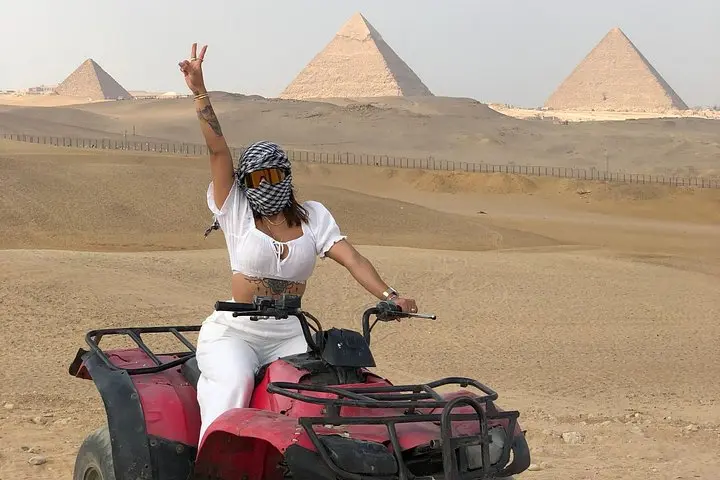
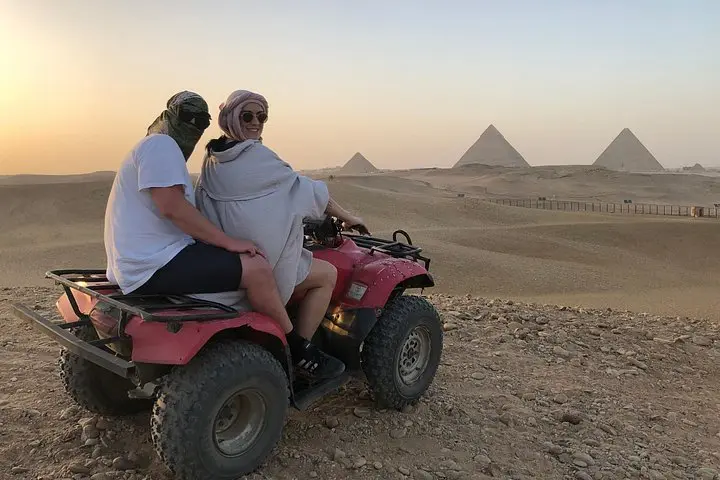
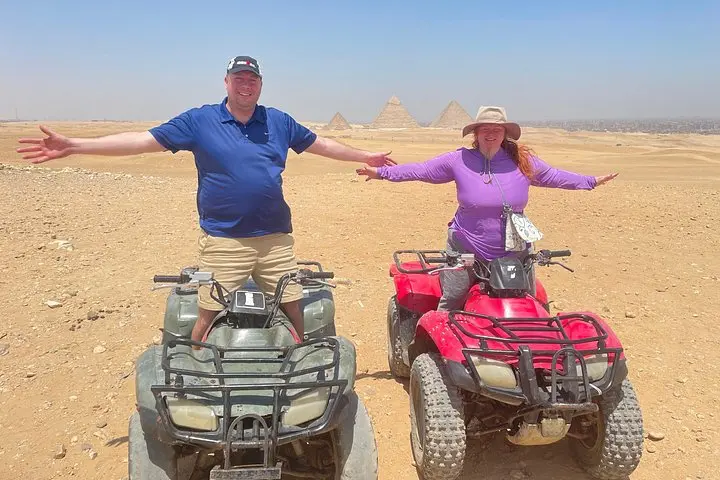
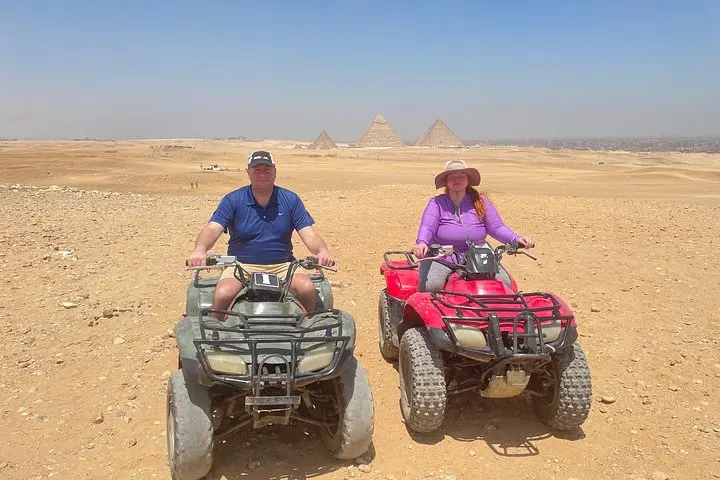
The minivan eases onto the dry track and the pyramids grow larger — blunt stone edges against an open sky while wind-formed dunes dare you to push faster. After a short briefing on the plateau, you mount an ATV and feel the desert answer under throttle: sand skims back, a spray of dust, and the Sphinx watching from its carved perch.
The minivan eases onto the dry track and the pyramids grow larger — blunt stone edges against an open sky while wind-formed dunes dare you to push faster. After a short briefing on the plateau, you mount an ATV and feel the desert answer under throttle: sand skims back, a spray of dust, and the Sphinx watching from its carved perch.
This stretch of the Giza Plateau has been a funerary landscape since Egypt’s Old Kingdom; the pyramids are tombs of kings and markers of ancient geometry set on limestone bedrock overlain by wind-blown sands. Geologically it’s a boundless interface — exposed bedrock, loose aeolian sand, and occasional calcite nodules — that makes for fast, changeable terrain.
Culturally the area is active: local guides interpret hieroglyphs and point to the Solar Boat Museum and quieter lookout points away from the main crowds. ATV operators typically run designated tracks to avoid sensitive archaeological spots; staying on those routes protects subsurface heritage.
Practical guidance: rides usually last one hour on the quad but expect a half-day booking that includes pickup, a short camel panorama, and return. Wear closed-toe shoes and long pants to shield from sand, bring sunglasses and a buff for dust, and drink plenty of water before and after the ride. Listen closely to the safety briefing — quick throttle responses and soft sand can surprise even experienced riders.
Timing matters: early morning light gives better photos and cooler sand; late afternoon brings dramatic shadows across the pyramid faces. Respect boundaries, ride within your skill level, and you’ll leave with desert grit in your boot treads and a sharper sense of place.