THE ADVENTURE COLLECTIVE® · Independent discovery and booking for outdoor travel

Drive an ATV from Urubamba across Sacred Valley trails to the concentric Inca terraces of Moray and the centuries-old salt pools of Maras. This five-hour ride mixes hands-on adventure with cultural and geological insights at high altitude.
Drive an ATV from Urubamba across Sacred Valley trails to the concentric Inca terraces of Moray and the centuries-old salt pools of Maras. This five-hour ride mixes hands-on adventure with cultural and geological insights at high altitude.
Sunlight cuts across high-altitude fields as you kick an ATV into life and the Sacred Valley opens like a map under your wheels. Dust lifts behind the group while the wind seems to push you toward a ringed bowl of terraces at Moray — an Inca agricultural laboratory that looks engineered by the landscape itself — then onward to the glittering grid of salt ponds at Maras.
Verified experiences and guided adventures in the surrounding area.
Operated by Machupicchu Nice · Urubamba, Cusco
Sunlight cuts across high-altitude fields as you kick an ATV into life and the Sacred Valley opens like a map under your wheels. Dust lifts behind the group while the wind seems to push you toward a ringed bowl of terraces at Moray — an Inca agricultural laboratory that looks engineered by the landscape itself — then onward to the glittering grid of salt ponds at Maras.
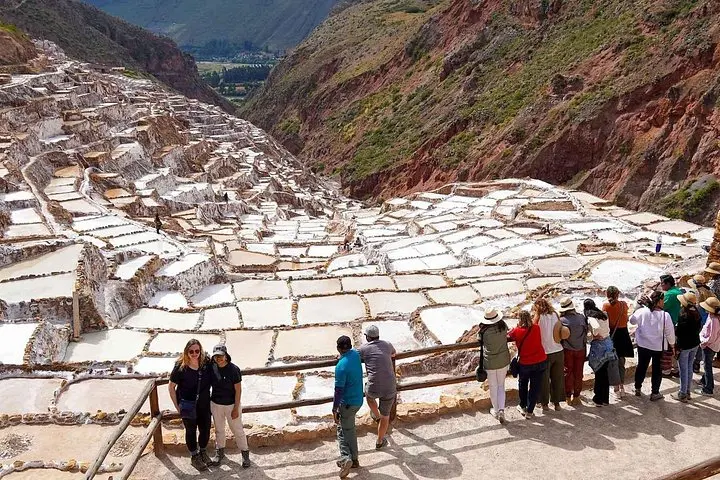
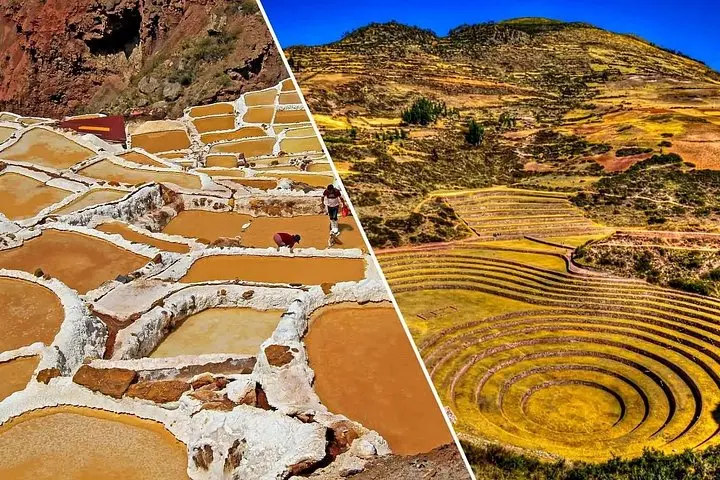
Moray’s concentric terraces reveal deliberate microclimates: circular benches that the Incas used to experiment with crops at varying temperatures. The geology here is steeped in uplifted sedimentary layers and eroding volcanic soils; near Maras, a saline spring has been channeled for centuries into hundreds of shallow evaporation pans still harvested by local families using ancestral techniques.
Culturally, the route threads small Andean communities where Quechua remains common and salt is both livelihood and heritage. Guides typically pause at viewpoints for context and photos, and the itinerary usually runs about five hours with roughly 20–40 km of mixed dirt trails and minor paved stretches.
Practicalities: expect altitudes between ~2,800–3,600 m — pace yourself, hydrate, and allow time for brief acclimatization. Helmets and a short safety briefing are standard; entrance fees to archaeological sites aren’t always included, so bring cash. Aim for morning departures in the wet season to avoid afternoon showers. Sturdy closed-toe shoes, layered clothing for sun and wind, and a small daypack will make the day comfortable. This ride blends speed, history, and wide-open Andean perspectives into a compact, memorable loop.
No — most tours provide a safety briefing and short practice run; basic coordination and comfort with a throttle and brakes are helpful.
Often they are not included; bring local currency to cover entrance fees and small purchases from vendors.
Age and height limits vary by operator; many require riders to be at least 16 and tall enough to reach handlebars and footrests—check during booking.
The tour is generally safe for healthy travelers, but altitude can cause breathlessness or headaches—acclimatize in Cusco or Urubamba and inform guides of any conditions.
Machupicchu Nice operates guided outdoor trips and adventures with an emphasis on safety, stewardship, and memorable experiences.
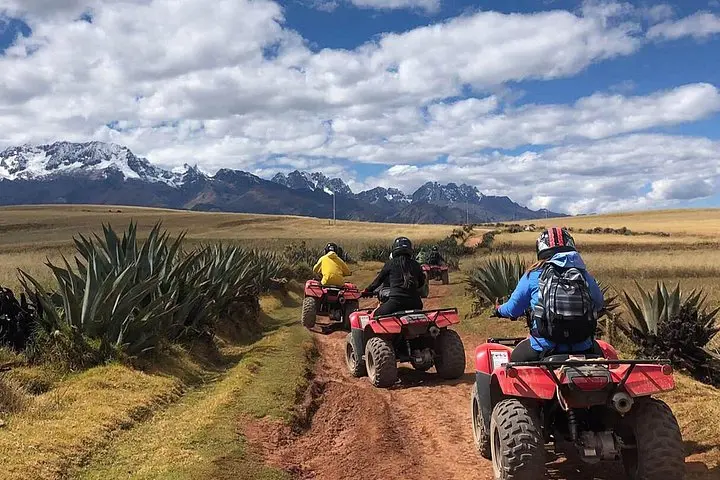
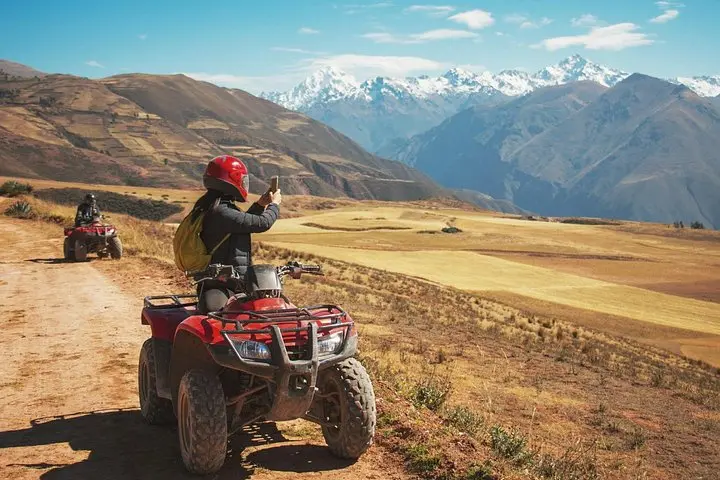
Sunlight cuts across high-altitude fields as you kick an ATV into life and the Sacred Valley opens like a map under your wheels. Dust lifts behind the group while the wind seems to push you toward a ringed bowl of terraces at Moray — an Inca agricultural laboratory that looks engineered by the landscape itself — then onward to the glittering grid of salt ponds at Maras.
Sunlight cuts across high-altitude fields as you kick an ATV into life and the Sacred Valley opens like a map under your wheels. Dust lifts behind the group while the wind seems to push you toward a ringed bowl of terraces at Moray — an Inca agricultural laboratory that looks engineered by the landscape itself — then onward to the glittering grid of salt ponds at Maras.
Moray’s concentric terraces reveal deliberate microclimates: circular benches that the Incas used to experiment with crops at varying temperatures. The geology here is steeped in uplifted sedimentary layers and eroding volcanic soils; near Maras, a saline spring has been channeled for centuries into hundreds of shallow evaporation pans still harvested by local families using ancestral techniques.
Culturally, the route threads small Andean communities where Quechua remains common and salt is both livelihood and heritage. Guides typically pause at viewpoints for context and photos, and the itinerary usually runs about five hours with roughly 20–40 km of mixed dirt trails and minor paved stretches.
Practicalities: expect altitudes between ~2,800–3,600 m — pace yourself, hydrate, and allow time for brief acclimatization. Helmets and a short safety briefing are standard; entrance fees to archaeological sites aren’t always included, so bring cash. Aim for morning departures in the wet season to avoid afternoon showers. Sturdy closed-toe shoes, layered clothing for sun and wind, and a small daypack will make the day comfortable. This ride blends speed, history, and wide-open Andean perspectives into a compact, memorable loop.