THE ADVENTURE COLLECTIVE® · Independent discovery and booking for outdoor travel

Throttle up above the Sacred Valley and cut between Inca terraces, ancient salt pans and highland lagoons. This half-day ATV circuit from Cusco blends controlled off-road thrills with culture, geology and practical tips for riding at altitude.
Throttle up above the Sacred Valley and cut between Inca terraces, ancient salt pans and highland lagoons. This half-day ATV circuit from Cusco blends controlled off-road thrills with culture, geology and practical tips for riding at altitude.
A wind-scoured track peels away from the paved road and the quad’s rumble answers the valley. Riders settle into the Honda 250s as the Andes open—stepped terraces slide past on one side, salt pans glitter like a patchwork jewel on the other, and blue high-altitude lagoons sit quiet in bowls carved by tectonics and time.
Verified experiences and guided adventures in the surrounding area.
Operated by Sakura Expedition · Cusco, Cusco
A wind-scoured track peels away from the paved road and the quad’s rumble answers the valley. Riders settle into the Honda 250s as the Andes open—stepped terraces slide past on one side, salt pans glitter like a patchwork jewel on the other, and blue high-altitude lagoons sit quiet in bowls carved by tectonics and time.
The route threads near Moray’s concentric agricultural terraces—engineers of Inca agronomy—and past the pre-Inca salt pans of Maras, where local families still harvest saline deposits by hand. Geologically the area is a mix of volcanic soils and uplifted river terraces; the lagoons occupy closed basins fed by mountain runoff and springs. Culturally the ride crosses Quechua communities whose tolls and access rules support local infrastructure, so expect small entry fees and the chance to buy snacks or artisan goods.
Practically: the full outing runs about 6–7 hours from Cusco with roughly 2–3 hours on quad bikes and an hour drive each way. Altitudes sit around 3,300–3,600 m, so acclimatization matters more than technical driving skill—the quads are automatic/semi-automatic and operators give a 15-minute practice and helmet. Bring cash for community fees, wear closed-toe shoes, and layer for sun and sharp afternoon winds. Avoid heavy rain in the wet season (Dec–Mar), when trails turn to slick clay.
This tour balances adrenaline and landscape study: it’s an efficient way to see Moray’s terraces, Maras’ salt pans, and the highland lagoons while learning about local land use, geology, and living traditions. Plan for altitude, respect community rules, and leave no trace on fragile puna soils.
No—quads are automatic/semi-automatic and guides provide a briefing plus a short practice; basic comfort with throttle and brakes is sufficient.
Yes—operators supply helmets and a security team; bring sunglasses and gloves for extra comfort.
No—entrances to Moray, Maras and some lagoons, plus community tolls, are usually excluded and paid on site in cash.
Operators cancel for unsafe weather; heavy rain creates hazardous, muddy tracks and tours are often rescheduled or refunded per policy.
Sakura Expedition operates guided outdoor trips and adventures with an emphasis on safety, stewardship, and memorable experiences.
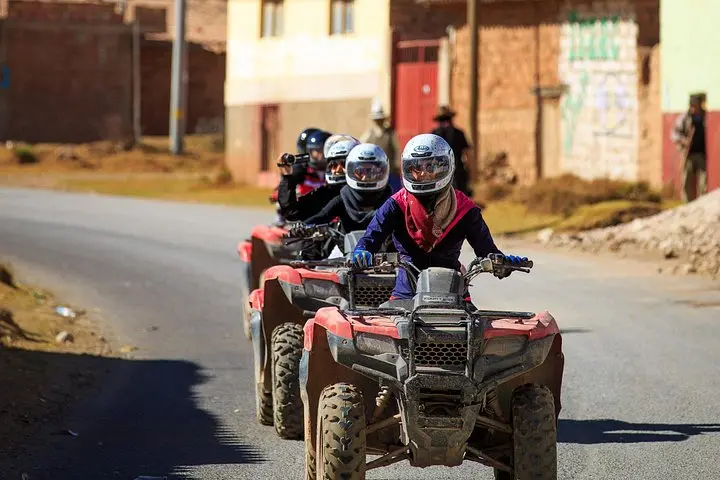
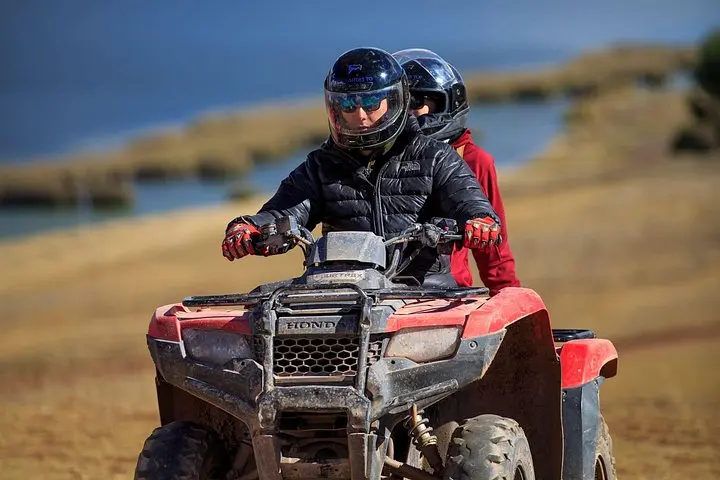
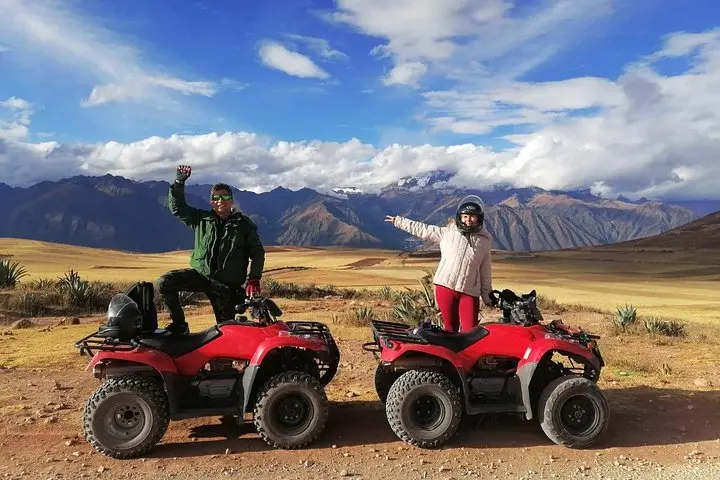
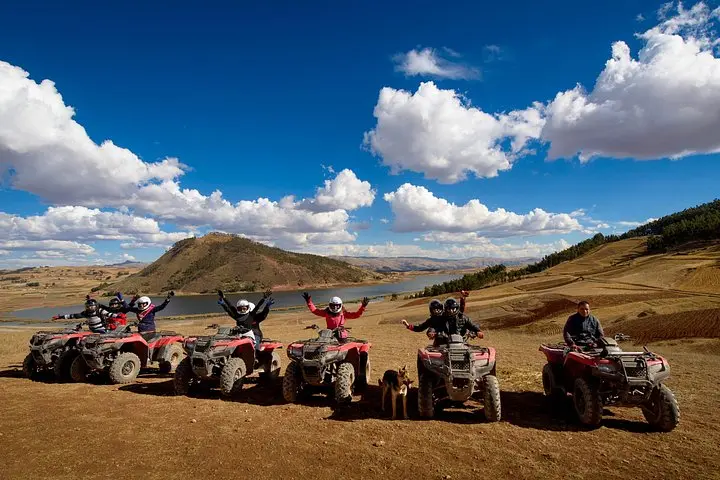
A wind-scoured track peels away from the paved road and the quad’s rumble answers the valley. Riders settle into the Honda 250s as the Andes open—stepped terraces slide past on one side, salt pans glitter like a patchwork jewel on the other, and blue high-altitude lagoons sit quiet in bowls carved by tectonics and time.
A wind-scoured track peels away from the paved road and the quad’s rumble answers the valley. Riders settle into the Honda 250s as the Andes open—stepped terraces slide past on one side, salt pans glitter like a patchwork jewel on the other, and blue high-altitude lagoons sit quiet in bowls carved by tectonics and time.
The route threads near Moray’s concentric agricultural terraces—engineers of Inca agronomy—and past the pre-Inca salt pans of Maras, where local families still harvest saline deposits by hand. Geologically the area is a mix of volcanic soils and uplifted river terraces; the lagoons occupy closed basins fed by mountain runoff and springs. Culturally the ride crosses Quechua communities whose tolls and access rules support local infrastructure, so expect small entry fees and the chance to buy snacks or artisan goods.
Practically: the full outing runs about 6–7 hours from Cusco with roughly 2–3 hours on quad bikes and an hour drive each way. Altitudes sit around 3,300–3,600 m, so acclimatization matters more than technical driving skill—the quads are automatic/semi-automatic and operators give a 15-minute practice and helmet. Bring cash for community fees, wear closed-toe shoes, and layer for sun and sharp afternoon winds. Avoid heavy rain in the wet season (Dec–Mar), when trails turn to slick clay.
This tour balances adrenaline and landscape study: it’s an efficient way to see Moray’s terraces, Maras’ salt pans, and the highland lagoons while learning about local land use, geology, and living traditions. Plan for altitude, respect community rules, and leave no trace on fragile puna soils.