THE ADVENTURE COLLECTIVE® · Independent discovery and booking for outdoor travel

Drive from Antigua or Guatemala City to Pacaya and trade roads for black lava fields aboard an ATV. This guided run offers close-up volcanic terrain, sweeping valley views, and short walks on cooled flows — all without a steep climb.
Drive from Antigua or Guatemala City to Pacaya and trade roads for black lava fields aboard an ATV. This guided run offers close-up volcanic terrain, sweeping valley views, and short walks on cooled flows — all without a steep climb.
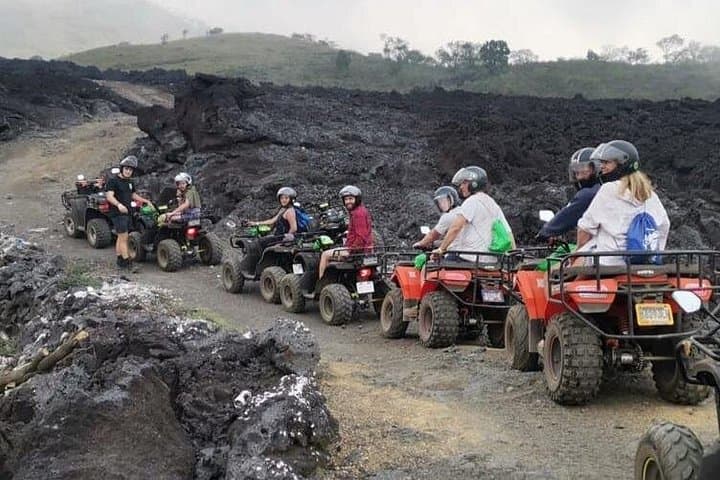
You kick gravel under a highland sky and the ATVs hum awake — a train of machines threading toward Pacaya’s black armor.
Verified experiences and guided adventures in the surrounding area.
Operated by Guate Tours by Nelson. · San Vicente Pacaya, Escuintla
You kick gravel under a highland sky and the ATVs hum awake — a train of machines threading toward Pacaya’s black armor.
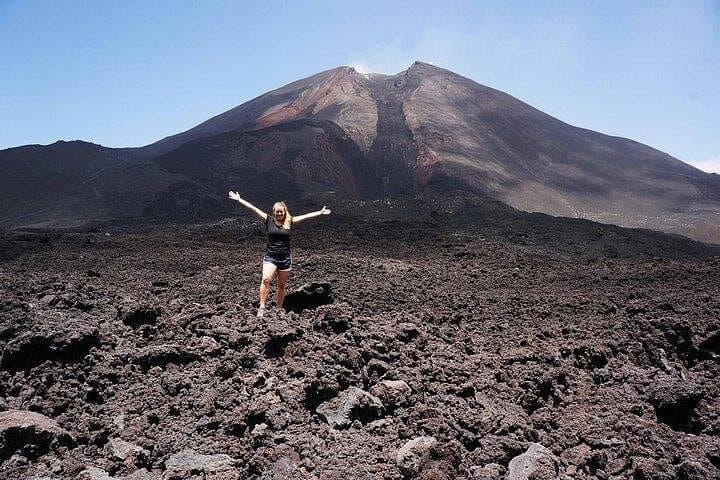
Pacaya sits on the southern edge of the Guatemalan highlands, a compact, frequently active volcano whose recent eruptions have reworked slopes into jagged lava fields and low, glassy flows. The route from Antigua or Guatemala City is short by Central American standards: roughly an hour’s drive to Pacaya National Park, then a guided ATV run over cooled ʻaʻā and pahoehoe ribbons that dare you to pick your line.
Geology here is blunt and immediate: young basalt, fresh vents, and a landscape still being built by molten rock. The volcano is part of the Central American Volcanic Arc and has been erupting intermittently for decades, shaping local farming communities and the view from Antigua toward the south.
Culturally, the run threads past coffee farms and village life; local guides share practical knowledge about safe approach zones and where to pause for views of Agua and Fuego. Expect wind-carved rocks, scattered pine, and the scent of volcanic dust that clings to clothing.
Practical guidance: this experience blends motorized riding with short walks at altitude (Pacaya summit ~2,552 m). Wear closed-toe shoes, layers for wind, sun protection, and a securely fastened helmet. Stay with your guide, watch for loose lava rock, and pack water — the highland sun and exertion dehydrate quickly. For photographers, the best light comes early or late; mid-day brings stronger winds and dust. Follow park rules, respect closures, and let the volcano feel like a live landscape rather than a backdrop.
Expect about 1 hour driving from Antigua or Guatemala City each way; the guided ATV experience and short walks last roughly 2–4 hours depending on conditions.
This activity is not recommended for pregnant travelers or those with serious back or cardiovascular conditions; consult the operator if you have concerns.
No formal license is required, but basic ATV handling experience or confidence on uneven surfaces is recommended—guides provide instruction.
Typical inclusions are hotel pickup, round-trip transport, ATV rental, bottled water, park entrance fee, and a guide; confirm details with the operator before booking.
Guate Tours by Nelson. operates guided outdoor trips and adventures with an emphasis on safety, stewardship, and memorable experiences.

You kick gravel under a highland sky and the ATVs hum awake — a train of machines threading toward Pacaya’s black armor.
You kick gravel under a highland sky and the ATVs hum awake — a train of machines threading toward Pacaya’s black armor.
Pacaya sits on the southern edge of the Guatemalan highlands, a compact, frequently active volcano whose recent eruptions have reworked slopes into jagged lava fields and low, glassy flows. The route from Antigua or Guatemala City is short by Central American standards: roughly an hour’s drive to Pacaya National Park, then a guided ATV run over cooled ʻaʻā and pahoehoe ribbons that dare you to pick your line.
Geology here is blunt and immediate: young basalt, fresh vents, and a landscape still being built by molten rock. The volcano is part of the Central American Volcanic Arc and has been erupting intermittently for decades, shaping local farming communities and the view from Antigua toward the south.
Culturally, the run threads past coffee farms and village life; local guides share practical knowledge about safe approach zones and where to pause for views of Agua and Fuego. Expect wind-carved rocks, scattered pine, and the scent of volcanic dust that clings to clothing.
Practical guidance: this experience blends motorized riding with short walks at altitude (Pacaya summit ~2,552 m). Wear closed-toe shoes, layers for wind, sun protection, and a securely fastened helmet. Stay with your guide, watch for loose lava rock, and pack water — the highland sun and exertion dehydrate quickly. For photographers, the best light comes early or late; mid-day brings stronger winds and dust. Follow park rules, respect closures, and let the volcano feel like a live landscape rather than a backdrop.