THE ADVENTURE COLLECTIVE® · Independent discovery and booking for outdoor travel

Hit the sand around the Giza Plateau on an ATV and see the pyramids from a raw, kinetic perspective. This short guided ride balances adrenaline with easy logistics—hotel pickup and bottled water included.
Hit the sand around the Giza Plateau on an ATV and see the pyramids from a raw, kinetic perspective. This short guided ride balances adrenaline with easy logistics—hotel pickup and bottled water included.
The engine hums and sand rises in a thin cloud as a line of ATVs threads across the edge of the Giza Plateau. From the saddle you have a clear, unobstructed view of the pyramids—massive, geometric silhouettes against the flat desert—while wind and grit punctuate each turn. Guides keep the group together; cameras click. The ride moves fast enough to feel elemental, slow enough to take in the scale.
Verified experiences and guided adventures in the surrounding area.
Operated by Emo Tours Swiss · Giza, Giza Governorate
The engine hums and sand rises in a thin cloud as a line of ATVs threads across the edge of the Giza Plateau. From the saddle you have a clear, unobstructed view of the pyramids—massive, geometric silhouettes against the flat desert—while wind and grit punctuate each turn. Guides keep the group together; cameras click. The ride moves fast enough to feel elemental, slow enough to take in the scale.
The Giza Plateau is a Pleistocene limestone outcrop rimmed by wind-blown sand; the pyramids themselves date to the Fourth Dynasty (c. 2600–2500 BCE), monuments built atop a bedrock that made them visible for millennia. The surrounding landscape is Sahara fringe: loose sand, occasional scrub, and exposed limestone ridges worn by centuries of wind. Local culture channels centuries of trade and caravan routes; vendors and camel handlers operate near the tourist perimeter but the ATV route stays in less trafficked sandy tracks.
Practical guidance: the advertised product is a short, guided ride — expect roughly 45–60 minutes of actual ATV time within a 1–2 hour door-to-door window. Terrain is sandy and uneven with low rises; elevation change is negligible but traction can be loose. Wear closed-toe shoes, sunglasses, and a dust buff; sunscreen and layered clothing are essential. Follow guide instructions, keep distance between vehicles, and secure cameras — guides often help photograph key angles. Hotel pickup and bottled water are typically provided. Avoid ATVing over archaeological features and respect restricted zones to help preserve the site. Early morning or late afternoon runs are cooler and give the best light on the pyramids.
The advertised package runs about 45–60 minutes of ATV time; total trip window is commonly 1–2 hours including pickup and transfers.
Not recommended for pregnant travelers, people with serious back/neck or heart conditions; operators may set a minimum driving age—check at booking.
No formal experience is required; guides provide instruction and supervise. Basic balance and the ability to follow directions are necessary.
Routes run on the plateau and desert fringe offering strong views, but ATV operators avoid protected archaeological zones—close-up access is limited to preserve the site.
Emo Tours Swiss operates guided outdoor trips and adventures with an emphasis on safety, stewardship, and memorable experiences.
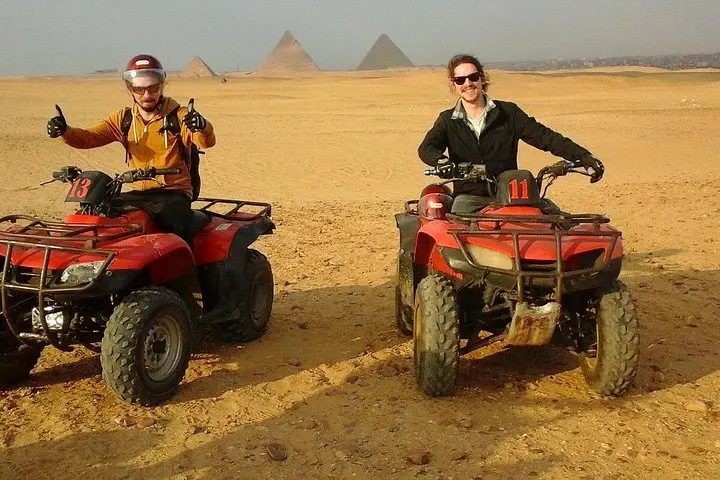
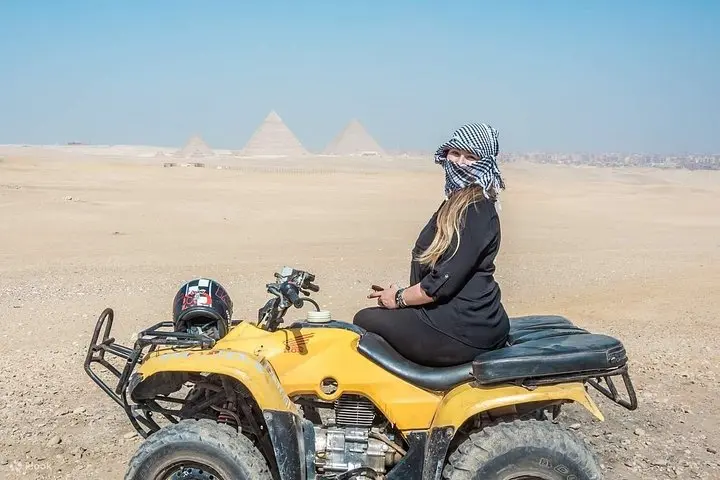
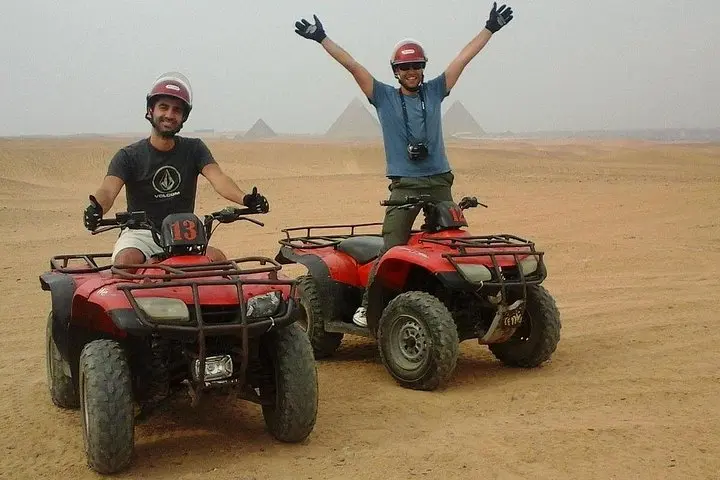
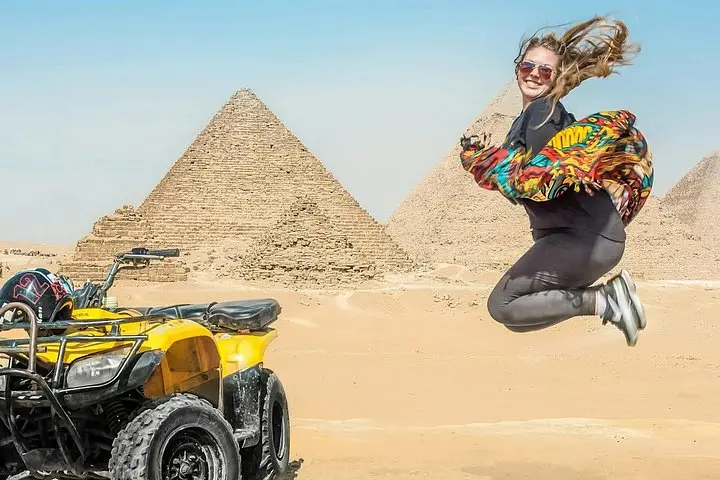
The engine hums and sand rises in a thin cloud as a line of ATVs threads across the edge of the Giza Plateau. From the saddle you have a clear, unobstructed view of the pyramids—massive, geometric silhouettes against the flat desert—while wind and grit punctuate each turn. Guides keep the group together; cameras click. The ride moves fast enough to feel elemental, slow enough to take in the scale.
The engine hums and sand rises in a thin cloud as a line of ATVs threads across the edge of the Giza Plateau. From the saddle you have a clear, unobstructed view of the pyramids—massive, geometric silhouettes against the flat desert—while wind and grit punctuate each turn. Guides keep the group together; cameras click. The ride moves fast enough to feel elemental, slow enough to take in the scale.
The Giza Plateau is a Pleistocene limestone outcrop rimmed by wind-blown sand; the pyramids themselves date to the Fourth Dynasty (c. 2600–2500 BCE), monuments built atop a bedrock that made them visible for millennia. The surrounding landscape is Sahara fringe: loose sand, occasional scrub, and exposed limestone ridges worn by centuries of wind. Local culture channels centuries of trade and caravan routes; vendors and camel handlers operate near the tourist perimeter but the ATV route stays in less trafficked sandy tracks.
Practical guidance: the advertised product is a short, guided ride — expect roughly 45–60 minutes of actual ATV time within a 1–2 hour door-to-door window. Terrain is sandy and uneven with low rises; elevation change is negligible but traction can be loose. Wear closed-toe shoes, sunglasses, and a dust buff; sunscreen and layered clothing are essential. Follow guide instructions, keep distance between vehicles, and secure cameras — guides often help photograph key angles. Hotel pickup and bottled water are typically provided. Avoid ATVing over archaeological features and respect restricted zones to help preserve the site. Early morning or late afternoon runs are cooler and give the best light on the pyramids.