THE ADVENTURE COLLECTIVE® · Independent discovery and booking for outdoor travel

Throttle a 300cc quad through Marrakech’s Palmeraie, where sandy tracks and date palms give way to a mint-tea stop with Berber nomads. This accessible 2-hour ride (3–4 hours total with transfers) blends engine-driven excitement with local culture.
Throttle a 300cc quad through Marrakech’s Palmeraie, where sandy tracks and date palms give way to a mint-tea stop with Berber nomads. This accessible 2-hour ride (3–4 hours total with transfers) blends engine-driven excitement with local culture.
Dust lifts behind you and the palms seem to lean in to watch as your guide opens the throttle on a 300cc quad. The Palmeraie — Marrakech’s broad ribbon of date palms and irrigation channels — stretches out in a patchwork of sand tracks, small dunes and cultivated groves. The smell of warm dust and eucalyptus follows the machines while the Atlas foothills sit hazy to the south.
Verified experiences and guided adventures in the surrounding area.
Operated by Uncommon Morocco · Marrakech, Marrakech-Safi
Dust lifts behind you and the palms seem to lean in to watch as your guide opens the throttle on a 300cc quad. The Palmeraie — Marrakech’s broad ribbon of date palms and irrigation channels — stretches out in a patchwork of sand tracks, small dunes and cultivated groves. The smell of warm dust and eucalyptus follows the machines while the Atlas foothills sit hazy to the south.
This landscape grew as an oasis system around historic kasbahs and irrigation khettaras; the palms you pass are productive date trees and shade for traditional nomad camps. Geologically the area is flat Saharan fringe with wind-blown sand and scattered red-brown clay, so traction and visibility change quickly between packed track and loose surface. Local Berber families still tend small plots; a led stop for mint tea is a cultural touchpoint that connects the modern machine to centuries of desert travel.
Practicalities: expect about 2 hours riding within a 3–4 hour total window including transfers. Terrain is mostly flat with short sandy stretches and occasional rutted tracks — minimal elevation change but moderate technical handling on loose sand. Helmets and fuel are provided; wear closed-toe shoes, sun protection and bring 1–2 liters of water. Beginners will find the tour accessible with a short handling briefing; experienced riders can push the throttle on longer straights.
Timing matters: ride in morning or late afternoon to avoid peak heat and to enjoy softer light. Respect local camps, follow guides’ instructions and leave no trace — the palms are an ecological and cultural resource worth protecting.
No — guides give a handling briefing and the route is suitable for beginners, though basic comfort with throttle and brakes helps.
Yes, helmets and fuel are provided as part of the experience.
The quad portion is about 2 hours; with pickup, drop-off and a tea stop expect 3–4 hours total.
Policies vary; children can share a quad with an adult on some tours but check age and weight limits with the operator before booking.
Uncommon Morocco operates guided outdoor trips and adventures with an emphasis on safety, stewardship, and memorable experiences.
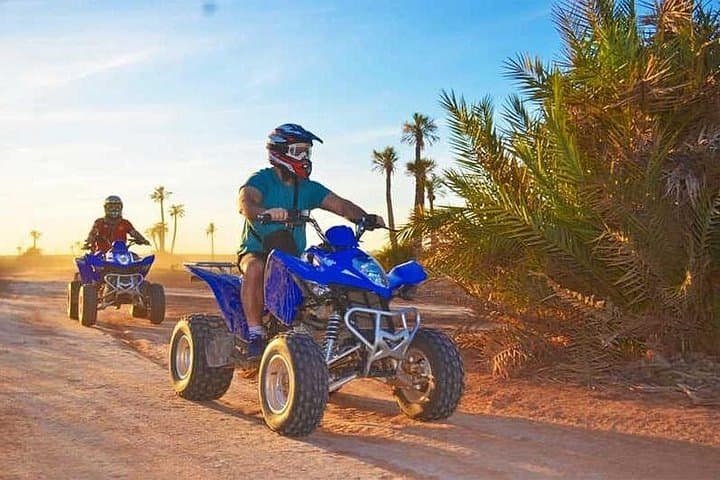
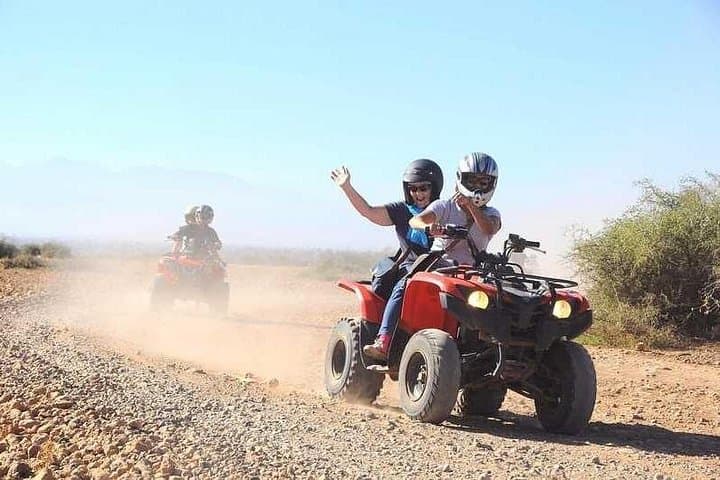
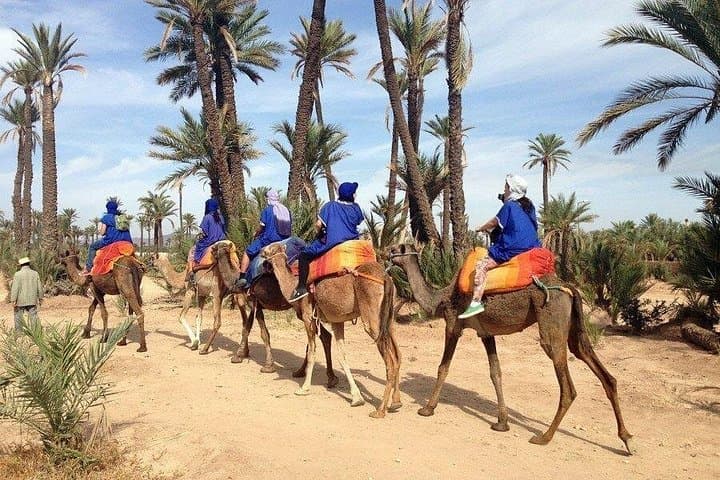
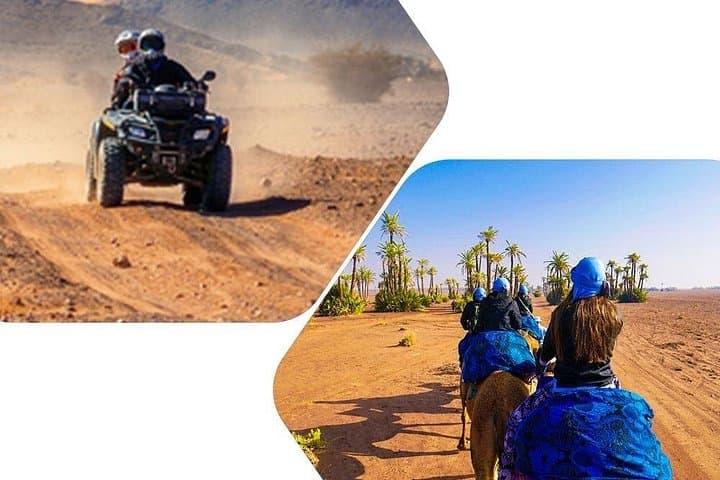
Dust lifts behind you and the palms seem to lean in to watch as your guide opens the throttle on a 300cc quad. The Palmeraie — Marrakech’s broad ribbon of date palms and irrigation channels — stretches out in a patchwork of sand tracks, small dunes and cultivated groves. The smell of warm dust and eucalyptus follows the machines while the Atlas foothills sit hazy to the south.
Dust lifts behind you and the palms seem to lean in to watch as your guide opens the throttle on a 300cc quad. The Palmeraie — Marrakech’s broad ribbon of date palms and irrigation channels — stretches out in a patchwork of sand tracks, small dunes and cultivated groves. The smell of warm dust and eucalyptus follows the machines while the Atlas foothills sit hazy to the south.
This landscape grew as an oasis system around historic kasbahs and irrigation khettaras; the palms you pass are productive date trees and shade for traditional nomad camps. Geologically the area is flat Saharan fringe with wind-blown sand and scattered red-brown clay, so traction and visibility change quickly between packed track and loose surface. Local Berber families still tend small plots; a led stop for mint tea is a cultural touchpoint that connects the modern machine to centuries of desert travel.
Practicalities: expect about 2 hours riding within a 3–4 hour total window including transfers. Terrain is mostly flat with short sandy stretches and occasional rutted tracks — minimal elevation change but moderate technical handling on loose sand. Helmets and fuel are provided; wear closed-toe shoes, sun protection and bring 1–2 liters of water. Beginners will find the tour accessible with a short handling briefing; experienced riders can push the throttle on longer straights.
Timing matters: ride in morning or late afternoon to avoid peak heat and to enjoy softer light. Respect local camps, follow guides’ instructions and leave no trace — the palms are an ecological and cultural resource worth protecting.