THE ADVENTURE COLLECTIVE® · Independent discovery and booking for outdoor travel

Feel the desert wind and view the pyramids up close on a one-hour guided ATV ride at Giza. This short, motorized excursion pairs private transfers with a hands-on off-road run across the plateau.
Feel the desert wind and view the pyramids up close on a one-hour guided ATV ride at Giza. This short, motorized excursion pairs private transfers with a hands-on off-road run across the plateau.
Sand scours the edges of the road as a private transfer drops you at the rim of the Giza Plateau. The pyramids loom—stone giants catching the low light—while the quad idles beneath you, ready to gulp desert air. The ride begins with a measured throttle; the sand pushes back, and the landscape takes on a tactile immediacy as dust and history share the same horizon.
Verified experiences and guided adventures in the surrounding area.
Operated by Camel Ride at Giza Pyramids · Giza, Cairo Governorate
Sand scours the edges of the road as a private transfer drops you at the rim of the Giza Plateau. The pyramids loom—stone giants catching the low light—while the quad idles beneath you, ready to gulp desert air. The ride begins with a measured throttle; the sand pushes back, and the landscape takes on a tactile immediacy as dust and history share the same horizon.
The Giza Plateau sits on Pleistocene limestone capped by wind-blown sand, a working edge between millennia-old monuments and an active desert. The Great Pyramid and its neighbors are funerary monuments from Egypt’s Fourth Dynasty; riding here puts modern motion against an ancient, engineered silence. Local guides often point out the Solar Boat Museum and smaller tombs tucked below the plateau—quiet reminders of the human labor behind the stones.
Practicalities are straightforward: tours typically include hotel pickup and bottled water, with one hour on ATVs and an overall two-hour window for transfers. Expect sandy, uneven terrain—loamy dunes, compacted tracks, and occasional rocky outcrops. Helmets and brief safety instruction are standard; riders should be steady on two feet, able to mount and dismount quickly. Avoid loose clothing that can snag, keep sunglasses and a buff handy, and favor closed-toe shoes.
Timing matters—early morning or late afternoon light reduces heat and improves visibility. Respect archaeological boundaries: stay in designated riding areas and follow the guide’s route. For many visitors, the thrill is not just speed but the contrast—the engine’s hum beneath the gaze of structures four millennia old.
No — guides provide basic instruction and the route is chosen for mixed-ability riders, though comfort with throttle and braking is helpful.
Yes, helmets and basic safety briefings are standard; bring your own goggles if you prefer.
ATVs operate in designated areas on the plateau; riders get close views and dramatic sightlines but must respect protected zones and follow the guide’s route.
Private transfers are typically included; confirm pickup location and timing at booking since total tour time often includes transfer time.
Camel Ride at Giza Pyramids operates guided outdoor trips and adventures with an emphasis on safety, stewardship, and memorable experiences.
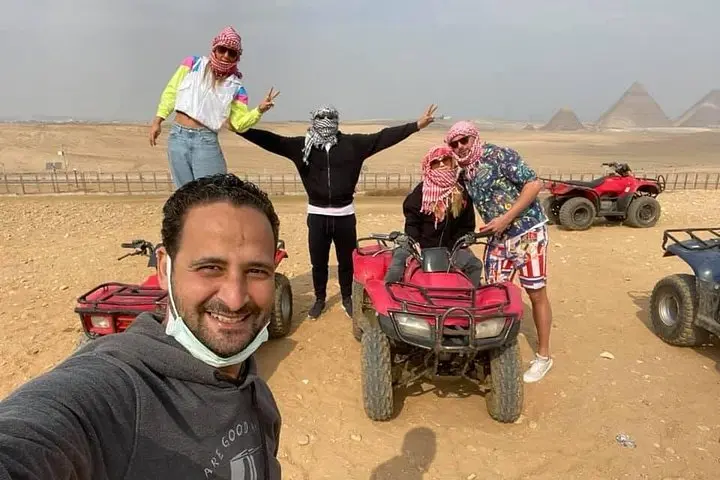
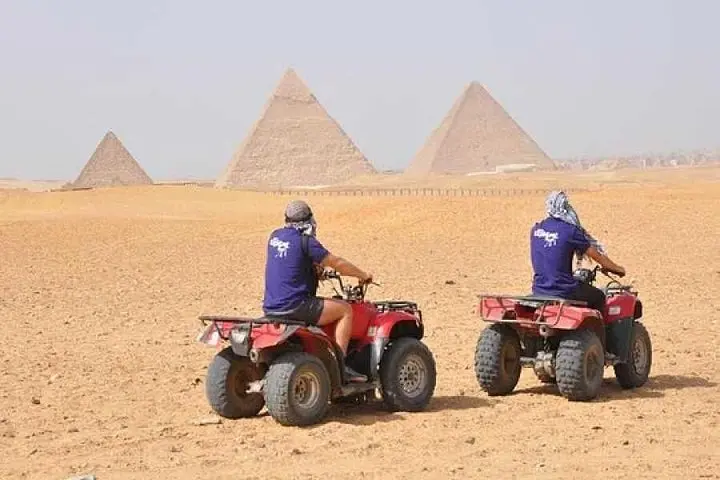
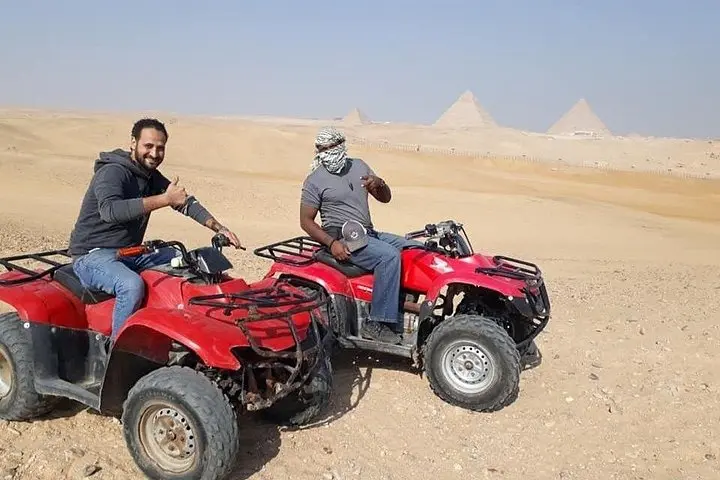
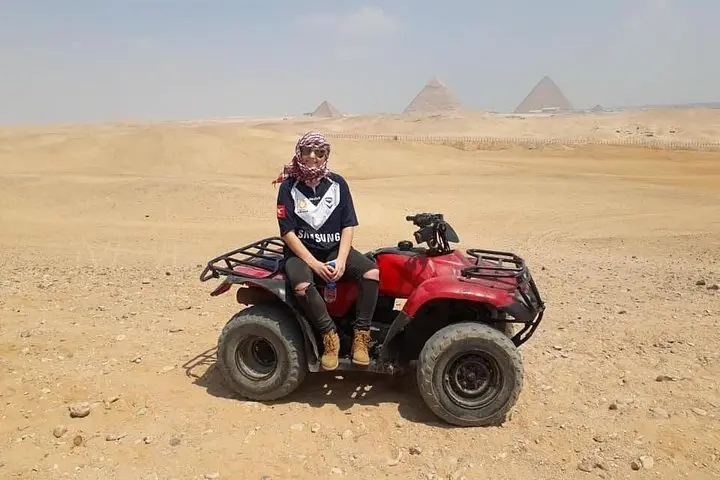
Sand scours the edges of the road as a private transfer drops you at the rim of the Giza Plateau. The pyramids loom—stone giants catching the low light—while the quad idles beneath you, ready to gulp desert air. The ride begins with a measured throttle; the sand pushes back, and the landscape takes on a tactile immediacy as dust and history share the same horizon.
Sand scours the edges of the road as a private transfer drops you at the rim of the Giza Plateau. The pyramids loom—stone giants catching the low light—while the quad idles beneath you, ready to gulp desert air. The ride begins with a measured throttle; the sand pushes back, and the landscape takes on a tactile immediacy as dust and history share the same horizon.
The Giza Plateau sits on Pleistocene limestone capped by wind-blown sand, a working edge between millennia-old monuments and an active desert. The Great Pyramid and its neighbors are funerary monuments from Egypt’s Fourth Dynasty; riding here puts modern motion against an ancient, engineered silence. Local guides often point out the Solar Boat Museum and smaller tombs tucked below the plateau—quiet reminders of the human labor behind the stones.
Practicalities are straightforward: tours typically include hotel pickup and bottled water, with one hour on ATVs and an overall two-hour window for transfers. Expect sandy, uneven terrain—loamy dunes, compacted tracks, and occasional rocky outcrops. Helmets and brief safety instruction are standard; riders should be steady on two feet, able to mount and dismount quickly. Avoid loose clothing that can snag, keep sunglasses and a buff handy, and favor closed-toe shoes.
Timing matters—early morning or late afternoon light reduces heat and improves visibility. Respect archaeological boundaries: stay in designated riding areas and follow the guide’s route. For many visitors, the thrill is not just speed but the contrast—the engine’s hum beneath the gaze of structures four millennia old.