THE ADVENTURE COLLECTIVE® · Independent discovery and booking for outdoor travel

Race across Sacred Valley highlands by ATV to see Moray’s circular agricultural terraces and the thousand-pool saltworks of Maras. This half-day quad tour pairs off-road excitement with living history at high altitude.
Race across Sacred Valley highlands by ATV to see Moray’s circular agricultural terraces and the thousand-pool saltworks of Maras. This half-day quad tour pairs off-road excitement with living history at high altitude.
The engine rumbles under the clear Andean sky as you point the Honda ATV toward open highland slopes. Dust rises in thin ribbons; terraces and salt ponds alternate like chapters in a field guide. Within an hour the landscape changes—stepped circular platforms of Moray carve into a bowl of wind and light, and later the white-patched panes of Maras flash across a sunlit slope.
Verified experiences and guided adventures in the surrounding area.
Operated by Sayariq Travel · Maras, Cusco
The engine rumbles under the clear Andean sky as you point the Honda ATV toward open highland slopes. Dust rises in thin ribbons; terraces and salt ponds alternate like chapters in a field guide. Within an hour the landscape changes—stepped circular platforms of Moray carve into a bowl of wind and light, and later the white-patched panes of Maras flash across a sunlit slope.
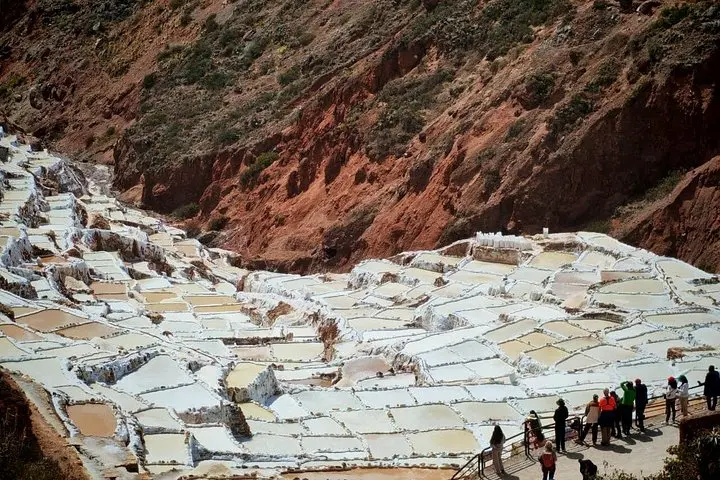
Moray’s concentric terraces were an Inca agricultural laboratory, each level creating unique microclimates used to test crops and seeds. Maras, fed by a mineral-rich spring, hosts more than 3,000 salt evaporation pools whose management predates the Inca and remains a family-run tradition today. Geology is visible at every turn: uplifted sedimentary slopes, carved valleys, and the steady seep of saline water that stains the pans.
Culturally, visits put you in contact with local economies—salt harvesting and small-scale Andean farming—so respect and distance matter. Guides typically provide bilingual commentary, helmets, gloves, first aid and oxygen; tours depart from central Cusco and run half-day, covering 35–45 km roundtrip over unpaved, high-altitude tracks.
Practicalities: expect elevations of roughly 3,300–3,600 m—pace yourself and hydrate before and during the ride. Wear closed-toe shoes, layered clothing for sun and wind, and eye protection for dust. The route blends easy single-track with occasional rocky sections; basic ATV skills suffice but listen to the safety briefing. Aim for dry-season mornings (May–September) for the clearest conditions and best traction. Stay on designated trails, honor local work in the salt pans, and leave space for farmers and pack animals—this is both an adventure and a window into living Andean practice.
Drivers typically must be at least 12 with parental consent; requirements vary so confirm at booking—no full driver's license is usually required for single-rider ATVs.
Yes—most departures include pickup from accommodations in Cusco’s Historic Center; confirm your pickup point when booking.
Moray and Maras each sit roughly 35–45 km from Cusco and are about 6–8 km apart, making them suitable for a half-day loop by ATV.
Operators monitor conditions; rain can make tracks slippery and tours may be rescheduled or canceled—check cancellation terms and local forecasts.
Sayariq Travel operates guided outdoor trips and adventures with an emphasis on safety, stewardship, and memorable experiences.
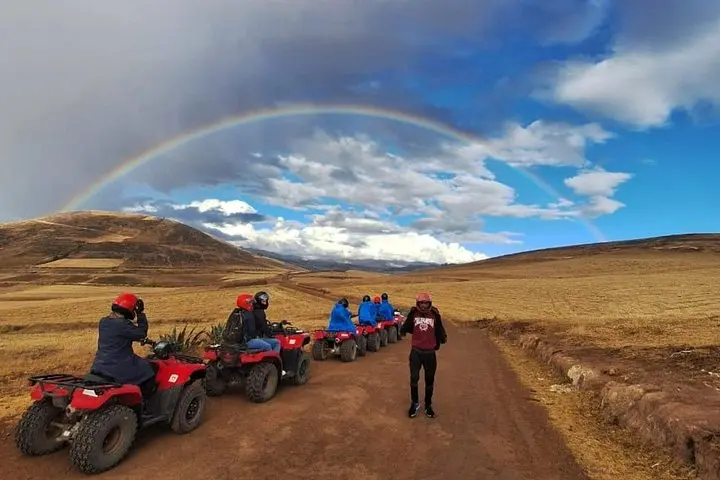
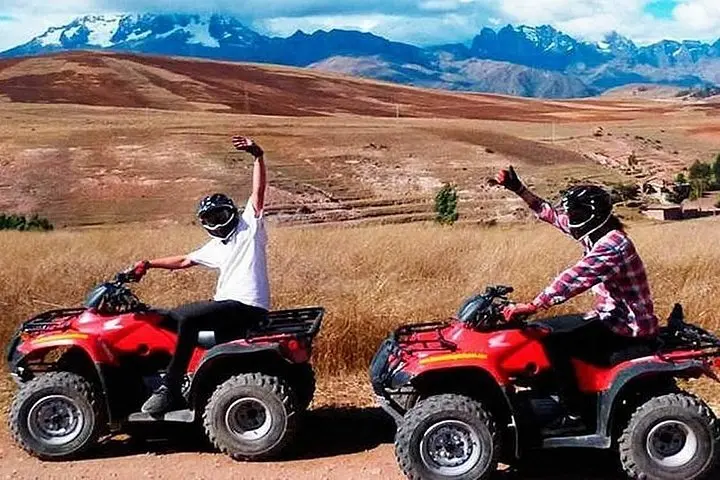
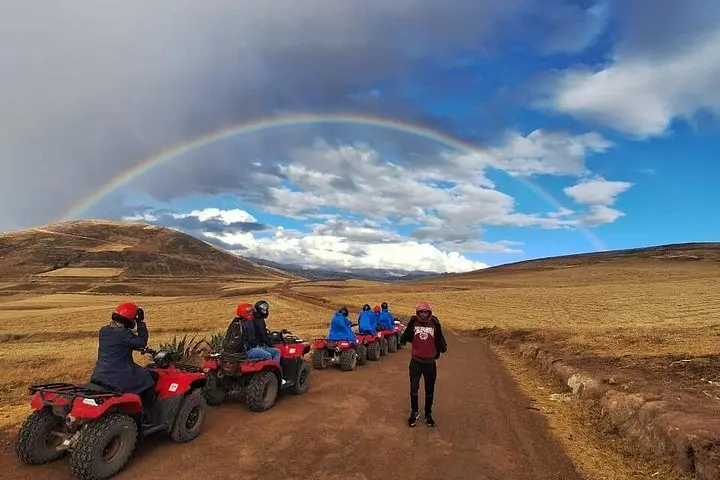
The engine rumbles under the clear Andean sky as you point the Honda ATV toward open highland slopes. Dust rises in thin ribbons; terraces and salt ponds alternate like chapters in a field guide. Within an hour the landscape changes—stepped circular platforms of Moray carve into a bowl of wind and light, and later the white-patched panes of Maras flash across a sunlit slope.
The engine rumbles under the clear Andean sky as you point the Honda ATV toward open highland slopes. Dust rises in thin ribbons; terraces and salt ponds alternate like chapters in a field guide. Within an hour the landscape changes—stepped circular platforms of Moray carve into a bowl of wind and light, and later the white-patched panes of Maras flash across a sunlit slope.
Moray’s concentric terraces were an Inca agricultural laboratory, each level creating unique microclimates used to test crops and seeds. Maras, fed by a mineral-rich spring, hosts more than 3,000 salt evaporation pools whose management predates the Inca and remains a family-run tradition today. Geology is visible at every turn: uplifted sedimentary slopes, carved valleys, and the steady seep of saline water that stains the pans.
Culturally, visits put you in contact with local economies—salt harvesting and small-scale Andean farming—so respect and distance matter. Guides typically provide bilingual commentary, helmets, gloves, first aid and oxygen; tours depart from central Cusco and run half-day, covering 35–45 km roundtrip over unpaved, high-altitude tracks.
Practicalities: expect elevations of roughly 3,300–3,600 m—pace yourself and hydrate before and during the ride. Wear closed-toe shoes, layered clothing for sun and wind, and eye protection for dust. The route blends easy single-track with occasional rocky sections; basic ATV skills suffice but listen to the safety briefing. Aim for dry-season mornings (May–September) for the clearest conditions and best traction. Stay on designated trails, honor local work in the salt pans, and leave space for farmers and pack animals—this is both an adventure and a window into living Andean practice.