THE ADVENTURE COLLECTIVE® · Independent discovery and booking for outdoor travel

Drive an ATV through Cozumel's limestone interior to explore iguana-filled caves, a Mayan vestige, and Ts’unu’um Cenote in a 90-minute loop. Practical tips on what to bring, fitness needed, and how to respect this fragile karst landscape.
Drive an ATV through Cozumel's limestone interior to explore iguana-filled caves, a Mayan vestige, and Ts’unu’um Cenote in a 90-minute loop. Practical tips on what to bring, fitness needed, and how to respect this fragile karst landscape.
The engine kicks a steady rhythm as your quad pushes through dappled light and red-dust tracks, the jungle closing around you like a living corridor. In 90 minutes the route moves fast but unhurried: short rides between karst outcrops, a low cave where iguanas sun themselves on limestone shelves, a cool chamber known locally as the Bat Cave, a small Mayan vestige tied to the goddess Ixchel, and finally Ts’unu’um Cenote — clear water framed by fallen rock and ferns.
Verified experiences and guided adventures in the surrounding area.
Operated by ATV TOURS COZUMEL EL VIEJO Y YO · San Miguel de Cozumel, Quintana Roo
The engine kicks a steady rhythm as your quad pushes through dappled light and red-dust tracks, the jungle closing around you like a living corridor. In 90 minutes the route moves fast but unhurried: short rides between karst outcrops, a low cave where iguanas sun themselves on limestone shelves, a cool chamber known locally as the Bat Cave, a small Mayan vestige tied to the goddess Ixchel, and finally Ts’unu’um Cenote — clear water framed by fallen rock and ferns.
Cozumel is a raised coral island with shallow, porous limestone; cenotes here form where the karst roof collapses and groundwater collects. The Mayan presence on the island is lighter than the mainland, but small shrines and carved stones mark the cultural ties to Ixchel, goddess of fertility and the sea. Locals run modest ranches like Rancho Linda Vista and guide small groups, blending ecology with safety.
Practical notes: this is a motorized, moderate excursion suitable for people comfortable with rough terrain and getting in and out of water. Helmets and goggles are provided; expect uneven trails, some short climbs on foot, and a brief swim or wading at the cenote. Bring closed-toe shoes, quick-dry clothes, biodegradable sunscreen, and a reusable water bottle. Mid-morning departures avoid the hottest sun; photographers should use a wrist strap for cameras near water.
Operators emphasize safety and conservation: stay on marked routes, don’t touch cave formations, and follow guide instructions to reduce erosion and protect the fragile cenote ecosystem.
No formal driver’s license is required for most operators, but drivers must be at least 15 with parental authorization and demonstrate basic ATV control.
Yes; the Ts’unu’um Cenote allows wading and brief swims, though depth can vary—follow the guide and avoid diving into unknown water.
Yes, helmets, goggles, and lockers are provided; bring your own gloves if you prefer extra grip.
Children 0–4 are not permitted; ages 5–14 can participate only when accompanied by an adult and may incur an extra fee per quad.
ATV TOURS COZUMEL EL VIEJO Y YO operates guided outdoor trips and adventures with an emphasis on safety, stewardship, and memorable experiences.
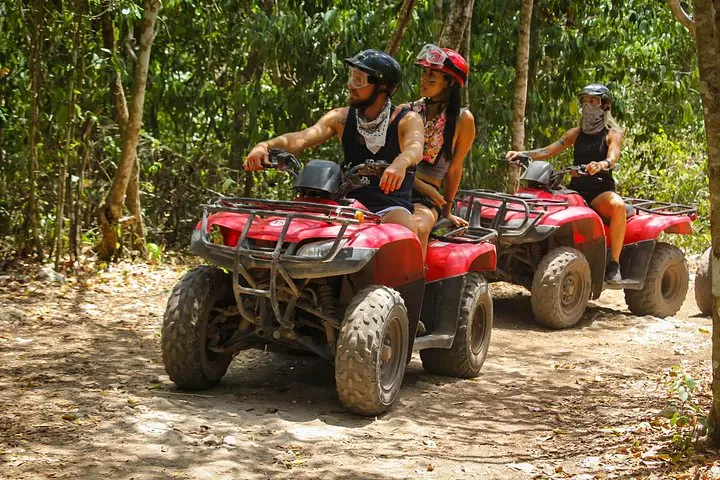
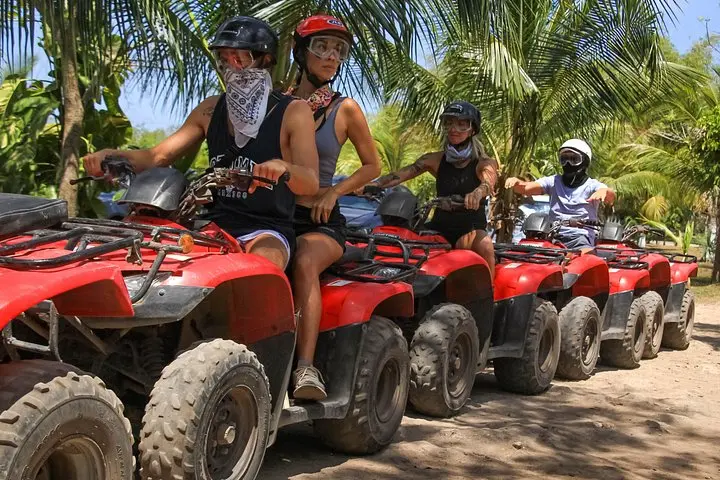
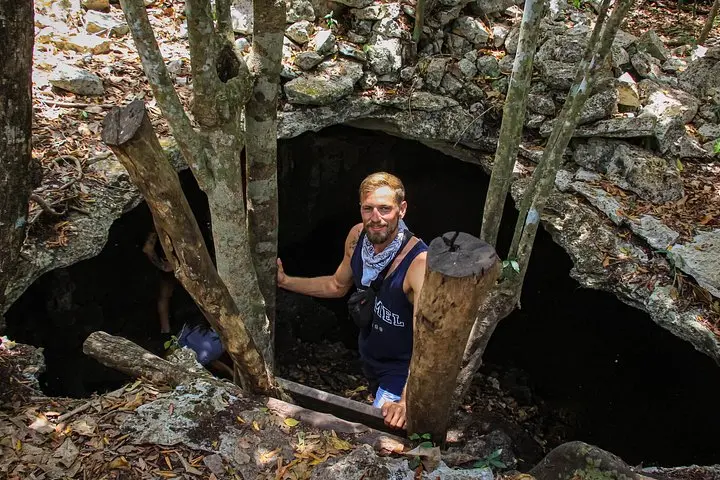
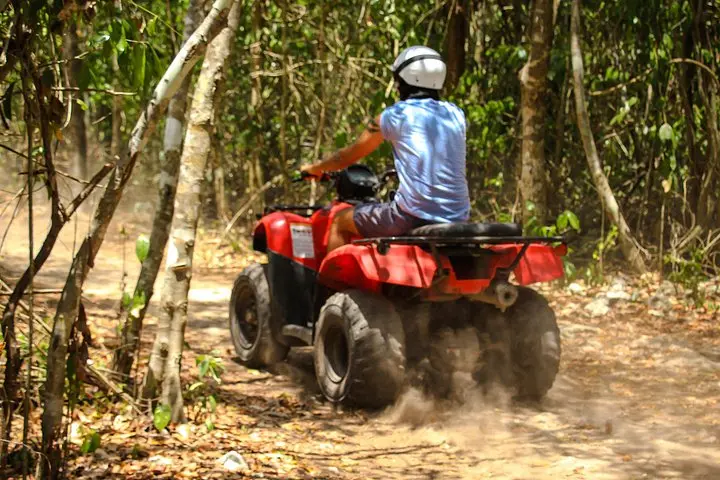
The engine kicks a steady rhythm as your quad pushes through dappled light and red-dust tracks, the jungle closing around you like a living corridor. In 90 minutes the route moves fast but unhurried: short rides between karst outcrops, a low cave where iguanas sun themselves on limestone shelves, a cool chamber known locally as the Bat Cave, a small Mayan vestige tied to the goddess Ixchel, and finally Ts’unu’um Cenote — clear water framed by fallen rock and ferns.
The engine kicks a steady rhythm as your quad pushes through dappled light and red-dust tracks, the jungle closing around you like a living corridor. In 90 minutes the route moves fast but unhurried: short rides between karst outcrops, a low cave where iguanas sun themselves on limestone shelves, a cool chamber known locally as the Bat Cave, a small Mayan vestige tied to the goddess Ixchel, and finally Ts’unu’um Cenote — clear water framed by fallen rock and ferns.
Cozumel is a raised coral island with shallow, porous limestone; cenotes here form where the karst roof collapses and groundwater collects. The Mayan presence on the island is lighter than the mainland, but small shrines and carved stones mark the cultural ties to Ixchel, goddess of fertility and the sea. Locals run modest ranches like Rancho Linda Vista and guide small groups, blending ecology with safety.
Practical notes: this is a motorized, moderate excursion suitable for people comfortable with rough terrain and getting in and out of water. Helmets and goggles are provided; expect uneven trails, some short climbs on foot, and a brief swim or wading at the cenote. Bring closed-toe shoes, quick-dry clothes, biodegradable sunscreen, and a reusable water bottle. Mid-morning departures avoid the hottest sun; photographers should use a wrist strap for cameras near water.
Operators emphasize safety and conservation: stay on marked routes, don’t touch cave formations, and follow guide instructions to reduce erosion and protect the fragile cenote ecosystem.