
Aurora Borealis Dogsled Tour in Kiruna — Night Husky Sledding Under the Northern Lights
Glide through Lapland’s night with a team of huskies and a chance to watch the Aurora Borealis unfold overhead. This three-hour Kiruna tour pairs intimate sled runs with kennel time and hot drinks by an open fire.
An Adventure In Kiruna.
Glide through Lapland’s night with a team of huskies and a chance to watch the Aurora Borealis unfold overhead. This three-hour Kiruna tour pairs intimate sled runs with kennel time and hot drinks by an open fire.
Read the full experience
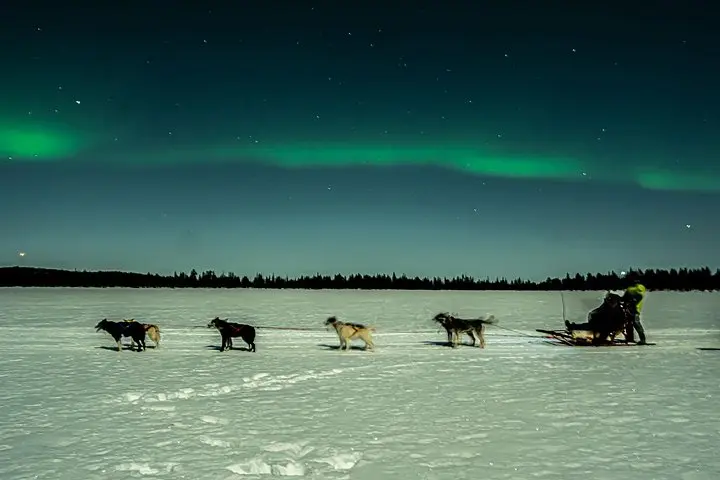
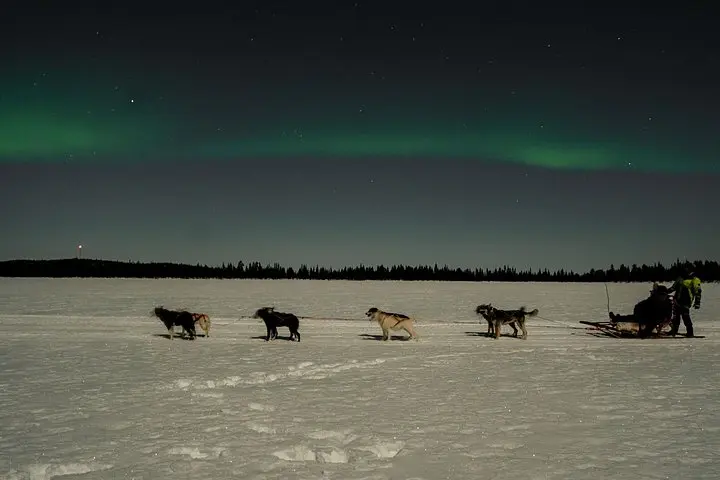
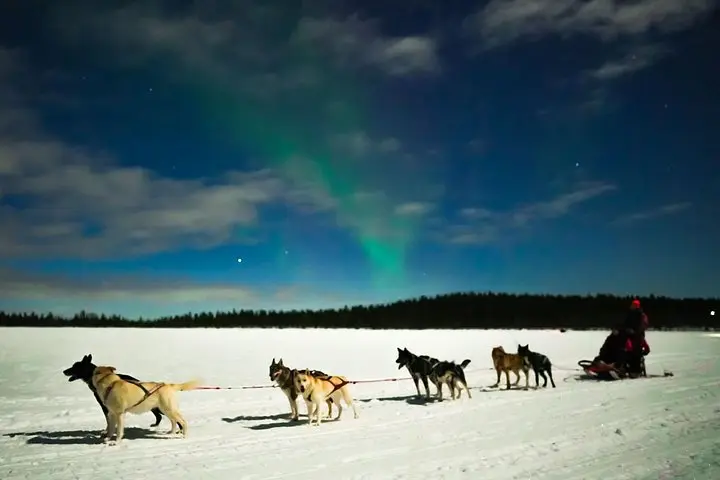
The sled slips forward on a river of blue-black snow and the pack answers in a chorus of breath and paws, the guide’s silhouette a small human shape against an Arctic dome. On a clear night above Kiruna the sky can open in curtains of green and violet; here, huskies pull you through open tundra and lichen-scattered birch, and the cold has a clean, immediate edge.
The sled slips forward on a river of blue-black snow and the pack answers in a chorus of breath and paws, the guide’s silhouette a small human shape against an Arctic dome. On a clear night above Kiruna the sky can open in curtains of green and violet; here, huskies pull you through open tundra and lichen-scattered birch, and the cold has a clean, immediate edge.
Dog sledding in Swedish Lapland is rooted in Sámi and Arctic travel traditions: working dogs have long been the efficient, dependable movers across winters that can last nine months. The region’s geology — ancient Precambrian bedrock and glacially scoured valleys — shapes the low, rolling profile you’ll cross, and Kiruna’s history as a mining and reindeer-herding hub frames local culture and hospitality.
This experience is a three-hour guided tour for small groups (up to six), driven by experienced guides and staged from a kennel of around 70 huskies. Logistics are straightforward: winter overalls, boots, and gloves are provided; the outing ends with coffee, tea, cookies, and time by an open fire to meet the dogs. Participants should expect cold, short bursts of standing on a runners’ platform and relaxed riding between turns. Not recommended for people with serious back, heart, or pregnancy concerns.
Practical tips: arrive layered, carry a camera with spare batteries (cold reduces life), and listen to the musher’s safety briefing — dogs work best when given clear, calm commands. Book in advance during peak aurora season (late autumn through early spring) and allow flexibility: auroras are a natural phenomenon and sightings cannot be guaranteed.
Frequently asked questions
The tour lasts about three hours and runs with small groups — shared tours are capped at six participants to keep the experience personal.
The operator supplies winter overalls, boots, and some gloves; it’s still wise to bring your own insulated layers and warm socks for best comfort.
Auroras are a natural phenomenon and cannot be guaranteed; the tour maximizes your odds by running on clear nights and away from local light, but sightings depend on weather and solar activity.
The tour is described as physically easy, but infants must sit on laps and the outing is not recommended for people with serious back, heart, or pregnancy concerns; contact the operator about specific mobility needs.
About This Experience
Snowdog - The Arctic Adventure Company operates guided outdoor trips and adventures with an emphasis on safety, stewardship, and memorable experiences.
Adventure tips
Recommended gear
- Insulated base and mid-layers: Traps body heat efficiently and offers flexible temperature control during the outing.
- Warm hat and windproof gloves: Protects extremities during cold rides and when handling dogs at the kennel.
- Thermal socks and insulated boots (if you have them): Additional insulation improves comfort; the operator supplies overalls and boots but personal socks help.
- Camera with spare batteries: Captures low-light aurora scenes; bring warm storage for spare batteries.
Photos of the experience
Related adventures & guides
Read the full experience
The sled slips forward on a river of blue-black snow and the pack answers in a chorus of breath and paws, the guide’s silhouette a small human shape against an Arctic dome. On a clear night above Kiruna the sky can open in curtains of green and violet; here, huskies pull you through open tundra and lichen-scattered birch, and the cold has a clean, immediate edge.
The sled slips forward on a river of blue-black snow and the pack answers in a chorus of breath and paws, the guide’s silhouette a small human shape against an Arctic dome. On a clear night above Kiruna the sky can open in curtains of green and violet; here, huskies pull you through open tundra and lichen-scattered birch, and the cold has a clean, immediate edge.
Dog sledding in Swedish Lapland is rooted in Sámi and Arctic travel traditions: working dogs have long been the efficient, dependable movers across winters that can last nine months. The region’s geology — ancient Precambrian bedrock and glacially scoured valleys — shapes the low, rolling profile you’ll cross, and Kiruna’s history as a mining and reindeer-herding hub frames local culture and hospitality.
This experience is a three-hour guided tour for small groups (up to six), driven by experienced guides and staged from a kennel of around 70 huskies. Logistics are straightforward: winter overalls, boots, and gloves are provided; the outing ends with coffee, tea, cookies, and time by an open fire to meet the dogs. Participants should expect cold, short bursts of standing on a runners’ platform and relaxed riding between turns. Not recommended for people with serious back, heart, or pregnancy concerns.
Practical tips: arrive layered, carry a camera with spare batteries (cold reduces life), and listen to the musher’s safety briefing — dogs work best when given clear, calm commands. Book in advance during peak aurora season (late autumn through early spring) and allow flexibility: auroras are a natural phenomenon and sightings cannot be guaranteed.
Make a day of it nearby.
Verified experiences and guided adventures in the surrounding area.