THE ADVENTURE COLLECTIVE® · Independent discovery and booking for outdoor travel

Spend a full night chasing the aurora oval from Fairbanks: an 8-hour guided drive that follows geomagnetic activity across Interior Alaska. Guides provide transit, an aurora discussion, photographic help, and warm snacks while you watch the sky.
Spend a full night chasing the aurora oval from Fairbanks: an 8-hour guided drive that follows geomagnetic activity across Interior Alaska. Guides provide transit, an aurora discussion, photographic help, and warm snacks while you watch the sky.
You climb into a heated van beneath a black sky that seems to breathe; the road ahead is a ribbon of snow and light, the horizon waiting like a dial. The driver slides north, chasing the aurora oval as it sweeps over Alaska’s interior. Engines hum, companions murmur, and the night stretches—this is a full-rotation chase built around watching the sky move across the oval.
Verified experiences and guided adventures in the surrounding area.
Operated by Wandering Alaska LLC · Fairbanks, Alaska
You climb into a heated van beneath a black sky that seems to breathe; the road ahead is a ribbon of snow and light, the horizon waiting like a dial. The driver slides north, chasing the aurora oval as it sweeps over Alaska’s interior. Engines hum, companions murmur, and the night stretches—this is a full-rotation chase built around watching the sky move across the oval.
The aurora here is framed by Interior Alaska’s geologic bones: bedrock scoured by Pleistocene ice, broad river valleys, and low rolling tundra that give the sky room to show itself. Fairbanks has long been a staging ground for aurora observation—Indigenous Athabascan stories interpreted the lights as messages, and 20th-century scientific stations formalized the region’s role in geomagnetic research.
Culturally, the night is practical and social: guides translate solar physics into plain language, photographers set tripods on frozen shoulders, and hot drinks punctuate the vigil. Expect remote pullouts rather than groomed viewing platforms; many stops are outside plumbing and require dressing for sustained cold.
Practical notes: tours often run 8 hours, cover up to 150 miles round trip within interior dark corridors, and include transportation from Fairbanks-area lodging. Wear insulated layers, warm boots, and a windproof outer shell. Bring a camera with manual controls and a tripod; guides usually assist with photography. Allow flexibility—visibility depends on solar activity and local weather—but an all-night chase maximizes your window for active displays. If you want the longest runs, plan visits between late autumn and mid-March when nights are longest and the aurora oval is most accessible.
No—aurora displays depend on solar activity and local weather; the all-night format maximizes observing time but cannot guarantee visibility.
Temperatures can drop well below freezing; wear layered synthetic or wool insulation, a windproof outer layer, insulated boots, and bring mittens and a hat.
Most stops are in remote areas without plumbing; guides plan breaks at known facilities if weather and route permit, but be prepared for outdoor restroom stops.
Yes—guides typically assist with camera settings and framing for long exposures and may offer a few edited portrait photos from the night.
Wandering Alaska LLC operates guided outdoor trips and adventures with an emphasis on safety, stewardship, and memorable experiences.
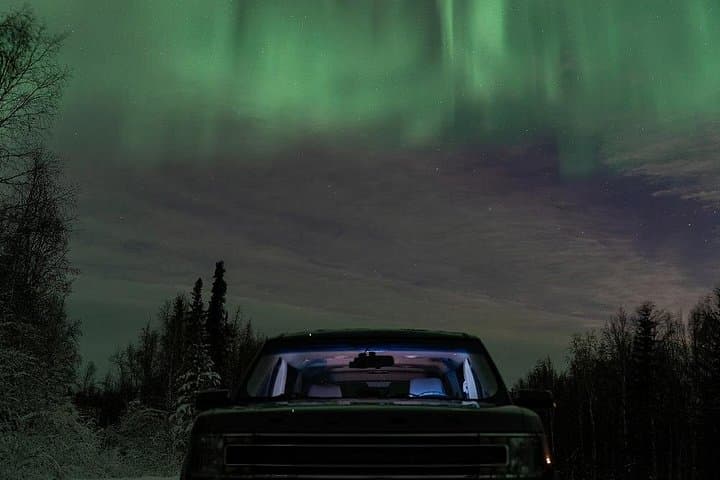
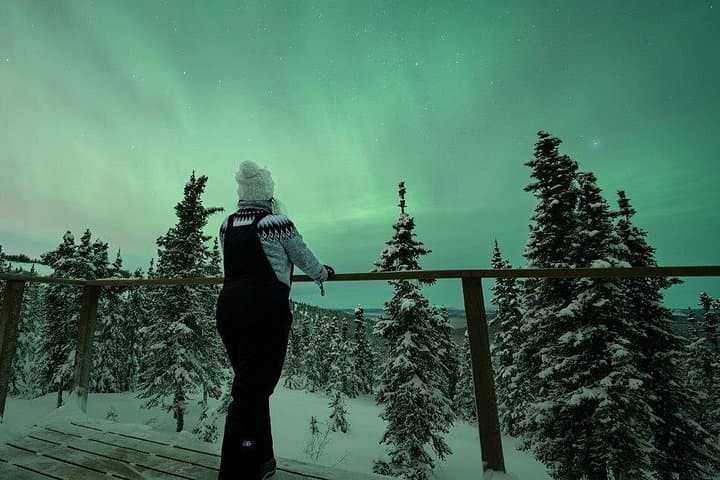
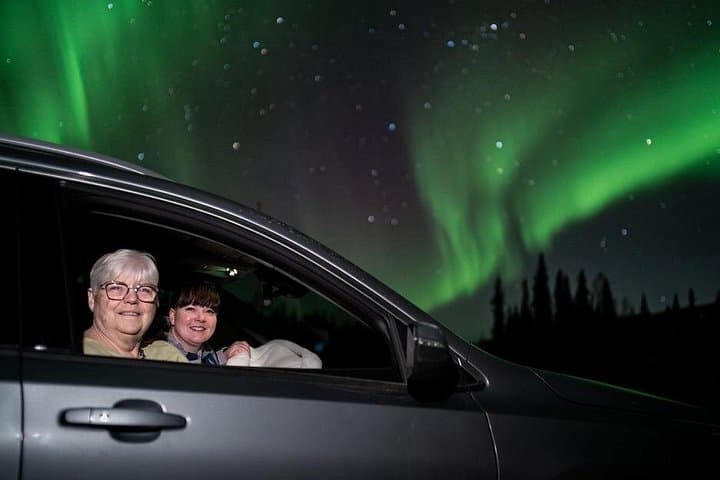
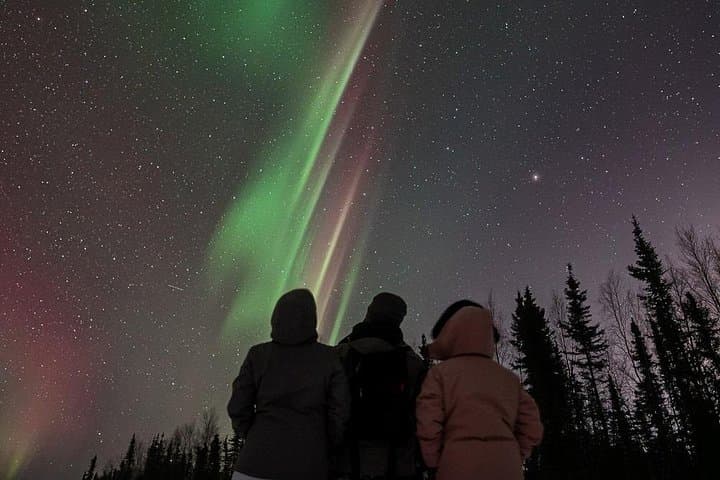
You climb into a heated van beneath a black sky that seems to breathe; the road ahead is a ribbon of snow and light, the horizon waiting like a dial. The driver slides north, chasing the aurora oval as it sweeps over Alaska’s interior. Engines hum, companions murmur, and the night stretches—this is a full-rotation chase built around watching the sky move across the oval.
You climb into a heated van beneath a black sky that seems to breathe; the road ahead is a ribbon of snow and light, the horizon waiting like a dial. The driver slides north, chasing the aurora oval as it sweeps over Alaska’s interior. Engines hum, companions murmur, and the night stretches—this is a full-rotation chase built around watching the sky move across the oval.
The aurora here is framed by Interior Alaska’s geologic bones: bedrock scoured by Pleistocene ice, broad river valleys, and low rolling tundra that give the sky room to show itself. Fairbanks has long been a staging ground for aurora observation—Indigenous Athabascan stories interpreted the lights as messages, and 20th-century scientific stations formalized the region’s role in geomagnetic research.
Culturally, the night is practical and social: guides translate solar physics into plain language, photographers set tripods on frozen shoulders, and hot drinks punctuate the vigil. Expect remote pullouts rather than groomed viewing platforms; many stops are outside plumbing and require dressing for sustained cold.
Practical notes: tours often run 8 hours, cover up to 150 miles round trip within interior dark corridors, and include transportation from Fairbanks-area lodging. Wear insulated layers, warm boots, and a windproof outer shell. Bring a camera with manual controls and a tripod; guides usually assist with photography. Allow flexibility—visibility depends on solar activity and local weather—but an all-night chase maximizes your window for active displays. If you want the longest runs, plan visits between late autumn and mid-March when nights are longest and the aurora oval is most accessible.