THE ADVENTURE COLLECTIVE® · Independent discovery and booking for outdoor travel

Warmth and clear sightlines meet the aurora beside the Chena River. The Aurora Sphere is a heated glass dome experience near Fairbanks that simplifies aurora viewing with seating, Wi‑Fi and telescope access—ideal for photographers and first-time chasers.
Warmth and clear sightlines meet the aurora beside the Chena River. The Aurora Sphere is a heated glass dome experience near Fairbanks that simplifies aurora viewing with seating, Wi‑Fi and telescope access—ideal for photographers and first-time chasers.
Step inside a transparent glass sphere set beside the Chena River and wait for the aurora to move across an arctic night. In the dome, warmth and soft light cushion guests while the sky—cool, vast, and unexpectedly expressive—begins its own performance. When the lights appear the room goes dark, and the aurora threads and folds above the river like a living map.
Verified experiences and guided adventures in the surrounding area.
Operated by Daniel Mo · Fairbanks, Alaska
Step inside a transparent glass sphere set beside the Chena River and wait for the aurora to move across an arctic night. In the dome, warmth and soft light cushion guests while the sky—cool, vast, and unexpectedly expressive—begins its own performance. When the lights appear the room goes dark, and the aurora threads and folds above the river like a living map.
This place sits on land carved by glacial action and shaped by the Chena River’s seasonal pulse; Fairbanks itself grew as a gold rush supply point and later as a hub for cold-weather science. Local Athabascan people have watched northern lights long before domes and telescopes arrived; the show is both a scientific phenomenon of charged solar particles and a cultural touchstone in subarctic communities.
Practical guidance is straightforward: the dome provides heating, seating, Wi‑Fi and an astronomical telescope, but guests should arrive layered and ready to turn off personal lights when the aurora shows. Photographers will want a tripod, wide aperture and manual exposure settings; plan for exposures between 2–15 seconds depending on activity. Shuttle service is offered for an extra fee—book early in winter months when roads and snowmobiles come into play. The provider recommends cancelling at least 24 hours in advance for a refund if conditions are poor; the experience is suitable for most fitness levels but not recommended for pregnant travelers or those with serious spinal or heart issues.
In short: the Aurora Sphere packages comfort and clear sightlines into an efficient aurora chase—minimal effort, maximum night-sky payoff.
Yes—the glass dome is heated and furnished with sofas, chairs, snacks and Wi‑Fi to make multi-hour waits comfortable.
The activity is suitable for most fitness levels but not recommended for travelers with serious spinal injuries or who require specialized medical care; contact the operator for accessibility details.
Photography is allowed and encouraged; bring your own tripod and camera—tripod stability is essential for long exposures.
For a full refund cancel at least 24 hours before; the operator may cancel in poor weather and offer a refund per the policy.
Daniel Mo operates guided outdoor trips and adventures with an emphasis on safety, stewardship, and memorable experiences.
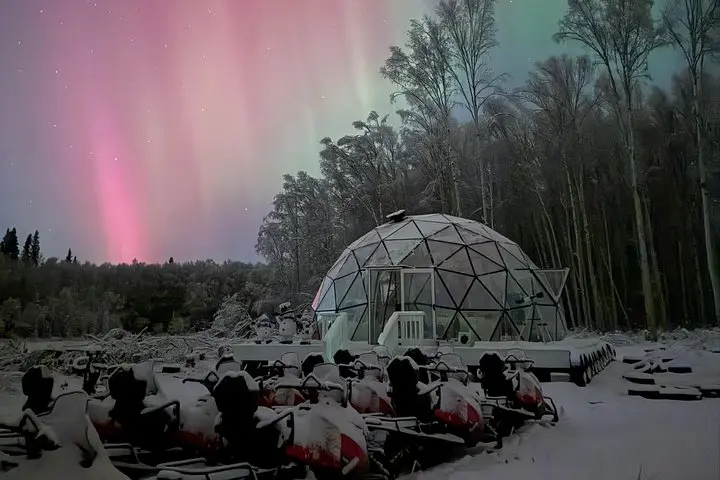
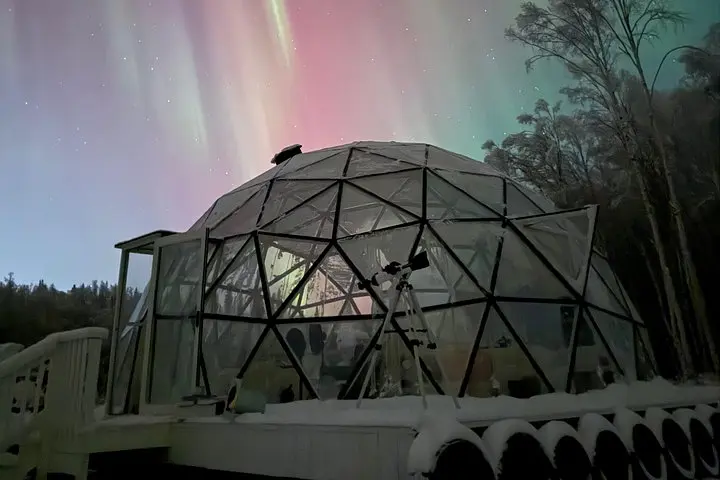
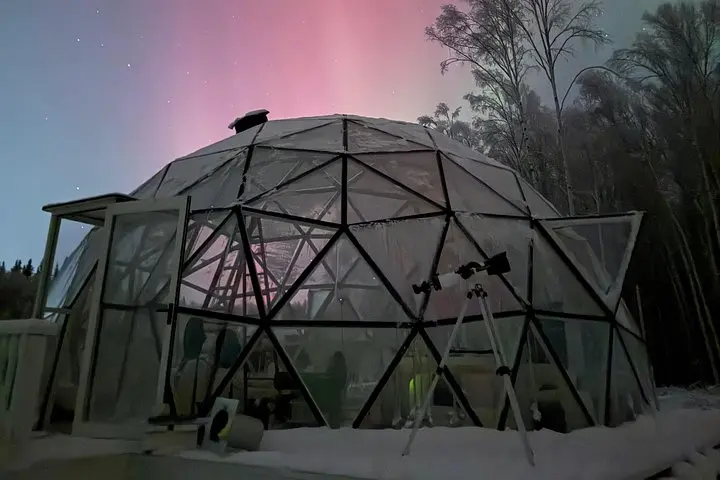
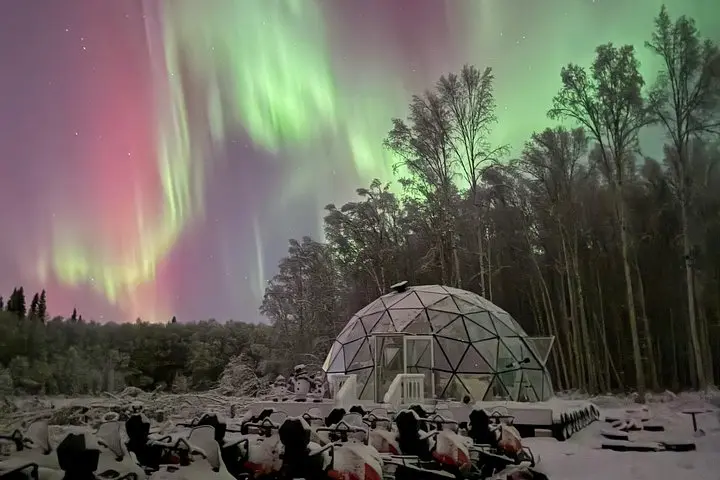
Step inside a transparent glass sphere set beside the Chena River and wait for the aurora to move across an arctic night. In the dome, warmth and soft light cushion guests while the sky—cool, vast, and unexpectedly expressive—begins its own performance. When the lights appear the room goes dark, and the aurora threads and folds above the river like a living map.
Step inside a transparent glass sphere set beside the Chena River and wait for the aurora to move across an arctic night. In the dome, warmth and soft light cushion guests while the sky—cool, vast, and unexpectedly expressive—begins its own performance. When the lights appear the room goes dark, and the aurora threads and folds above the river like a living map.
This place sits on land carved by glacial action and shaped by the Chena River’s seasonal pulse; Fairbanks itself grew as a gold rush supply point and later as a hub for cold-weather science. Local Athabascan people have watched northern lights long before domes and telescopes arrived; the show is both a scientific phenomenon of charged solar particles and a cultural touchstone in subarctic communities.
Practical guidance is straightforward: the dome provides heating, seating, Wi‑Fi and an astronomical telescope, but guests should arrive layered and ready to turn off personal lights when the aurora shows. Photographers will want a tripod, wide aperture and manual exposure settings; plan for exposures between 2–15 seconds depending on activity. Shuttle service is offered for an extra fee—book early in winter months when roads and snowmobiles come into play. The provider recommends cancelling at least 24 hours in advance for a refund if conditions are poor; the experience is suitable for most fitness levels but not recommended for pregnant travelers or those with serious spinal or heart issues.
In short: the Aurora Sphere packages comfort and clear sightlines into an efficient aurora chase—minimal effort, maximum night-sky payoff.