THE ADVENTURE COLLECTIVE® · Independent discovery and booking for outdoor travel

Ride the Alaska Railroad’s Aurora Winter Train from Anchorage to Fairbanks and watch the interior of Alaska transform into quiet snowfields, high passes and river canyons. This one‑way daylight journey offers large windows, onboard dining, and the chance to see Denali and winter wildlife.
Ride the Alaska Railroad’s Aurora Winter Train from Anchorage to Fairbanks and watch the interior of Alaska transform into quiet snowfields, high passes and river canyons. This one‑way daylight journey offers large windows, onboard dining, and the chance to see Denali and winter wildlife.
The depot platform is cold and clean, steam from breath curling under the glow of station lights as a long silver train waits like a moving lodge. Step inside and the car’s large picture windows frame a winter Alaska that reconfigures familiar landmarks: white plains, the dark spine of the Alaska Range, and the sudden silhouette of Denali rising above the Susitna River on a clear day.
Verified experiences and guided adventures in the surrounding area.
Operated by Alaska Railroad Corporation · Anchorage, Alaska
The depot platform is cold and clean, steam from breath curling under the glow of station lights as a long silver train waits like a moving lodge. Step inside and the car’s large picture windows frame a winter Alaska that reconfigures familiar landmarks: white plains, the dark spine of the Alaska Range, and the sudden silhouette of Denali rising above the Susitna River on a clear day.
The Alaska Railroad’s winter service follows a corridor carved by ice and river—routes once vital to early 20th‑century freight and frontier settlement. Tracks cross broad passes and Hurricane Gulch’s 296‑foot bridge, tracing glacially honed valleys and braided rivers such as the Nenana and Indian.
Culturally, rail travel in Alaska is pragmatic: it links remote communities, carries freight, and offers one of the few comfortable ways to see deep interior winter without a backcountry permit. Along the route you may glimpse remote cabins, a moose feeding at treeline, or the quiet of roadless backcountry as the train pauses for flagstop service.
Practically, expect a 12‑hour northbound schedule with dining and a snack bar available for purchase, reserved seating, and baggage limits. Check in an hour early at the ticket counter; large windows make midday light best for photos, while the late afternoon and evening runs can reward travelers with low winter sun and, on rare clear nights, aurora activity. Dress in layered winter clothing, bring a power bank and binoculars, and plan accommodations in Fairbanks independently—rail arrival does not include hotel transfers.
This trip is less about hiking and more about moving through landscape: a warm, seated vantage point to witness Alaska’s winter bones.
The scheduled northbound trip takes about 12 hours (departing Anchorage mid‑morning and arriving Fairbanks in the evening).
Dining and a snack bar are available for purchase; there is optional full dining and lighter fare in the café car.
Passengers are allowed two checked bags and one carry‑on; items over 50 lbs, oversized items, bicycles and some recreational equipment may incur special handling fees.
Yes—passenger trains and station facilities are wheelchair accessible and comply with ADA standards; check with the railroad for specific assistance needs.
Alaska Railroad Corporation operates guided outdoor trips and adventures with an emphasis on safety, stewardship, and memorable experiences.
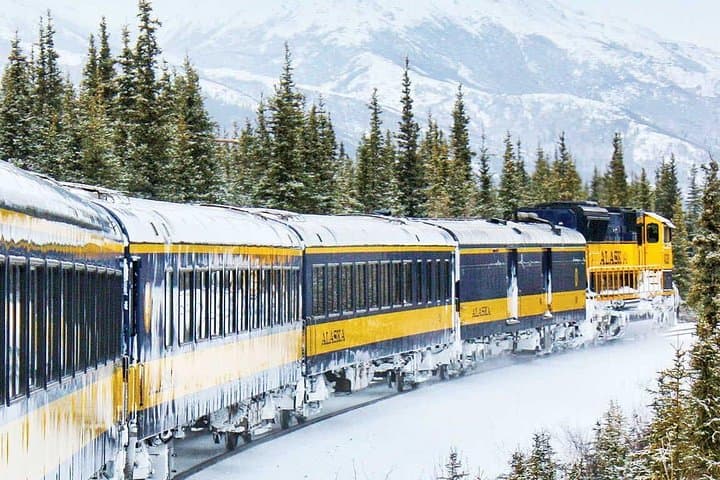
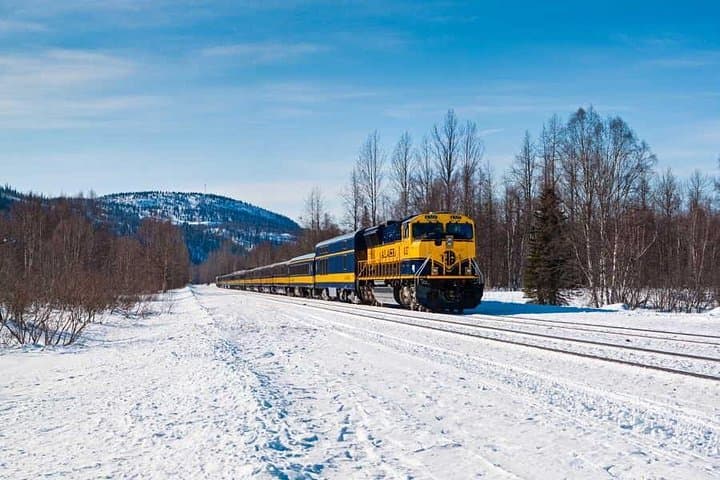
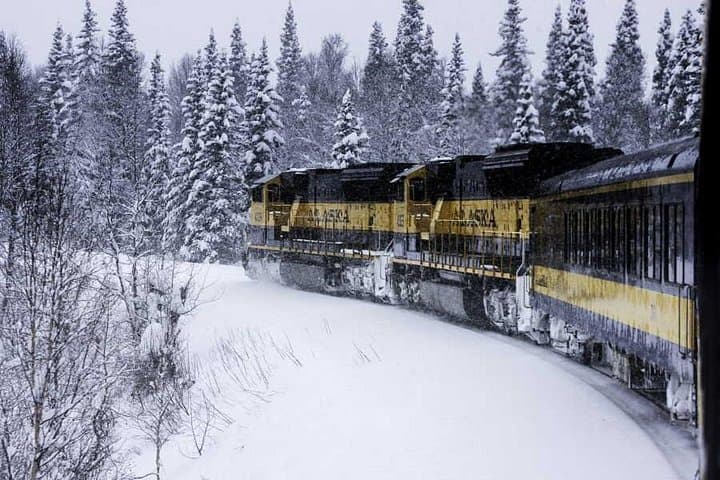
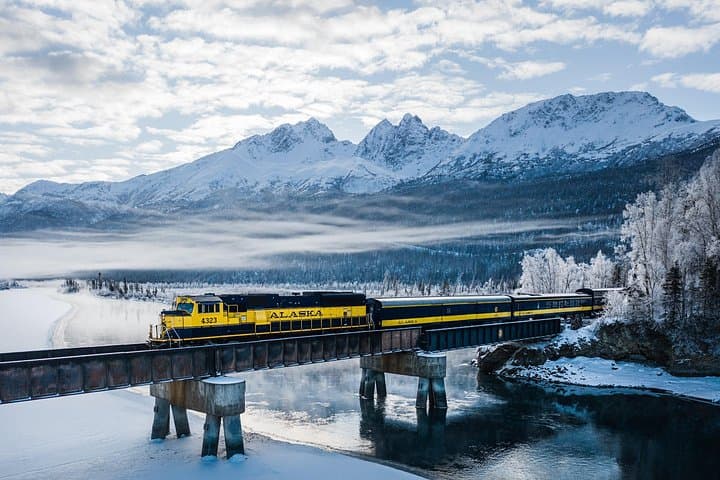
The depot platform is cold and clean, steam from breath curling under the glow of station lights as a long silver train waits like a moving lodge. Step inside and the car’s large picture windows frame a winter Alaska that reconfigures familiar landmarks: white plains, the dark spine of the Alaska Range, and the sudden silhouette of Denali rising above the Susitna River on a clear day.
The depot platform is cold and clean, steam from breath curling under the glow of station lights as a long silver train waits like a moving lodge. Step inside and the car’s large picture windows frame a winter Alaska that reconfigures familiar landmarks: white plains, the dark spine of the Alaska Range, and the sudden silhouette of Denali rising above the Susitna River on a clear day.
The Alaska Railroad’s winter service follows a corridor carved by ice and river—routes once vital to early 20th‑century freight and frontier settlement. Tracks cross broad passes and Hurricane Gulch’s 296‑foot bridge, tracing glacially honed valleys and braided rivers such as the Nenana and Indian.
Culturally, rail travel in Alaska is pragmatic: it links remote communities, carries freight, and offers one of the few comfortable ways to see deep interior winter without a backcountry permit. Along the route you may glimpse remote cabins, a moose feeding at treeline, or the quiet of roadless backcountry as the train pauses for flagstop service.
Practically, expect a 12‑hour northbound schedule with dining and a snack bar available for purchase, reserved seating, and baggage limits. Check in an hour early at the ticket counter; large windows make midday light best for photos, while the late afternoon and evening runs can reward travelers with low winter sun and, on rare clear nights, aurora activity. Dress in layered winter clothing, bring a power bank and binoculars, and plan accommodations in Fairbanks independently—rail arrival does not include hotel transfers.
This trip is less about hiking and more about moving through landscape: a warm, seated vantage point to witness Alaska’s winter bones.