THE ADVENTURE COLLECTIVE® · Independent discovery and booking for outdoor travel

A rigorous three-day circuit from Upis to Vinicunca that pairs high Andean passes and glacial lagoons with two nights of camping and a sunrise visit to Rainbow Mountain. Ideal for fit hikers acclimatized to altitude.
A rigorous three-day circuit from Upis to Vinicunca that pairs high Andean passes and glacial lagoons with two nights of camping and a sunrise visit to Rainbow Mountain. Ideal for fit hikers acclimatized to altitude.
A cold pre-dawn ride from Cusco drops you at Upis, where thin air and a pink horizon announce the Andes are awake. You step onto a flinty trail that climbs steadily beneath Ausangate’s glaciers; wind tugs at your jacket and lagoons flash like polished mirrors. By afternoon the group reaches Hatun Pucacocha camp and the mountain’s bulk fills the skyline — impressive, indifferent, and impossibly high.
Verified experiences and guided adventures in the surrounding area.
Operated by Salkantay Trekking · Cusco, Cusco Region
A cold pre-dawn ride from Cusco drops you at Upis, where thin air and a pink horizon announce the Andes are awake. You step onto a flinty trail that climbs steadily beneath Ausangate’s glaciers; wind tugs at your jacket and lagoons flash like polished mirrors. By afternoon the group reaches Hatun Pucacocha camp and the mountain’s bulk fills the skyline — impressive, indifferent, and impossibly high.
This route traces old pastoral corridors used for centuries by Quechua herders. Geologically the range is young and tectonically active: bands of metamorphic rock and glacial cirques carved by repeated ice ages frame the trek. Cultural touches appear in adobe hamlets and corrals of stone where llamas and alpacas graze; guides explain local rituals that honor the mountain — Apu Ausangate — during seasonal festivals.
Expect two substantial passes (Puca and Warmisaya), high-elevation lagoons, and a final early-morning push to Vinicunca (Rainbow Mountain) to beat the crowds. Terrain alternates between rocky booted singletrack, grassy puna slopes, and short steep ascents; altitude is the defining challenge rather than technical scrambling. Practical prep matters: sleep two nights at basic high-altitude camps, carry layers for sub-freezing nights, and hydrate deliberately to ease acclimatization. Guides supply tents, most meals, oxygen, and luggage transport (7 kg). Pace yourself on the first day to save strength for the higher second-day passes and the early third-day ascent to Vinicunca. The reward is a sequence of wide, wind-swept panoramas that make the effort obvious.
The route reaches passes above 5,000 m; altitude is the primary challenge — acclimatize in Cusco, ascend slowly, and discuss symptoms with guides who carry oxygen.
Two nights are in assembled mountain camps with tents, air mattresses, dining tent and cooked meals provided by the crew.
Not recommended for young children; the operator limits group size and requires participants to be physically capable and acclimatized.
Vinicunca can be crowded mid-day; this itinerary times the ascent early on day three to minimize contact with large tour groups.
Salkantay Trekking operates guided outdoor trips and adventures with an emphasis on safety, stewardship, and memorable experiences.
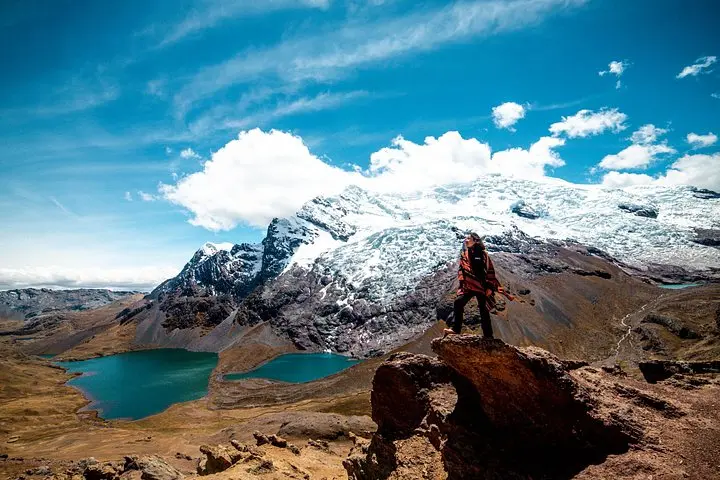
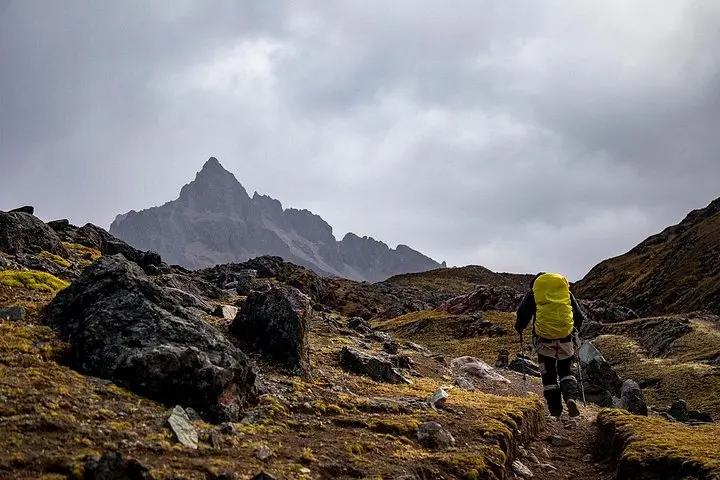
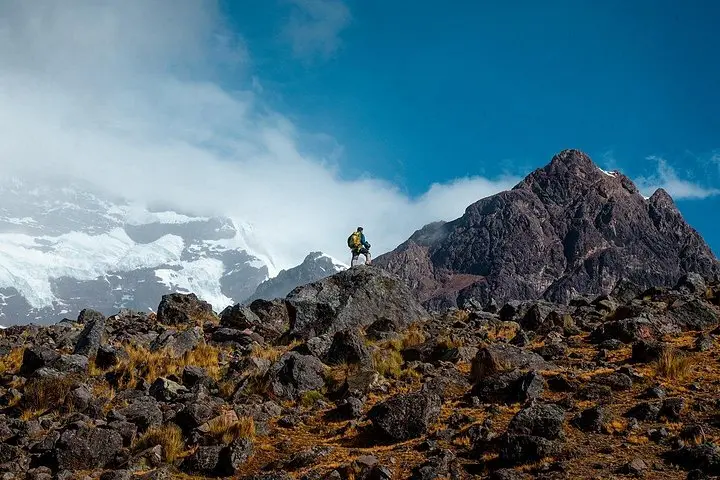
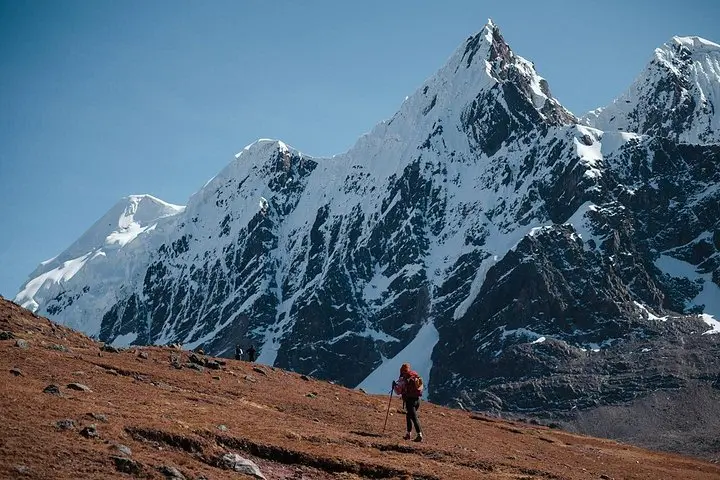
A cold pre-dawn ride from Cusco drops you at Upis, where thin air and a pink horizon announce the Andes are awake. You step onto a flinty trail that climbs steadily beneath Ausangate’s glaciers; wind tugs at your jacket and lagoons flash like polished mirrors. By afternoon the group reaches Hatun Pucacocha camp and the mountain’s bulk fills the skyline — impressive, indifferent, and impossibly high.
A cold pre-dawn ride from Cusco drops you at Upis, where thin air and a pink horizon announce the Andes are awake. You step onto a flinty trail that climbs steadily beneath Ausangate’s glaciers; wind tugs at your jacket and lagoons flash like polished mirrors. By afternoon the group reaches Hatun Pucacocha camp and the mountain’s bulk fills the skyline — impressive, indifferent, and impossibly high.
This route traces old pastoral corridors used for centuries by Quechua herders. Geologically the range is young and tectonically active: bands of metamorphic rock and glacial cirques carved by repeated ice ages frame the trek. Cultural touches appear in adobe hamlets and corrals of stone where llamas and alpacas graze; guides explain local rituals that honor the mountain — Apu Ausangate — during seasonal festivals.
Expect two substantial passes (Puca and Warmisaya), high-elevation lagoons, and a final early-morning push to Vinicunca (Rainbow Mountain) to beat the crowds. Terrain alternates between rocky booted singletrack, grassy puna slopes, and short steep ascents; altitude is the defining challenge rather than technical scrambling. Practical prep matters: sleep two nights at basic high-altitude camps, carry layers for sub-freezing nights, and hydrate deliberately to ease acclimatization. Guides supply tents, most meals, oxygen, and luggage transport (7 kg). Pace yourself on the first day to save strength for the higher second-day passes and the early third-day ascent to Vinicunca. The reward is a sequence of wide, wind-swept panoramas that make the effort obvious.