THE ADVENTURE COLLECTIVE® · Independent discovery and booking for outdoor travel

Walk the lines of Austerlitz from Brno: climb Pratzen Heights, stand on Žuráň where Napoleon watched the field, and explore Slavkov Chateau. This 5–7 hour guided tour blends short hikes, village stops and battlefield museums with clear historical context and practical logistics.
Walk the lines of Austerlitz from Brno: climb Pratzen Heights, stand on Žuráň where Napoleon watched the field, and explore Slavkov Chateau. This 5–7 hour guided tour blends short hikes, village stops and battlefield museums with clear historical context and practical logistics.
A cold wind moves across the low tableland and the grasses on Pratzen Heights bend as if nudging you forward. You arrive from Brno into a landscape that still carries the measured geometry of fields and villages — hilltops, farm lanes, and the chessboard of trenches and ridgelines where commanders took their positions. The day unfolds as a moving map: Žuráň where Napoleon watched the field, Santon hill and its scarred slopes, the constructed diorama at Tvarožná, and the quiet courtyard of Slavkov (Austerlitz) Chateau.
Verified experiences and guided adventures in the surrounding area.
Operated by BRNOguide · Slavkov u Brna, South Moravian Region
A cold wind moves across the low tableland and the grasses on Pratzen Heights bend as if nudging you forward. You arrive from Brno into a landscape that still carries the measured geometry of fields and villages — hilltops, farm lanes, and the chessboard of trenches and ridgelines where commanders took their positions. The day unfolds as a moving map: Žuráň where Napoleon watched the field, Santon hill and its scarred slopes, the constructed diorama at Tvarožná, and the quiet courtyard of Slavkov (Austerlitz) Chateau.
This ground bears a clear history. On 2 December 1805, the Battle of the Three Emperors reshaped Europe; the Pratzen Heights, composed of compact clay over loess, offered commanding lines of sight that dictated troop movement. Local villages—Sokolnice, Telnice, Křenovice—are working agricultural communities whose churches, granaries and chateaux quietly preserve 19th-century echoes and wartime artifacts. The Cairn of Peace and the museum on Pratzen provide context: uniforms, maps and models that turn the wide plain into a readable story.
Practical guidance: expect a 5–7 hour tour with several short hikes up grassy rises; terrain is farm tracks, gravel lanes and gentle slopes. Wear sturdy walking shoes, bring layered clothing for exposed ridges, carry 1–2 liters of water and a packed lunch or plan to stop in Sokolnice. Museums may be closed on Mondays and the interactive exhibitions have limited opening hours; confirm in advance. Photography is excellent at sunrise and late afternoon when shadows reveal the battlefield’s contours. Respect fenced sites, stay on paths, and leave no trace—this is working farmland and protected historic ground.
The tour runs about 5–7 hours and includes several short hikes up hilltops and walking between village stops; expect intermittent walking throughout the day.
Museum admissions are not included by default; some stops are external views and entry fees for museums or chateaux are typically paid separately.
Infants and small children can be accommodated but some hilltop approaches are uneven—strollers may be usable on roads but not on all trails.
Yes; many tours include transport from Brno in an air-conditioned vehicle, but confirm pickup point and transfer details when booking.
BRNOguide operates guided outdoor trips and adventures with an emphasis on safety, stewardship, and memorable experiences.
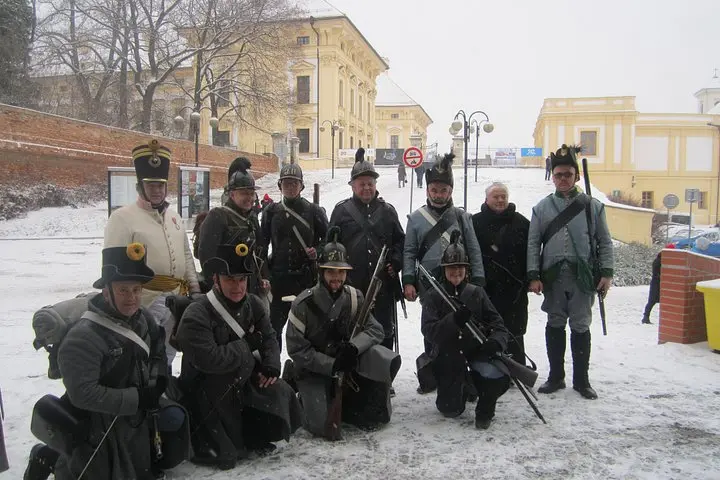
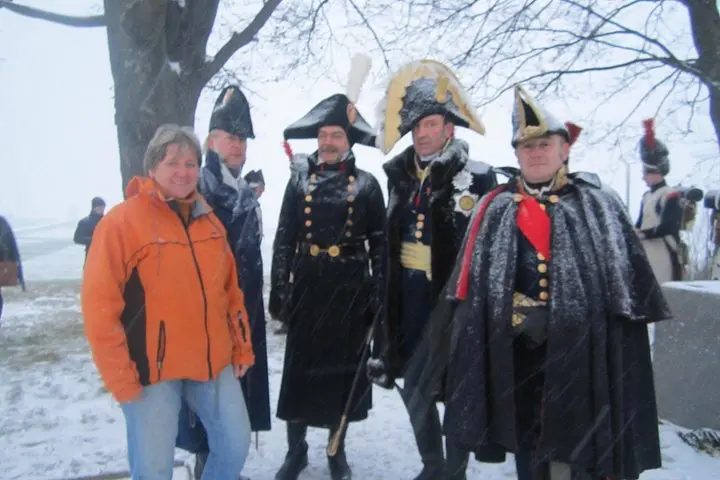
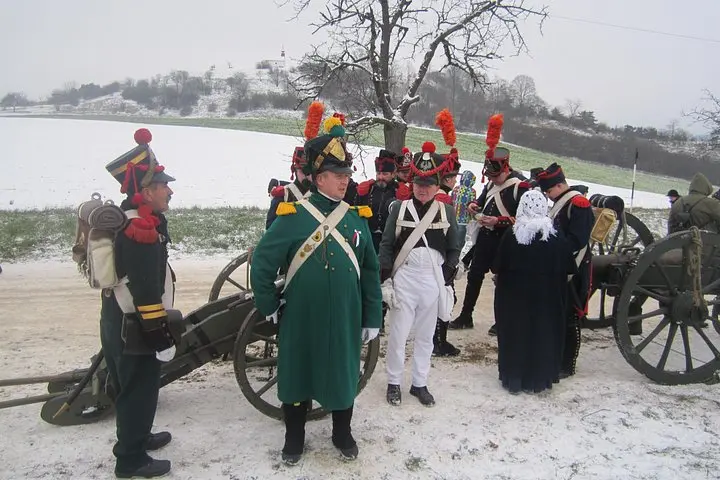
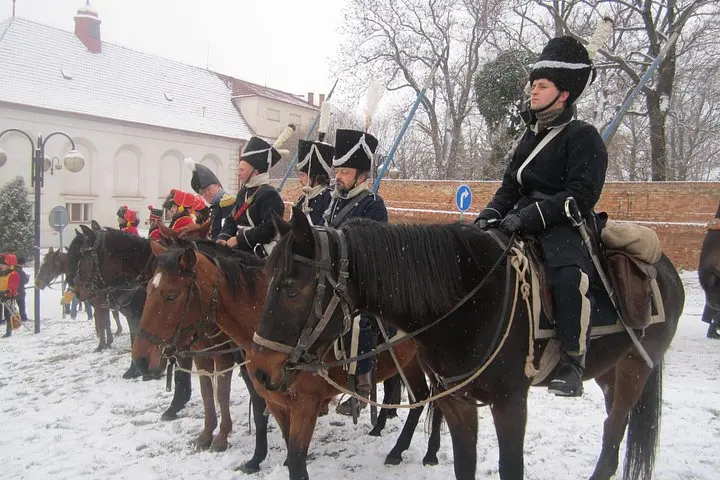
A cold wind moves across the low tableland and the grasses on Pratzen Heights bend as if nudging you forward. You arrive from Brno into a landscape that still carries the measured geometry of fields and villages — hilltops, farm lanes, and the chessboard of trenches and ridgelines where commanders took their positions. The day unfolds as a moving map: Žuráň where Napoleon watched the field, Santon hill and its scarred slopes, the constructed diorama at Tvarožná, and the quiet courtyard of Slavkov (Austerlitz) Chateau.
A cold wind moves across the low tableland and the grasses on Pratzen Heights bend as if nudging you forward. You arrive from Brno into a landscape that still carries the measured geometry of fields and villages — hilltops, farm lanes, and the chessboard of trenches and ridgelines where commanders took their positions. The day unfolds as a moving map: Žuráň where Napoleon watched the field, Santon hill and its scarred slopes, the constructed diorama at Tvarožná, and the quiet courtyard of Slavkov (Austerlitz) Chateau.
This ground bears a clear history. On 2 December 1805, the Battle of the Three Emperors reshaped Europe; the Pratzen Heights, composed of compact clay over loess, offered commanding lines of sight that dictated troop movement. Local villages—Sokolnice, Telnice, Křenovice—are working agricultural communities whose churches, granaries and chateaux quietly preserve 19th-century echoes and wartime artifacts. The Cairn of Peace and the museum on Pratzen provide context: uniforms, maps and models that turn the wide plain into a readable story.
Practical guidance: expect a 5–7 hour tour with several short hikes up grassy rises; terrain is farm tracks, gravel lanes and gentle slopes. Wear sturdy walking shoes, bring layered clothing for exposed ridges, carry 1–2 liters of water and a packed lunch or plan to stop in Sokolnice. Museums may be closed on Mondays and the interactive exhibitions have limited opening hours; confirm in advance. Photography is excellent at sunrise and late afternoon when shadows reveal the battlefield’s contours. Respect fenced sites, stay on paths, and leave no trace—this is working farmland and protected historic ground.