THE ADVENTURE COLLECTIVE® · Independent discovery and booking for outdoor travel

Watch Austin’s skyline shift from copper to cobalt on a sunset cruise of Lady Bird Lake, then follow local lore and lights on a narrated night drive. From March–October, the tour times to catch 1.5 million bats erupting beneath the Congress Avenue Bridge.
Watch Austin’s skyline shift from copper to cobalt on a sunset cruise of Lady Bird Lake, then follow local lore and lights on a narrated night drive. From March–October, the tour times to catch 1.5 million bats erupting beneath the Congress Avenue Bridge.
The sun slides toward the horizon and the city exhales. On Lady Bird Lake, the water darkens into a ribbon of ink while downtown skyscrapers take on a copper edge; the boat cuts a slow line across that changing light. Passengers lean on the rail, cameras poised, as the shoreline—Pfluger Bridge, Rainey Street bungalows, and the looming Congress Avenue Bridge—settles into silhouette.
Verified experiences and guided adventures in the surrounding area.
Operated by See Sight Tours USA · Austin, Texas
The sun slides toward the horizon and the city exhales. On Lady Bird Lake, the water darkens into a ribbon of ink while downtown skyscrapers take on a copper edge; the boat cuts a slow line across that changing light. Passengers lean on the rail, cameras poised, as the shoreline—Pfluger Bridge, Rainey Street bungalows, and the looming Congress Avenue Bridge—settles into silhouette.
This two-and-a-half-hour experience pairs a sunset cruise on Lady Bird Lake with a narrated, small-group driving tour in an air-conditioned Mercedes Metris van. From March through October, timing is calibrated to the nightly exodus of the Mexican free-tailed bats beneath the Congress Avenue Bridge—one of the largest urban colonies on the planet. The bats burst from the bridge in a staggering black plume, darting and slicing through the twilight sky with a speed and direction that seems to challenge the city’s geometry.
Lady Bird Lake itself is a man-made reservoir on the Colorado River, formed in the mid-20th century to tame seasonal floods and create the linear green space that defines central Austin. The bridges and promenades are relatively recent urban gestures; the bat colony, once fragmented, has become an ecological icon and a nightly ritual, attracting scientists and curious visitors alike. Along the driving route, the tour taps into Austin’s cultural layers—Rainey Street’s dozen converted bungalows whose string lights hum with neighborhoods’ recent renaissance, South Congress’ muraled façades that shout local pride, and the pedestrian rhythm of Pfluger Bridge offering direct skyline views.
Practicalities are simple: the tour departs from downtown with complimentary pickup for central hotels (guests should expect a 30-minute pre-departure pickup window). The boat portion offers covered seating but an open-air vantage for photos; accessibility is provided. Guides narrate with concise local history and point out the best viewing positions for the bat emergence and skyline shots.
To make the most of the night, arrive with a light layer—the temperature shifts quickly after sunset—and a headlamp for moving between vehicle and dock. Bring insect repellent and a mid-telephoto lens if you want identifiable bat silhouettes against the sky. If you book between March and October, position yourself on the lake-facing side of the boat for the clearest view of the bats; outside that window, the cruise still offers excellent skyline and bridge views.
This is a low-effort, high-reward urban nature outing: part wildlife spectacle, part city tour. It’s ideal for evening arrivals, families, and travelers who want a compact sampler of Austin’s riverside charm and nocturnal surprises without worrying about logistics or driving after dark.
Plan between March and October when nightly emergence is most reliable; the exact time varies with sunset and season, so tours time departures to match the bats’ activity.
Yes — the tour notes wheelchair accessibility, but confirm any special assistance needs with the operator when booking.
Restrooms are available at the dock before boarding and the driving portion has stops; expect limited facilities onboard the cruise vessel.
Yes — families are welcome and strollers are accommodated; minors should be supervised at the dock and on the boat.
Bat activity depends on weather and season; guides provide local context and the cruise still offers excellent sunset and city views even if bat numbers are low.
Beverages or snacks are not included; you may purchase items at nearby venues before pickup or bring bottled water aboard.
See Sight Tours USA operates guided outdoor trips and adventures with an emphasis on safety, stewardship, and memorable experiences.
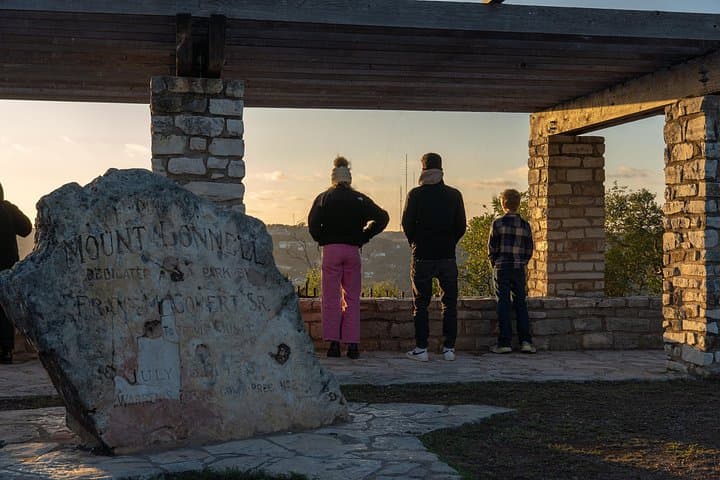


The sun slides toward the horizon and the city exhales. On Lady Bird Lake, the water darkens into a ribbon of ink while downtown skyscrapers take on a copper edge; the boat cuts a slow line across that changing light. Passengers lean on the rail, cameras poised, as the shoreline—Pfluger Bridge, Rainey Street bungalows, and the looming Congress Avenue Bridge—settles into silhouette.
The sun slides toward the horizon and the city exhales. On Lady Bird Lake, the water darkens into a ribbon of ink while downtown skyscrapers take on a copper edge; the boat cuts a slow line across that changing light. Passengers lean on the rail, cameras poised, as the shoreline—Pfluger Bridge, Rainey Street bungalows, and the looming Congress Avenue Bridge—settles into silhouette.
This two-and-a-half-hour experience pairs a sunset cruise on Lady Bird Lake with a narrated, small-group driving tour in an air-conditioned Mercedes Metris van. From March through October, timing is calibrated to the nightly exodus of the Mexican free-tailed bats beneath the Congress Avenue Bridge—one of the largest urban colonies on the planet. The bats burst from the bridge in a staggering black plume, darting and slicing through the twilight sky with a speed and direction that seems to challenge the city’s geometry.
Lady Bird Lake itself is a man-made reservoir on the Colorado River, formed in the mid-20th century to tame seasonal floods and create the linear green space that defines central Austin. The bridges and promenades are relatively recent urban gestures; the bat colony, once fragmented, has become an ecological icon and a nightly ritual, attracting scientists and curious visitors alike. Along the driving route, the tour taps into Austin’s cultural layers—Rainey Street’s dozen converted bungalows whose string lights hum with neighborhoods’ recent renaissance, South Congress’ muraled façades that shout local pride, and the pedestrian rhythm of Pfluger Bridge offering direct skyline views.
Practicalities are simple: the tour departs from downtown with complimentary pickup for central hotels (guests should expect a 30-minute pre-departure pickup window). The boat portion offers covered seating but an open-air vantage for photos; accessibility is provided. Guides narrate with concise local history and point out the best viewing positions for the bat emergence and skyline shots.
To make the most of the night, arrive with a light layer—the temperature shifts quickly after sunset—and a headlamp for moving between vehicle and dock. Bring insect repellent and a mid-telephoto lens if you want identifiable bat silhouettes against the sky. If you book between March and October, position yourself on the lake-facing side of the boat for the clearest view of the bats; outside that window, the cruise still offers excellent skyline and bridge views.
This is a low-effort, high-reward urban nature outing: part wildlife spectacle, part city tour. It’s ideal for evening arrivals, families, and travelers who want a compact sampler of Austin’s riverside charm and nocturnal surprises without worrying about logistics or driving after dark.