THE ADVENTURE COLLECTIVE® · Independent discovery and booking for outdoor travel

A compact, cultural day trek from Pokhara that climbs forested trails to Australian Camp for sweeping Annapurna views, then returns via the traditional Gurung village of Dhampus. Ideal as a single-day introduction to the Annapurna foothills.
A compact, cultural day trek from Pokhara that climbs forested trails to Australian Camp for sweeping Annapurna views, then returns via the traditional Gurung village of Dhampus. Ideal as a single-day introduction to the Annapurna foothills.
The day begins on a narrow road out of Pokhara, the car easing toward Kande as low clouds lift from the Annapurna ridgeline. From the trailhead a steady path climbs through rhododendron and pine, the forest pushing you forward until the vista opens at Australian Camp — a grassy bench ringed with prayer flags where Annapurna South and Machapuchare (Fishtail) dominate the horizon.
Verified experiences and guided adventures in the surrounding area.
Operated by AM Travels and Tours · Pokhara, Gandaki Province
The day begins on a narrow road out of Pokhara, the car easing toward Kande as low clouds lift from the Annapurna ridgeline. From the trailhead a steady path climbs through rhododendron and pine, the forest pushing you forward until the vista opens at Australian Camp — a grassy bench ringed with prayer flags where Annapurna South and Machapuchare (Fishtail) dominate the horizon.
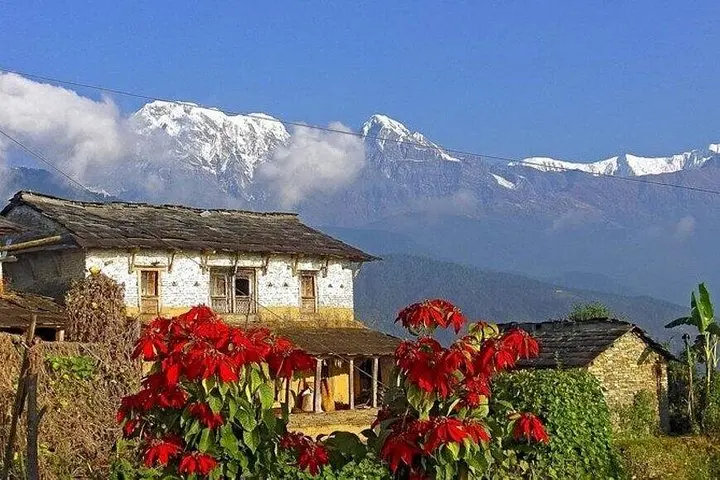
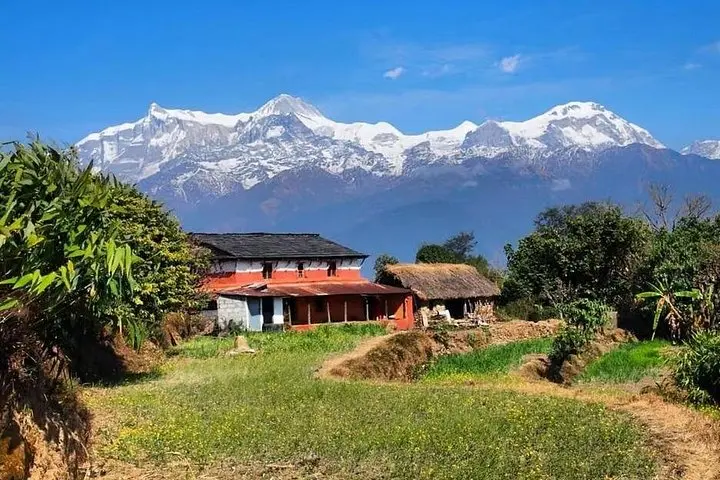
The trail follows the southern foothills of the Himalaya, running along old trade tracks and terraces cut into folded schist and greywacke. Small Gurung villages punctuate the route; in Australian Camp and Dhampus you can meet families who tend terraced fields and maintain local teahouses. The name “Australian Camp” reflects decades of international trekkers and volunteers who helped develop viewpoints and simple guest facilities.
Expect mixed terrain: compacted dirt, stone steps and short switchbacks. The day includes roughly 8–10 km of walking with a cumulative uphill section that feels like 400–800 m of gain depending on your start point, broken into two clear climbs and one long descent. Streams and terraces offer shade and photo stops; weather can shift quickly, with afternoon clouds rolling up from the valleys.
Practical guidance: start early to catch clear mountain light, carry 2–3 L of water and layered clothing, and wear grippy hiking shoes. Operators typically handle permits and transfers; mobile signal is intermittent beyond Pokhara. Be respectful when photographing locals, pack out trash, and allow extra time for relaxed photo stops and a packed lunch with a view.
The full outing typically takes 5–6 hours including transfers; expect steady uphill sections and a long descent—suitable for hikers with moderate fitness.
Operators usually handle local permits and transfers; a certified English-speaking guide is commonly provided for safety and cultural context.
Trails can be slippery in heavy rain—check local conditions and consider postponing during peak monsoon; guides will advise based on weather.
Yes—this day hike is commonly marketed to first-time trekkers, but participants should be comfortable with continuous uphill walking and uneven steps.
AM Travels and Tours operates guided outdoor trips and adventures with an emphasis on safety, stewardship, and memorable experiences.
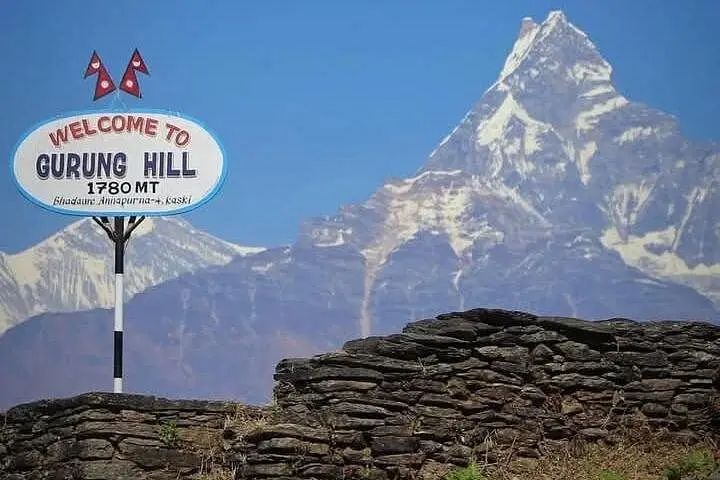
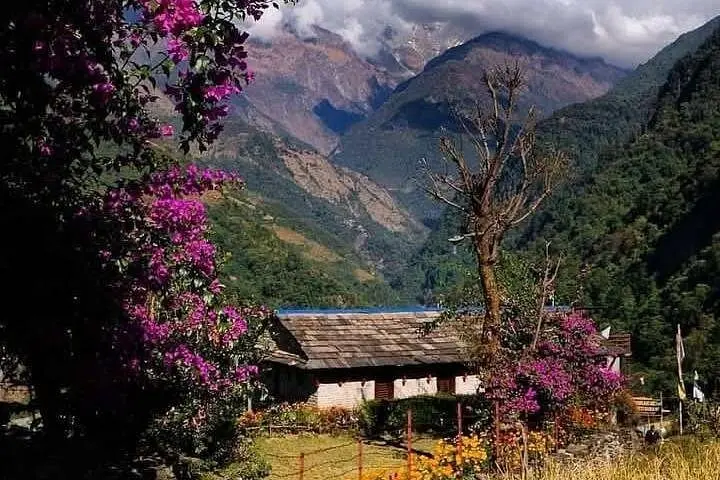
The day begins on a narrow road out of Pokhara, the car easing toward Kande as low clouds lift from the Annapurna ridgeline. From the trailhead a steady path climbs through rhododendron and pine, the forest pushing you forward until the vista opens at Australian Camp — a grassy bench ringed with prayer flags where Annapurna South and Machapuchare (Fishtail) dominate the horizon.
The day begins on a narrow road out of Pokhara, the car easing toward Kande as low clouds lift from the Annapurna ridgeline. From the trailhead a steady path climbs through rhododendron and pine, the forest pushing you forward until the vista opens at Australian Camp — a grassy bench ringed with prayer flags where Annapurna South and Machapuchare (Fishtail) dominate the horizon.
The trail follows the southern foothills of the Himalaya, running along old trade tracks and terraces cut into folded schist and greywacke. Small Gurung villages punctuate the route; in Australian Camp and Dhampus you can meet families who tend terraced fields and maintain local teahouses. The name “Australian Camp” reflects decades of international trekkers and volunteers who helped develop viewpoints and simple guest facilities.
Expect mixed terrain: compacted dirt, stone steps and short switchbacks. The day includes roughly 8–10 km of walking with a cumulative uphill section that feels like 400–800 m of gain depending on your start point, broken into two clear climbs and one long descent. Streams and terraces offer shade and photo stops; weather can shift quickly, with afternoon clouds rolling up from the valleys.
Practical guidance: start early to catch clear mountain light, carry 2–3 L of water and layered clothing, and wear grippy hiking shoes. Operators typically handle permits and transfers; mobile signal is intermittent beyond Pokhara. Be respectful when photographing locals, pack out trash, and allow extra time for relaxed photo stops and a packed lunch with a view.