THE ADVENTURE COLLECTIVE® · Independent discovery and booking for outdoor travel

A one‑day guided circuit from Madrid to two UNESCO cities: walk Ávila’s ramparts, visit Saint Teresa’s birthplace and skip the line at Segovia’s aqueduct, cathedral and Alcázar. Practical, paced and ideal for first‑time visitors.
A one‑day guided circuit from Madrid to two UNESCO cities: walk Ávila’s ramparts, visit Saint Teresa’s birthplace and skip the line at Segovia’s aqueduct, cathedral and Alcázar. Practical, paced and ideal for first‑time visitors.
You step onto a cool, air‑conditioned coach in central Madrid at 09:00 and the city’s hum fades as stone and plains slide into view. Within an hour the skyline gives way to thick medieval walls of Ávila, their weathered blocks catching light like records of centuries. The guide’s voice is deliberate through the provided headset as you circle towers that once defined the frontier of Castile.
Verified experiences and guided adventures in the surrounding area.
Operated by Fun and Tickets · Madrid, Community of Madrid
You step onto a cool, air‑conditioned coach in central Madrid at 09:00 and the city’s hum fades as stone and plains slide into view. Within an hour the skyline gives way to thick medieval walls of Ávila, their weathered blocks catching light like records of centuries. The guide’s voice is deliberate through the provided headset as you circle towers that once defined the frontier of Castile.
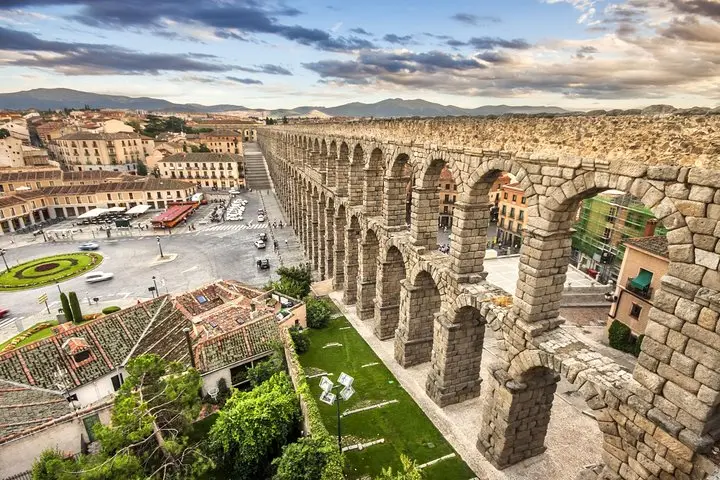
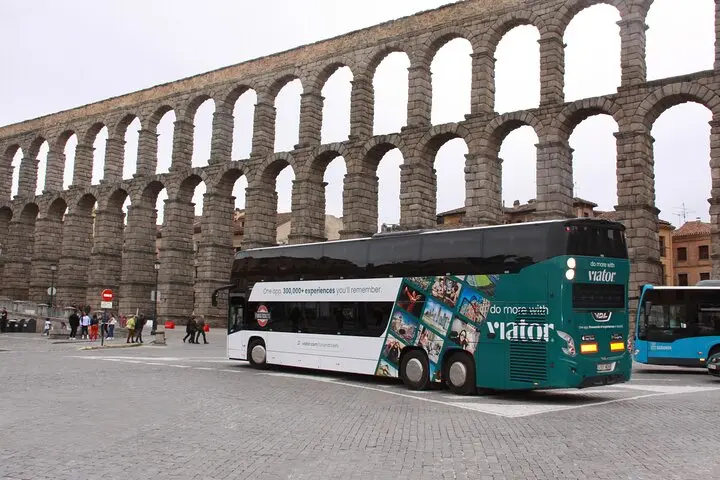
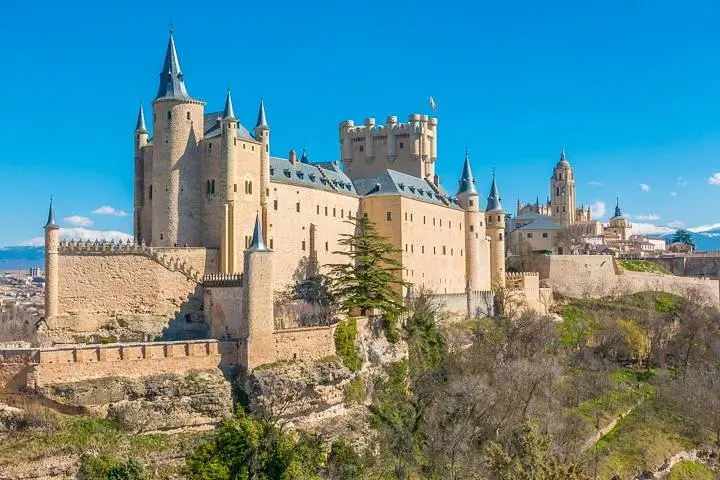
Ávila and Segovia are both UNESCO sites shaped by Roman, Visigothic and medieval Castilian forces. In Ávila the cathedral’s fortress‑apse speaks to a time when churches doubled as keeps; the convent of Saint Teresa anchors the town’s spiritual history. Segovia’s landmark aqueduct — giant granite arches set without mortar — is Roman engineering laid across a limestone shelf, feeding a city that later crowned itself with a fairytale Alcázar built on volcanic and metamorphic bedrock atop a river confluence.
Culturally the two cities represent different registers: Ávila’s austere religious past and Segovia’s royal pageantry and military geometry. Expect compact walking tours, skip‑the‑line admissions to the Basilica, Alcázar and Cathedral, and small bilingual groups for clearer interpretation.
Practical guidance: wear supportive walking shoes (cobblestones and short stair sections), bring a refillable water bottle and a light layer for wind on exposed viewpoints. Timing is tight — meals are not included beyond a snack in Ávila — so budget lunch time in Segovia’s plaza. The tour moves at a steady pace; if you travel with mobility limitations, check accessibility in advance. For a single day out of Madrid this route delivers concentrated history, structural drama and clear logistics — an efficient cultural circuit with minimal guesswork.
The tour departs and returns to Calle de San Bernardo 7 in central Madrid; check‑in starts about 30 minutes before the 9:00 departure.
Yes — admission and skip‑the‑line tickets are included for the Basilica in Ávila, Alcázar and Segovia Cathedral, plus guided narration via radio headsets.
No — a drink and snack are provided in Ávila; plan for a self‑served lunch in Segovia or bring a packed meal.
Children are welcome, but the tour is not recommended for travelers with significant mobility limitations due to cobblestones and short stair sections; confirm specifics with the operator in advance.
Fun and Tickets operates guided outdoor trips and adventures with an emphasis on safety, stewardship, and memorable experiences.
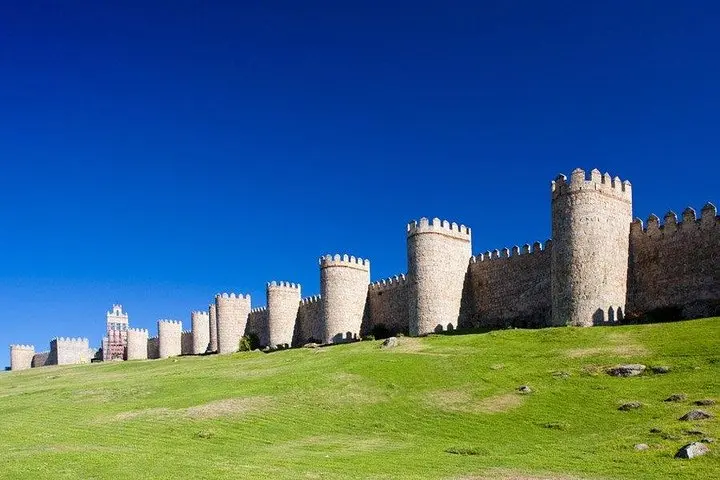
You step onto a cool, air‑conditioned coach in central Madrid at 09:00 and the city’s hum fades as stone and plains slide into view. Within an hour the skyline gives way to thick medieval walls of Ávila, their weathered blocks catching light like records of centuries. The guide’s voice is deliberate through the provided headset as you circle towers that once defined the frontier of Castile.
You step onto a cool, air‑conditioned coach in central Madrid at 09:00 and the city’s hum fades as stone and plains slide into view. Within an hour the skyline gives way to thick medieval walls of Ávila, their weathered blocks catching light like records of centuries. The guide’s voice is deliberate through the provided headset as you circle towers that once defined the frontier of Castile.
Ávila and Segovia are both UNESCO sites shaped by Roman, Visigothic and medieval Castilian forces. In Ávila the cathedral’s fortress‑apse speaks to a time when churches doubled as keeps; the convent of Saint Teresa anchors the town’s spiritual history. Segovia’s landmark aqueduct — giant granite arches set without mortar — is Roman engineering laid across a limestone shelf, feeding a city that later crowned itself with a fairytale Alcázar built on volcanic and metamorphic bedrock atop a river confluence.
Culturally the two cities represent different registers: Ávila’s austere religious past and Segovia’s royal pageantry and military geometry. Expect compact walking tours, skip‑the‑line admissions to the Basilica, Alcázar and Cathedral, and small bilingual groups for clearer interpretation.
Practical guidance: wear supportive walking shoes (cobblestones and short stair sections), bring a refillable water bottle and a light layer for wind on exposed viewpoints. Timing is tight — meals are not included beyond a snack in Ávila — so budget lunch time in Segovia’s plaza. The tour moves at a steady pace; if you travel with mobility limitations, check accessibility in advance. For a single day out of Madrid this route delivers concentrated history, structural drama and clear logistics — an efficient cultural circuit with minimal guesswork.