THE ADVENTURE COLLECTIVE® · Independent discovery and booking for outdoor travel

Speed across turquoise water aboard an Axopar 37 to reach the remote Dry Tortugas: snorkel vibrant reefs, wander the ramparts of Fort Jefferson, and visit Loggerhead Key’s lighthouse on a private full‑day charter from Key West.
Speed across turquoise water aboard an Axopar 37 to reach the remote Dry Tortugas: snorkel vibrant reefs, wander the ramparts of Fort Jefferson, and visit Loggerhead Key’s lighthouse on a private full‑day charter from Key West.
The bow of the Axopar 37 cuts a clean white wedge through endless turquoise; spray spits off the rails and the horizon seems to roll away like a promise. On a clear morning the Florida Straits open into a flat glass plain, and the Dry Tortugas—low, bright islands crowned by the squat profile of Fort Jefferson and the needle of Loggerhead’s lighthouse—appear suddenly, as if the ocean has decided to hand you a secret.
Verified experiences and guided adventures in the surrounding area.
Operated by SeaEO Nautical Ventures · Key West, Florida
The bow of the Axopar 37 cuts a clean white wedge through endless turquoise; spray spits off the rails and the horizon seems to roll away like a promise. On a clear morning the Florida Straits open into a flat glass plain, and the Dry Tortugas—low, bright islands crowned by the squat profile of Fort Jefferson and the needle of Loggerhead’s lighthouse—appear suddenly, as if the ocean has decided to hand you a secret.
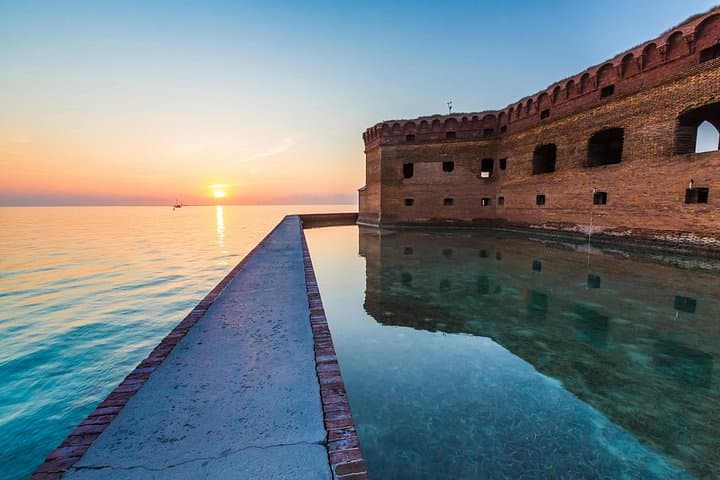
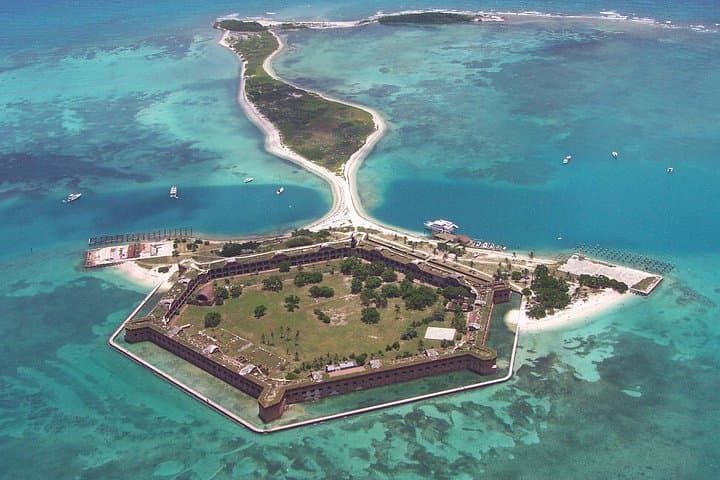
This is not a long ferry day. A high-performance Axopar 37 on a private charter makes the roughly two‑hour run from Stock Island to Garden Key feel quick: wind in your face, an easy layout for sunbathing up front, and a captain who doubles as guide. Once ashore, Fort Jefferson—an enormous brickwork hexagon begun in the 1840s—dominates the island. It’s an American coastal fortress from the era of rifled cannon, later a Civil War outpost and a grim 19th‑century prison for a few notable inmates.
Geology here is simple and ruthless: low carbonate islands sitting on an offshore platform, ringed by coral and hardbottom that support a surprising abundance of tropical life. The reefs dare you to snorkel: parrotfish, angelfish, nurse sharks loafing beneath coral ledges, and sea turtles threading through the seagrass. Loggerhead Key’s shuttered lighthouse—three miles west—keeps watch over quieter water and attracts birds by the hundreds in spring.
Culturally, the Dry Tortugas have always been remote. Early mariners prized the islands’ turtle populations and sheltered ground; Fort Jefferson represents the federal investment in coastal control in an era when movement of men and goods depended on wind and wood. Today, the islands are managed for both history and habitat—visitors are briefed to leave artifacts, corals, and wildlife alone.
Practicalities matter on a full‑day private run. Expect about eight hours total; your itinerary typically includes multiple snorkel stops, beach time, Fort Jefferson exploration, and a look toward Loggerhead Key’s lighthouse. The operator provides snorkel equipment, a captain/guide, and sun‑ready deck space. Bring reef‑safe sunscreen, a light windbreaker for the run, a good mask if you prefer your own, and seasickness meds if you’re prone—the sea is usually fair but the Straits can surprise.
Timing the trip for morning light yields calmer water and clearer snorkeling; late spring brings bird nesting and summer brings the warmest water and afternoon thunderstorms. Respect coral, pack out trash, and ask crew where to step—these islands heal slowly. The trip is a compact package of high-octane boat time, shallow‑water marine life, and a slice of American coastal history—an efficient, luxurious way to reach one of the country’s most remote national parks.
Park admission is typically not included in this private charter; expect to pay the National Park entrance fee separately—verify with your operator before departure.
On a high‑performance Axopar 37 expect roughly a two‑hour run each way depending on sea state—plan for an eight‑hour day overall.
Yes, the operator provides snorkeling equipment, but bringing your own mask improves fit and lens clarity for underwater photos.
Children are welcome and infant seats are available; service animals are permitted—confirm any special needs with the operator ahead of time.
The Straits can be choppy; take preventive medication or use acupressure bands and sit mid‑vessel if you’re prone to motion sickness.
Loggerhead Key is part of the park but access may be limited; the itinerary often includes a view from the boat and a short visit when conditions and regulations permit.
SeaEO Nautical Ventures operates guided outdoor trips and adventures with an emphasis on safety, stewardship, and memorable experiences.


The bow of the Axopar 37 cuts a clean white wedge through endless turquoise; spray spits off the rails and the horizon seems to roll away like a promise. On a clear morning the Florida Straits open into a flat glass plain, and the Dry Tortugas—low, bright islands crowned by the squat profile of Fort Jefferson and the needle of Loggerhead’s lighthouse—appear suddenly, as if the ocean has decided to hand you a secret.
The bow of the Axopar 37 cuts a clean white wedge through endless turquoise; spray spits off the rails and the horizon seems to roll away like a promise. On a clear morning the Florida Straits open into a flat glass plain, and the Dry Tortugas—low, bright islands crowned by the squat profile of Fort Jefferson and the needle of Loggerhead’s lighthouse—appear suddenly, as if the ocean has decided to hand you a secret.
This is not a long ferry day. A high-performance Axopar 37 on a private charter makes the roughly two‑hour run from Stock Island to Garden Key feel quick: wind in your face, an easy layout for sunbathing up front, and a captain who doubles as guide. Once ashore, Fort Jefferson—an enormous brickwork hexagon begun in the 1840s—dominates the island. It’s an American coastal fortress from the era of rifled cannon, later a Civil War outpost and a grim 19th‑century prison for a few notable inmates.
Geology here is simple and ruthless: low carbonate islands sitting on an offshore platform, ringed by coral and hardbottom that support a surprising abundance of tropical life. The reefs dare you to snorkel: parrotfish, angelfish, nurse sharks loafing beneath coral ledges, and sea turtles threading through the seagrass. Loggerhead Key’s shuttered lighthouse—three miles west—keeps watch over quieter water and attracts birds by the hundreds in spring.
Culturally, the Dry Tortugas have always been remote. Early mariners prized the islands’ turtle populations and sheltered ground; Fort Jefferson represents the federal investment in coastal control in an era when movement of men and goods depended on wind and wood. Today, the islands are managed for both history and habitat—visitors are briefed to leave artifacts, corals, and wildlife alone.
Practicalities matter on a full‑day private run. Expect about eight hours total; your itinerary typically includes multiple snorkel stops, beach time, Fort Jefferson exploration, and a look toward Loggerhead Key’s lighthouse. The operator provides snorkel equipment, a captain/guide, and sun‑ready deck space. Bring reef‑safe sunscreen, a light windbreaker for the run, a good mask if you prefer your own, and seasickness meds if you’re prone—the sea is usually fair but the Straits can surprise.
Timing the trip for morning light yields calmer water and clearer snorkeling; late spring brings bird nesting and summer brings the warmest water and afternoon thunderstorms. Respect coral, pack out trash, and ask crew where to step—these islands heal slowly. The trip is a compact package of high-octane boat time, shallow‑water marine life, and a slice of American coastal history—an efficient, luxurious way to reach one of the country’s most remote national parks.