THE ADVENTURE COLLECTIVE® · Independent discovery and booking for outdoor travel

Raft the Ayung River near Ubud on a 2–3 hour journey through tropical gorge, class II–III rapids, and riverside temples. Practical, guide-led trips include safety briefings and lunch—perfect for travelers who want excitement without technical whitewater skills.
Raft the Ayung River near Ubud on a 2–3 hour journey through tropical gorge, class II–III rapids, and riverside temples. Practical, guide-led trips include safety briefings and lunch—perfect for travelers who want excitement without technical whitewater skills.
Beneath a humid canopy the Ayung River edges Ubud, its current tugging playfully at the raft as you push off from a small bamboo jetty. Palm fronds slap at the gorge walls; occasional spray cools your face while the guide calls the line through the next class II–III drop. The run moves briskly—equal parts calm pools where birds hover and short, excited rapids that demand paddling in rhythm.
Verified experiences and guided adventures in the surrounding area.
Operated by Bersinar Bali Tour · Ubud, Bali
Beneath a humid canopy the Ayung River edges Ubud, its current tugging playfully at the raft as you push off from a small bamboo jetty. Palm fronds slap at the gorge walls; occasional spray cools your face while the guide calls the line through the next class II–III drop. The run moves briskly—equal parts calm pools where birds hover and short, excited rapids that demand paddling in rhythm.
The Ayung cuts its way through volcanic flows and rich alluvial soils, carving a narrow gorge lined with companion trees and occasional carved stone shrines. Rice terraces and small temples cling to higher slopes, reflecting the island’s subak water system and the local importance of riverways for irrigation and ritual. Culturally, the river corridor has long been part of Ubud’s hinterland—villages, craftspeople, and waterside shrines appear between runs.
Practicalities are straightforward: trips typically last 2–3 hours door-to-door, include basic safety briefing, life jackets, and lunch, and navigate mainly class II–III rapids suitable for most active travelers. Wear secure water shoes, a fast-drying layer, and sunscreen; protect cameras with waterproof housings or dry bags. Morning departures cut the heat and increase wildlife sightings; rainy season raises flows and can make rapids punchier.
Expect clear instructions from guides, the occasional roadside waterfall, and easy access to showers afterward. This is a river that invites you to move with it—steady, occasionally playful, and rooted in the landscape and communities that line its banks.
The full activity is about 2–3 hours door-to-door; the river section with safety briefing and lunch typically lasts around 60–90 minutes.
Most Ayung River trips navigate class II–III rapids—short, punchy sections requiring teamwork but no technical whitewater skills.
Yes—operators provide life jackets and helmets as part of standard safety equipment and give a pre-run safety briefing.
Many Ubud operators offer hotel pickup; confirm your pickup point when booking and allow extra travel time on narrow roads.
Bersinar Bali Tour operates guided outdoor trips and adventures with an emphasis on safety, stewardship, and memorable experiences.

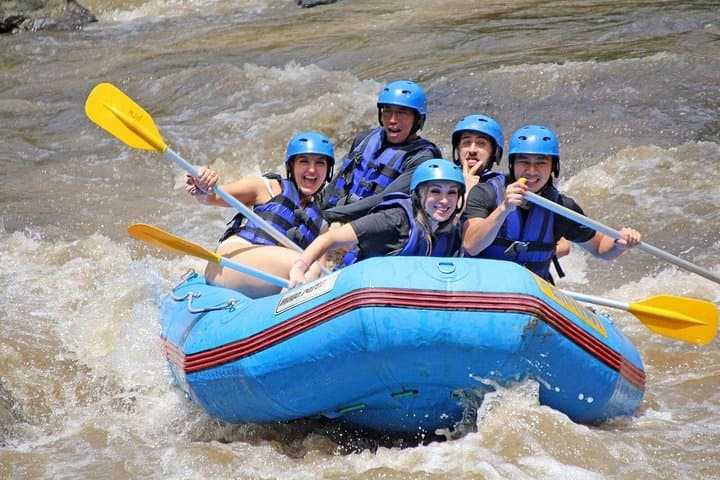


Beneath a humid canopy the Ayung River edges Ubud, its current tugging playfully at the raft as you push off from a small bamboo jetty. Palm fronds slap at the gorge walls; occasional spray cools your face while the guide calls the line through the next class II–III drop. The run moves briskly—equal parts calm pools where birds hover and short, excited rapids that demand paddling in rhythm.
Beneath a humid canopy the Ayung River edges Ubud, its current tugging playfully at the raft as you push off from a small bamboo jetty. Palm fronds slap at the gorge walls; occasional spray cools your face while the guide calls the line through the next class II–III drop. The run moves briskly—equal parts calm pools where birds hover and short, excited rapids that demand paddling in rhythm.
The Ayung cuts its way through volcanic flows and rich alluvial soils, carving a narrow gorge lined with companion trees and occasional carved stone shrines. Rice terraces and small temples cling to higher slopes, reflecting the island’s subak water system and the local importance of riverways for irrigation and ritual. Culturally, the river corridor has long been part of Ubud’s hinterland—villages, craftspeople, and waterside shrines appear between runs.
Practicalities are straightforward: trips typically last 2–3 hours door-to-door, include basic safety briefing, life jackets, and lunch, and navigate mainly class II–III rapids suitable for most active travelers. Wear secure water shoes, a fast-drying layer, and sunscreen; protect cameras with waterproof housings or dry bags. Morning departures cut the heat and increase wildlife sightings; rainy season raises flows and can make rapids punchier.
Expect clear instructions from guides, the occasional roadside waterfall, and easy access to showers afterward. This is a river that invites you to move with it—steady, occasionally playful, and rooted in the landscape and communities that line its banks.