THE ADVENTURE COLLECTIVE® · Independent discovery and booking for outdoor travel

Two hours on the Ayung is part river sprint, part jungle glide: a family-friendly white-water run that threads rice terraces, carved cliffs and a hidden waterfall. Read on for what to expect, local context and the packing list that makes the day easy.
Two hours on the Ayung is part river sprint, part jungle glide: a family-friendly white-water run that threads rice terraces, carved cliffs and a hidden waterfall. Read on for what to expect, local context and the packing list that makes the day easy.
The oar cuts a steady rhythm as the raft slides into the green throat of the Ayung. Rainforest inclines lean over the water, leaves brushing the current like long, slow fingers. For two hours the river becomes an active companion—sometimes playful, sometimes insistent—carrying a paddle team past carved cliff faces, rice-edge clearings and a hidden curtain of water that appears like a secret the canyon finally decides to show.
Verified experiences and guided adventures in the surrounding area.
Operated by Bali Sky Tour · Ubud, Bali
The oar cuts a steady rhythm as the raft slides into the green throat of the Ayung. Rainforest inclines lean over the water, leaves brushing the current like long, slow fingers. For two hours the river becomes an active companion—sometimes playful, sometimes insistent—carrying a paddle team past carved cliff faces, rice-edge clearings and a hidden curtain of water that appears like a secret the canyon finally decides to show.
Ayung River has long been part of central Bali’s working landscape: its flows irrigated rice fields and powered small mills, while its banks have framed temples and terraced plantations for generations. Geologically the gorge is young—steep volcanic soils sculpted by seasonal monsoon runoff—and the river’s clear pools and riffles reflect that energetic history. Local guides will point out the Blue Javan kingfisher and the occasional macaque, wildlife that treats the river corridor as a dependable route through a patchwork of farms and forest.
Culturally, the Ayung sits under Balinese Hindu rhythms. You’ll pass small shrines and offerings tied to trees and rock faces; the river is respected here, both as source and boundary. Modern rafting operators have fitted the experience to families and first-timers: the route averages about 10 kilometers and delivers a sequence of class II–III rapids that emphasize fun over technical challenge.
On the water you'll get practical thrills—splashy surges that demand teamwork—and quieter moments when the current slows and the canyon opens to rice terraces. Equipment is safety-approved: helmets, lifejackets, and a professionally trained guide in every boat. Post-raft facilities are surprisingly civilized—lockers, showers, towels and a buffet lunch are usually included.
Plan practically: morning departures avoid the heat and give better light for photos; the river runs fuller in the wet season, when rapids feel punchier. Wear secure water shoes, bring sunscreen and a towel, and expect to change after your trip. Most operators offer hotel pickup around Ubud and surrounding areas (confirm pickup zones when you book). Children as young as five are usually permitted, and operators commonly cap activity to guests up to around 60 years—check medical clearance rules if you have heart or back concerns.
The Ayung is an approachable white-water day out: atmospheric, scenic and engineered for safety. It’s not an expert-only run—there’s room for laughter, for the surprise of a hidden waterfall, and for the simple satisfaction of working a raft through a living river that’s still doing the work it’s done for centuries.
Typical trips cover about 10 kilometers on the Ayung and take roughly two hours on the water; total excursion time with transfer and facilities is longer.
Most operators accept children from age 5 up to about 60; age limits can vary so confirm at booking and disclose health concerns.
No—this run is graded II–III and designed for beginners and families with a professional guide in each raft.
Yes—hotel pickup around Ubud and many surrounding districts is commonly included; confirm pickup location and time when you book.
Trips can be canceled for safety if river conditions are dangerous; operators typically offer refunds or rescheduling (check specific cancellation terms).
Many guides or operators offer photo services or will help you shoot; bring a waterproof case if you want to use your own camera.
Bali Sky Tour operates guided outdoor trips and adventures with an emphasis on safety, stewardship, and memorable experiences.
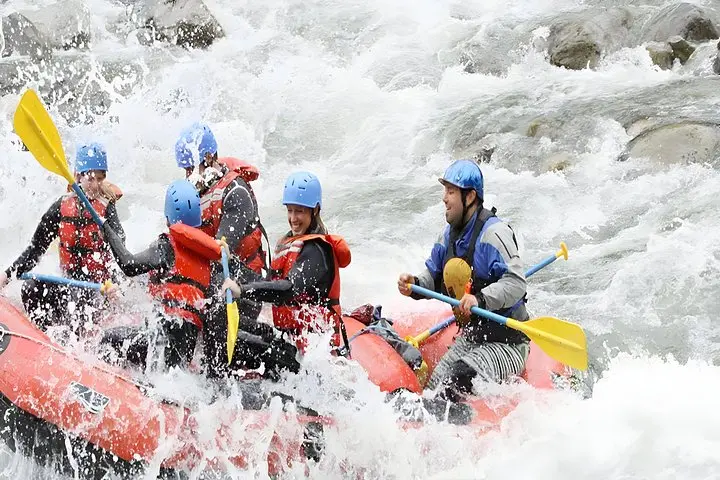
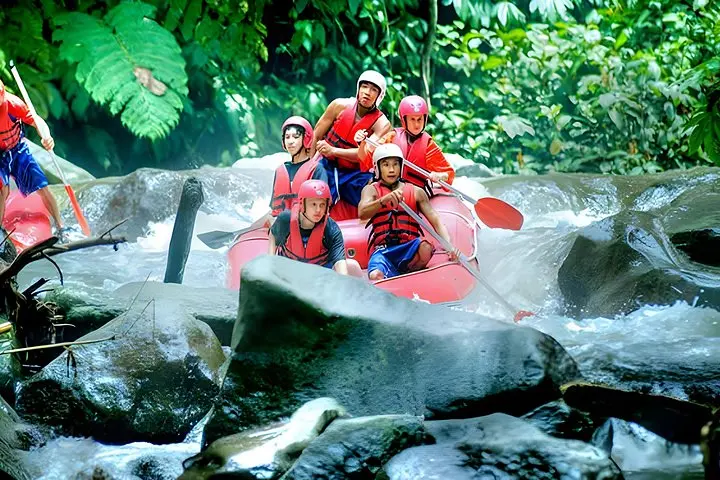
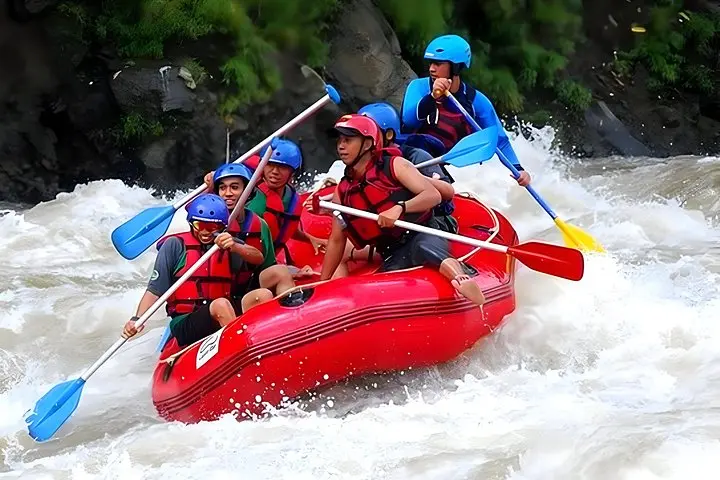
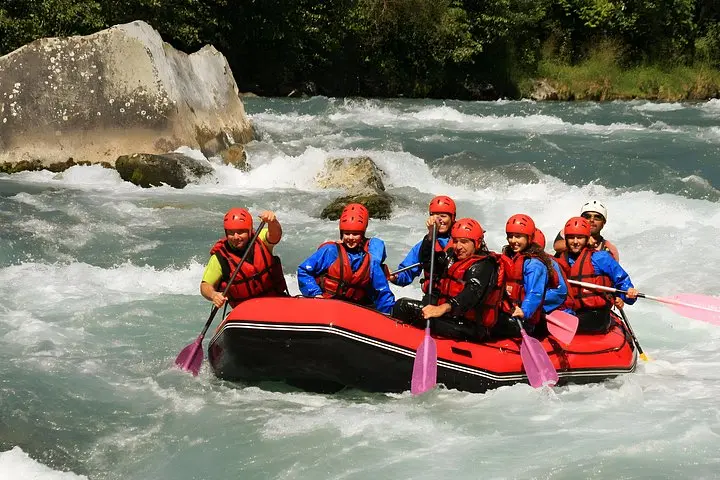
The oar cuts a steady rhythm as the raft slides into the green throat of the Ayung. Rainforest inclines lean over the water, leaves brushing the current like long, slow fingers. For two hours the river becomes an active companion—sometimes playful, sometimes insistent—carrying a paddle team past carved cliff faces, rice-edge clearings and a hidden curtain of water that appears like a secret the canyon finally decides to show.
The oar cuts a steady rhythm as the raft slides into the green throat of the Ayung. Rainforest inclines lean over the water, leaves brushing the current like long, slow fingers. For two hours the river becomes an active companion—sometimes playful, sometimes insistent—carrying a paddle team past carved cliff faces, rice-edge clearings and a hidden curtain of water that appears like a secret the canyon finally decides to show.
Ayung River has long been part of central Bali’s working landscape: its flows irrigated rice fields and powered small mills, while its banks have framed temples and terraced plantations for generations. Geologically the gorge is young—steep volcanic soils sculpted by seasonal monsoon runoff—and the river’s clear pools and riffles reflect that energetic history. Local guides will point out the Blue Javan kingfisher and the occasional macaque, wildlife that treats the river corridor as a dependable route through a patchwork of farms and forest.
Culturally, the Ayung sits under Balinese Hindu rhythms. You’ll pass small shrines and offerings tied to trees and rock faces; the river is respected here, both as source and boundary. Modern rafting operators have fitted the experience to families and first-timers: the route averages about 10 kilometers and delivers a sequence of class II–III rapids that emphasize fun over technical challenge.
On the water you'll get practical thrills—splashy surges that demand teamwork—and quieter moments when the current slows and the canyon opens to rice terraces. Equipment is safety-approved: helmets, lifejackets, and a professionally trained guide in every boat. Post-raft facilities are surprisingly civilized—lockers, showers, towels and a buffet lunch are usually included.
Plan practically: morning departures avoid the heat and give better light for photos; the river runs fuller in the wet season, when rapids feel punchier. Wear secure water shoes, bring sunscreen and a towel, and expect to change after your trip. Most operators offer hotel pickup around Ubud and surrounding areas (confirm pickup zones when you book). Children as young as five are usually permitted, and operators commonly cap activity to guests up to around 60 years—check medical clearance rules if you have heart or back concerns.
The Ayung is an approachable white-water day out: atmospheric, scenic and engineered for safety. It’s not an expert-only run—there’s room for laughter, for the surprise of a hidden waterfall, and for the simple satisfaction of working a raft through a living river that’s still doing the work it’s done for centuries.