THE ADVENTURE COLLECTIVE® · Independent discovery and booking for outdoor travel

Feel the Ayung River’s push through jungle canyons and carved rock as guides lead a long, lively white-water run near Ubud. This accessible rafting trip blends steady rapids, local culture and a riverside buffet for a full morning of motion and scenery.
Feel the Ayung River’s push through jungle canyons and carved rock as guides lead a long, lively white-water run near Ubud. This accessible rafting trip blends steady rapids, local culture and a riverside buffet for a full morning of motion and scenery.
You step off the shuttle where the jungle smells of wet earth and ginger, the Ayung River already audible a breath away — a steady, impatient rumble that promises motion. Guides fit helmets and life vests with practiced speed, their calm voices slicing through the chatter. When the raft hits the current the river takes the lead: playful drops, clean boils of white water and a few teeth-clenching rollers that make even steady hands paddle harder.
Verified experiences and guided adventures in the surrounding area.
Operated by Abadi Agus Tour · Ubud, Bali
You step off the shuttle where the jungle smells of wet earth and ginger, the Ayung River already audible a breath away — a steady, impatient rumble that promises motion. Guides fit helmets and life vests with practiced speed, their calm voices slicing through the chatter. When the raft hits the current the river takes the lead: playful drops, clean boils of white water and a few teeth-clenching rollers that make even steady hands paddle harder.
The Ayung has been carving this valley for millennia, its limestone and volcanic terrace walls holding stories of Bali’s geologic restlessness. Colonial-era maps first marked the river for irrigation and holy rites, but in recent decades it has become one of Ubud’s defining outdoor draws: not extreme white-water, exactly, but long runs framed by tropical forest, cliffside carvings and occasional rice terraces glimpsed through the trees.
Locally, rafting is part show, part livelihood. Small rafting operators link the sport to community: guides and boat crews are often sons and daughters of nearby villages, and many tours fold in a buffet lunch and a short cultural stop to explain temple offerings and river-as-gift beliefs. Geologically you’re on young volcanic soils; expect steep, eroded banks and fast-run sections where the river has gnawed new channels after heavy rains.
Practically, the trip is direct: about 2.5 hours from hotel pickup to drop-off is the typical window, with roughly 1–1.5 hours on the water depending on river conditions. Safety briefings are thorough; you’ll wear standard rafting kit and work as a team — this is a guided group run rather than a technical, expert-only descent. Children under 7 and travelers with serious back or heart conditions should sit this one out.
Timing matters. Mornings are cooler and less crowded if you can snag an early pickup from Ubud. Bring waterproof gear for cameras or use a cheap dry bag from the operator; flip-flops are fine for the shuttle but river shoes with good grip are more secure in the raft. Sunscreen and a quick-change outfit for the ride home are wise, and a modest tip for crew goes a long way.
If you want a fuller day, many operators combine rafting with an Ubud tour — rice terraces, monkey forest or a temple visit — letting the river be both adrenaline and a corridor into Balinese landscape and culture. On the Ayung, the current pushes you forward literally and, often, toward a clearer sense of why Ubud draws active travelers: it’s a place where motion and meaning run together.
The on-water portion is typically 60–90 minutes depending on river conditions; total trip time including pickup, briefing and lunch is around 2–3 hours.
Yes — this run is guided, aimed at beginners and families (children usually 7+), with life vests, helmets and hands-on instruction from professional guides.
Wear quick-dry clothes and secure water shoes, bring sunscreen, a dry bag for electronics, and a change of clothes for after the trip.
Yes — most packages include hotel pickup and drop-off in Ubud and surrounding areas; confirm pickup time when you book.
No — operators generally advise against rafting for pregnant travelers and those with spinal or serious cardiovascular issues.
Rafting may be rescheduled or canceled if conditions are unsafe; check the tour’s cancellation policy (full refund typically if canceled 24 hours prior).
Abadi Agus Tour operates guided outdoor trips and adventures with an emphasis on safety, stewardship, and memorable experiences.
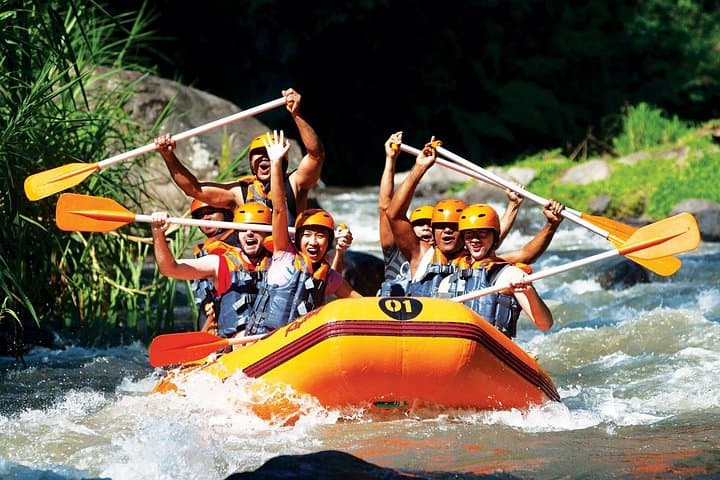
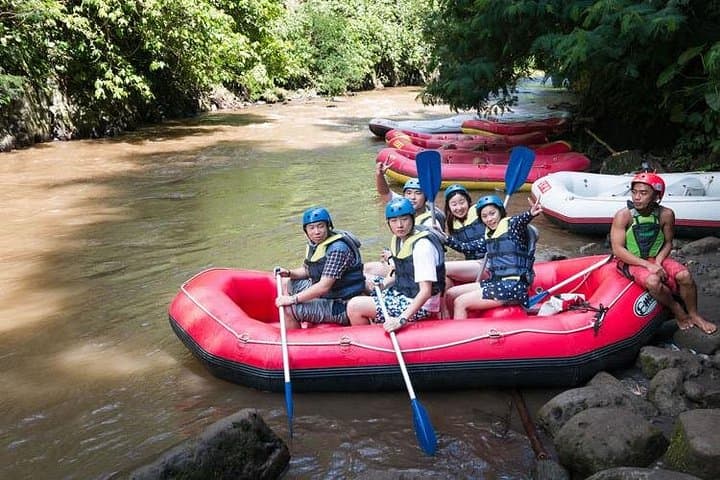
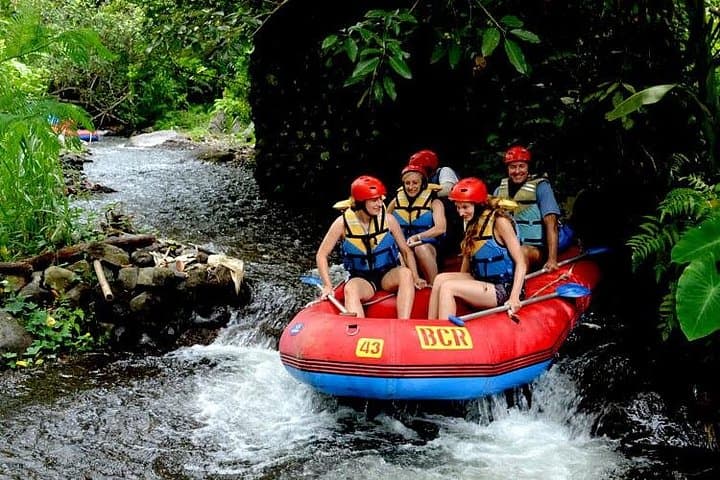
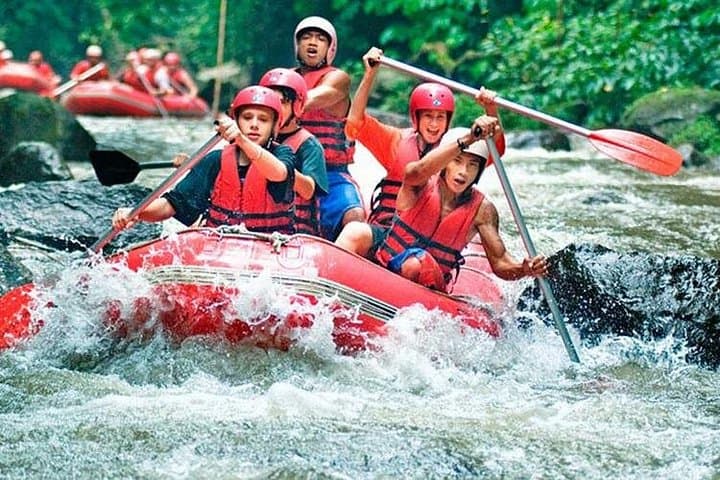
You step off the shuttle where the jungle smells of wet earth and ginger, the Ayung River already audible a breath away — a steady, impatient rumble that promises motion. Guides fit helmets and life vests with practiced speed, their calm voices slicing through the chatter. When the raft hits the current the river takes the lead: playful drops, clean boils of white water and a few teeth-clenching rollers that make even steady hands paddle harder.
You step off the shuttle where the jungle smells of wet earth and ginger, the Ayung River already audible a breath away — a steady, impatient rumble that promises motion. Guides fit helmets and life vests with practiced speed, their calm voices slicing through the chatter. When the raft hits the current the river takes the lead: playful drops, clean boils of white water and a few teeth-clenching rollers that make even steady hands paddle harder.
The Ayung has been carving this valley for millennia, its limestone and volcanic terrace walls holding stories of Bali’s geologic restlessness. Colonial-era maps first marked the river for irrigation and holy rites, but in recent decades it has become one of Ubud’s defining outdoor draws: not extreme white-water, exactly, but long runs framed by tropical forest, cliffside carvings and occasional rice terraces glimpsed through the trees.
Locally, rafting is part show, part livelihood. Small rafting operators link the sport to community: guides and boat crews are often sons and daughters of nearby villages, and many tours fold in a buffet lunch and a short cultural stop to explain temple offerings and river-as-gift beliefs. Geologically you’re on young volcanic soils; expect steep, eroded banks and fast-run sections where the river has gnawed new channels after heavy rains.
Practically, the trip is direct: about 2.5 hours from hotel pickup to drop-off is the typical window, with roughly 1–1.5 hours on the water depending on river conditions. Safety briefings are thorough; you’ll wear standard rafting kit and work as a team — this is a guided group run rather than a technical, expert-only descent. Children under 7 and travelers with serious back or heart conditions should sit this one out.
Timing matters. Mornings are cooler and less crowded if you can snag an early pickup from Ubud. Bring waterproof gear for cameras or use a cheap dry bag from the operator; flip-flops are fine for the shuttle but river shoes with good grip are more secure in the raft. Sunscreen and a quick-change outfit for the ride home are wise, and a modest tip for crew goes a long way.
If you want a fuller day, many operators combine rafting with an Ubud tour — rice terraces, monkey forest or a temple visit — letting the river be both adrenaline and a corridor into Balinese landscape and culture. On the Ayung, the current pushes you forward literally and, often, toward a clearer sense of why Ubud draws active travelers: it’s a place where motion and meaning run together.