THE ADVENTURE COLLECTIVE® · Independent discovery and booking for outdoor travel

Cut through jungle gorges and splash through class II–III rapids on a five‑hour rafting trip down the Ayung River. Expert local guides combine rivercraft, ecology, and Balinese stories for an accessible yet exciting day near Ubud.
Cut through jungle gorges and splash through class II–III rapids on a five‑hour rafting trip down the Ayung River. Expert local guides combine rivercraft, ecology, and Balinese stories for an accessible yet exciting day near Ubud.
The raft slips into a ribbon of green water and the jungle leans in close—palm fronds slap the sky, vines loop like ropes, and the current begins to pick up. Paddle commands crack in Balinese-accented English; the raft answers, surging around bedrock and through froth. For five hours, the Ayung River frames a motion-picture of Bali’s interior: limestone cliffs, sculpted rice terraces on distant ridges, and a constant hum of life along the banks.
Verified experiences and guided adventures in the surrounding area.
Operated by Bali Bliss Tours · Ubud, Bali
The raft slips into a ribbon of green water and the jungle leans in close—palm fronds slap the sky, vines loop like ropes, and the current begins to pick up. Paddle commands crack in Balinese-accented English; the raft answers, surging around bedrock and through froth. For five hours, the Ayung River frames a motion-picture of Bali’s interior: limestone cliffs, sculpted rice terraces on distant ridges, and a constant hum of life along the banks.
Ayung is Ubud’s working river: a life source for local villages and the same channel that powered traditional irrigation systems for centuries. Geologically, the valley cuts through volcanic and coral-derived deposits, producing the steep, polished rock faces that funnel the rapids. Culturally the river runs past small family temples and carved stone shrines—reminders that this is not just a playground but a place threaded into daily ritual.
Rafting here is accessible without compromising on thrill. The common commercial route covers roughly 8–10 km of river and contains mostly class II–III rapids: long, splashy sections that test coordination more than courage, punctuated by short, punchy drops where the guide’s timing matters. Along the way you’ll pass a few hidden cascades and get the chance to swim in calm pools while guides point out native figs and discuss river ecology.
Local guides bring more than paddling skill; they’re storytellers who explain the river’s role in Balinese life and point out bird species and riverbank agriculture. Many outfitters include a simple Balinese lunch at a cliffside restaurant, offering a view back down the gorge where the river narrows and the current tightens.
Practicalities: expect about five hours total from pickup to drop-off, with roughly two hours on the water. Moderate fitness is required—you’ll be on the raft, but scrambling in and out and a short walk to launch are part of the program. Tours run year-round, though the dry season (April–October) has steadier flows and clearer skies; wet-season afternoons bring bigger swells and muddier water.
Bring a waterproof bag for your phone, water shoes with a solid sole, and sunscreen; the guides will provide helmets, lifejackets, and paddles. If you have back problems, heart conditions, or are pregnant, this isn’t the day for you—rapids and jostling are part of the experience.
When you step off the raft, the noise of the current lingers in your bones and the smell of wet stone stays in your clothes. It’s an energetic, educative slice of Bali—fast enough to excite, informal enough to learn, and close enough to Ubud that it fits neatly into any travel plan.
The full experience including pickup and lunch is about five hours; on-water time is roughly two hours covering about 8–10 km of river.
Most rapids are class II–III—fun and splashy but suitable for beginners with a moderate level of fitness and a guide.
Yes—this tour includes a local lunch at a riverside or cliffside restaurant after the rafting segment.
No prior rafting experience is required; guides give a safety briefing and paddle instruction before launch.
Many operators accept children but age and weight minimums vary—check with the supplier when booking and note that the tour requests passenger weights for safety.
Tours usually operate in light rain; if conditions are dangerous, operators may reschedule or offer a full refund if canceled at least 24 hours in advance.
Bali Bliss Tours operates guided outdoor trips and adventures with an emphasis on safety, stewardship, and memorable experiences.
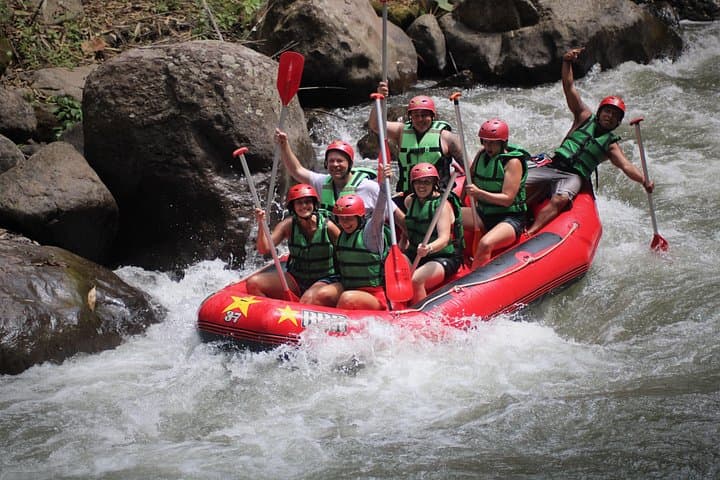

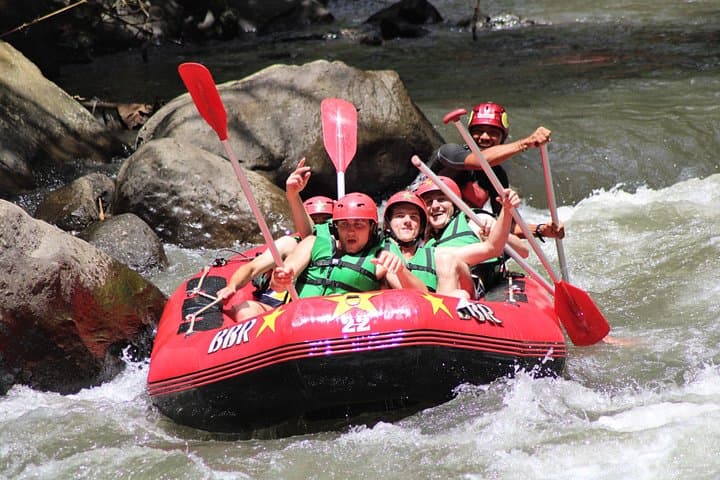
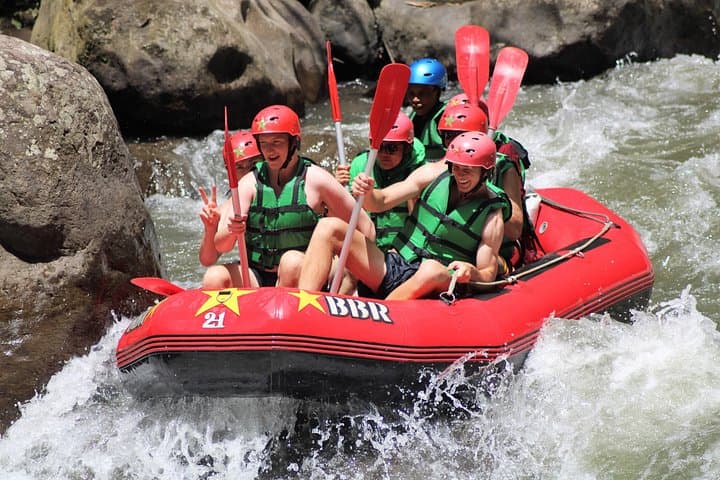
The raft slips into a ribbon of green water and the jungle leans in close—palm fronds slap the sky, vines loop like ropes, and the current begins to pick up. Paddle commands crack in Balinese-accented English; the raft answers, surging around bedrock and through froth. For five hours, the Ayung River frames a motion-picture of Bali’s interior: limestone cliffs, sculpted rice terraces on distant ridges, and a constant hum of life along the banks.
The raft slips into a ribbon of green water and the jungle leans in close—palm fronds slap the sky, vines loop like ropes, and the current begins to pick up. Paddle commands crack in Balinese-accented English; the raft answers, surging around bedrock and through froth. For five hours, the Ayung River frames a motion-picture of Bali’s interior: limestone cliffs, sculpted rice terraces on distant ridges, and a constant hum of life along the banks.
Ayung is Ubud’s working river: a life source for local villages and the same channel that powered traditional irrigation systems for centuries. Geologically, the valley cuts through volcanic and coral-derived deposits, producing the steep, polished rock faces that funnel the rapids. Culturally the river runs past small family temples and carved stone shrines—reminders that this is not just a playground but a place threaded into daily ritual.
Rafting here is accessible without compromising on thrill. The common commercial route covers roughly 8–10 km of river and contains mostly class II–III rapids: long, splashy sections that test coordination more than courage, punctuated by short, punchy drops where the guide’s timing matters. Along the way you’ll pass a few hidden cascades and get the chance to swim in calm pools while guides point out native figs and discuss river ecology.
Local guides bring more than paddling skill; they’re storytellers who explain the river’s role in Balinese life and point out bird species and riverbank agriculture. Many outfitters include a simple Balinese lunch at a cliffside restaurant, offering a view back down the gorge where the river narrows and the current tightens.
Practicalities: expect about five hours total from pickup to drop-off, with roughly two hours on the water. Moderate fitness is required—you’ll be on the raft, but scrambling in and out and a short walk to launch are part of the program. Tours run year-round, though the dry season (April–October) has steadier flows and clearer skies; wet-season afternoons bring bigger swells and muddier water.
Bring a waterproof bag for your phone, water shoes with a solid sole, and sunscreen; the guides will provide helmets, lifejackets, and paddles. If you have back problems, heart conditions, or are pregnant, this isn’t the day for you—rapids and jostling are part of the experience.
When you step off the raft, the noise of the current lingers in your bones and the smell of wet stone stays in your clothes. It’s an energetic, educative slice of Bali—fast enough to excite, informal enough to learn, and close enough to Ubud that it fits neatly into any travel plan.