THE ADVENTURE COLLECTIVE® · Independent discovery and booking for outdoor travel

A ten-day circuit from Baku across Gobustan’s petroglyphs, bubbling mud volcanoes, the fire temples of Absheron, the painted palaces of Sheki and the high village of Khinalig. Expect long drives, short hikes, and a mix of geology and living culture.
A ten-day circuit from Baku across Gobustan’s petroglyphs, bubbling mud volcanoes, the fire temples of Absheron, the painted palaces of Sheki and the high village of Khinalig. Expect long drives, short hikes, and a mix of geology and living culture.
You step off an air-conditioned minibus into a flat, salty wind that smells faintly of gas and sea — Baku’s coastline presses the Caspian like a sleeping animal. The tour begins with city vernacular: glass towers blinking across cobbled lanes, and the low, warm stone of Icherisheher where the Maiden Tower watches the bay. Over ten days the road will push you inland and up into mountain air, across landscapes that still feel like they’re deciding whether to be sea or steppe.
Verified experiences and guided adventures in the surrounding area.
Operated by Guided Azerbaijan · Baku, Baku
You step off an air-conditioned minibus into a flat, salty wind that smells faintly of gas and sea — Baku’s coastline presses the Caspian like a sleeping animal. The tour begins with city vernacular: glass towers blinking across cobbled lanes, and the low, warm stone of Icherisheher where the Maiden Tower watches the bay. Over ten days the road will push you inland and up into mountain air, across landscapes that still feel like they’re deciding whether to be sea or steppe.
Drive 56 km south to Gobustan and the land changes under the tires: mud flats dotted with squat oil rigs and, beyond them, the UNESCO-listed petroglyph fields. Here stone walls carry images carved 10,000 years ago — hunting scenes and carved hoofprints — the rock faces insisting on a human presence older than empires. Nearby the mud volcanoes put on a quieter spectacle: slow, bubbling cones that smell of petroleum and spit glossy clay that locals swear is good for the skin.
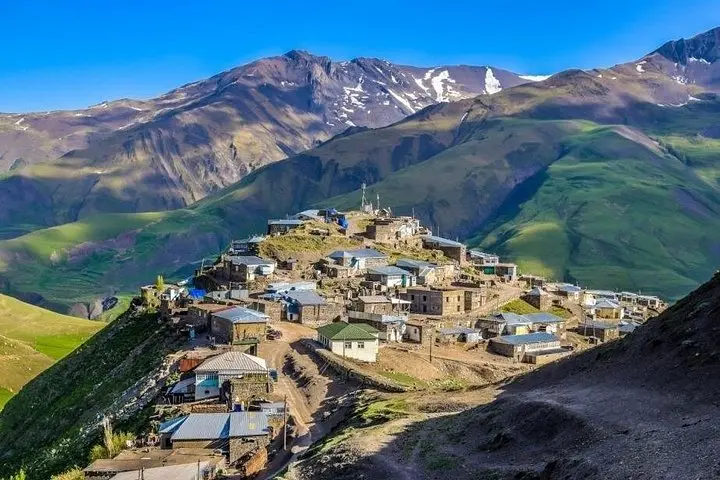
Cultural layers alternate fast. The Ateshgah fire temple and Yanardag’s eternal flames explain why this is called the land of fire; Zoroastrian, Hindu and Persian histories overlap with the Silk Road legacy visible in Sheki’s caravanserais and the Sheki Khan’s Palace, whose painted walls and delicate shebeke (stained-glass lattice) feel like a private sermon to craft. Higher, in the Greater Caucasus, Khinalig sits at 2,335 meters — a village that keeps an older way of life, where stone lanes climb and the air tastes metallic and clear.
Geology and human history are stitched together on this route: natural gas seams that burn for millennia, and limestone cliffs sheltering Mesolithic art. Local guides bring context — who rebuilt what after which invasion, why certain carpentry techniques survived, where the best local jams are made.
Practical edge: expect long drives between dispersed sites; Baku to Gabala is roughly 220 km and mountain roads to Khinalig are steep and sometimes unpaved. Bring layers for a 1,500–2,300 m swing in elevation, and shoes with good soles for cobbles and short hikes. Carry local currency for small museum stalls and tea houses in mountain villages. Expect easy walking in towns but uneven terrain at natural sites — Gobustan and mud volcanoes have short trails and exposed sun.
Timing matters: start coastal days early for cooler light and save higher-elevation excursions for afternoons when clouds lift. The trip balances cultural immersion with roadside geology — it’s less about ticking boxes and more about being moved by places where nature keeps a voice all its own.
Yes — pickup from Heydar Aliyev International Airport or hotels in Baku is provided; confirm arrival details with the operator.
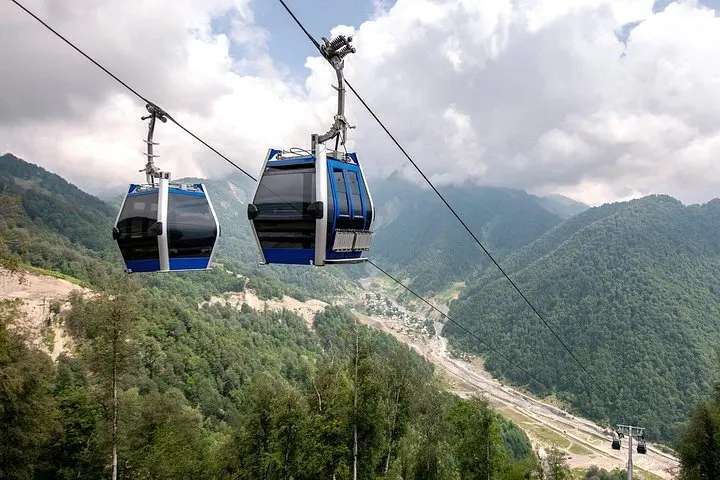
Some key entries are included per the itinerary (e.g., Shirvanshah’s Palace, Sheki Khan Palace, Gobustan Museum) but check specifics for sites like Tufandag ski complex or optional activities.
The tour is rated physically easy to moderate: most days involve short walks and stairs with long vehicle transfers; mountain access can include rough roads.
Guides are English-speaking; local drivers and staff may speak Azerbaijani or Russian.
Yes — the booking asks about special requirements. Regional cuisine is varied but inform your guide in advance for specific needs.
Khinalig involves steep, narrow roads and some walking on uneven stone; travelers with limited mobility should discuss alternatives with the operator.
Guided Azerbaijan operates guided outdoor trips and adventures with an emphasis on safety, stewardship, and memorable experiences.
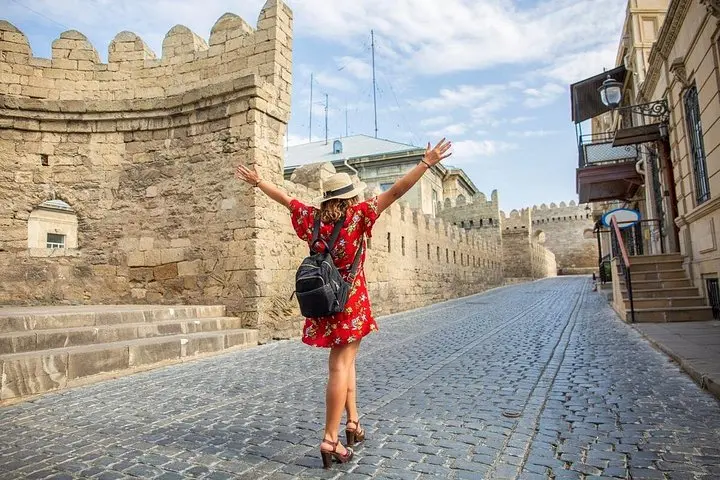
You step off an air-conditioned minibus into a flat, salty wind that smells faintly of gas and sea — Baku’s coastline presses the Caspian like a sleeping animal. The tour begins with city vernacular: glass towers blinking across cobbled lanes, and the low, warm stone of Icherisheher where the Maiden Tower watches the bay. Over ten days the road will push you inland and up into mountain air, across landscapes that still feel like they’re deciding whether to be sea or steppe.
You step off an air-conditioned minibus into a flat, salty wind that smells faintly of gas and sea — Baku’s coastline presses the Caspian like a sleeping animal. The tour begins with city vernacular: glass towers blinking across cobbled lanes, and the low, warm stone of Icherisheher where the Maiden Tower watches the bay. Over ten days the road will push you inland and up into mountain air, across landscapes that still feel like they’re deciding whether to be sea or steppe.
Drive 56 km south to Gobustan and the land changes under the tires: mud flats dotted with squat oil rigs and, beyond them, the UNESCO-listed petroglyph fields. Here stone walls carry images carved 10,000 years ago — hunting scenes and carved hoofprints — the rock faces insisting on a human presence older than empires. Nearby the mud volcanoes put on a quieter spectacle: slow, bubbling cones that smell of petroleum and spit glossy clay that locals swear is good for the skin.
Cultural layers alternate fast. The Ateshgah fire temple and Yanardag’s eternal flames explain why this is called the land of fire; Zoroastrian, Hindu and Persian histories overlap with the Silk Road legacy visible in Sheki’s caravanserais and the Sheki Khan’s Palace, whose painted walls and delicate shebeke (stained-glass lattice) feel like a private sermon to craft. Higher, in the Greater Caucasus, Khinalig sits at 2,335 meters — a village that keeps an older way of life, where stone lanes climb and the air tastes metallic and clear.
Geology and human history are stitched together on this route: natural gas seams that burn for millennia, and limestone cliffs sheltering Mesolithic art. Local guides bring context — who rebuilt what after which invasion, why certain carpentry techniques survived, where the best local jams are made.
Practical edge: expect long drives between dispersed sites; Baku to Gabala is roughly 220 km and mountain roads to Khinalig are steep and sometimes unpaved. Bring layers for a 1,500–2,300 m swing in elevation, and shoes with good soles for cobbles and short hikes. Carry local currency for small museum stalls and tea houses in mountain villages. Expect easy walking in towns but uneven terrain at natural sites — Gobustan and mud volcanoes have short trails and exposed sun.
Timing matters: start coastal days early for cooler light and save higher-elevation excursions for afternoons when clouds lift. The trip balances cultural immersion with roadside geology — it’s less about ticking boxes and more about being moved by places where nature keeps a voice all its own.