THE ADVENTURE COLLECTIVE® · Independent discovery and booking for outdoor travel

Ride one of the world’s longest cable cars up to Ba Na Hills, cross the Golden Hand Bridge, and explore a mountaintop French Village. This full-day tour from Hoi An blends dramatic views with convenient transport and a buffet lunch on the hill.
Ride one of the world’s longest cable cars up to Ba Na Hills, cross the Golden Hand Bridge, and explore a mountaintop French Village. This full-day tour from Hoi An blends dramatic views with convenient transport and a buffet lunch on the hill.
You step off an air-conditioned minivan into a cloud that moves like a slow river, and the coast’s humidity gives way to crisp, mountain air. The cable car pulls you up through emerald forest—an ascent of roughly 1,400–1,500 meters—over a span of about 5–6 km to a mountaintop where the Golden Hand Bridge arcs between ridgelines like a held breath.
Verified experiences and guided adventures in the surrounding area.
Operated by Amber Journeys · Da Nang, Da Nang
You step off an air-conditioned minivan into a cloud that moves like a slow river, and the coast’s humidity gives way to crisp, mountain air. The cable car pulls you up through emerald forest—an ascent of roughly 1,400–1,500 meters—over a span of about 5–6 km to a mountaintop where the Golden Hand Bridge arcs between ridgelines like a held breath.
Ba Na Hills sits on the Annamite slopes west of Da Nang, a colonial-era resort reimagined in recent decades as a leisure complex. Geologically the area is ancient highland, weathered into rounded ridges and steep valleys that fog and wind shape daily. Culturally you move from Vietnamese pagodas to a reconstructed French Village whose shuttered facades recall a brief 20th-century European presence on the coast.
Expect manicured gardens, pagodas, and a large indoor amusement center; wildlife is subtle—forest songbirds and occasional macaques watch from the treeline. Weather changes fast: sun one hour, mist the next, which is part of the place’s personality.
Practical guidance: plan 6–8 hours from Hoi An, leave early to avoid mid-day crowds, and buy a tour that includes cable car and round-trip transport to skip ticket lines. Terrain on-site is paved with steps and short climbs; comfortable, grippy shoes and layered clothing matter more than peak fitness. Hydrate—the altitude is mild but the walk and stair sections add up.
Manage expectations: the bridge is photogenic and often busy; aim for morning light for clearer views, and leave room in the afternoon for slower exploration of gardens and the French Village before the descent.
Yes—this full-day tour includes round-trip cable car tickets and entrance fees to Ba Na Hills attractions.
Transfer time is typically 45–75 minutes each way depending on traffic and the pickup location in Hoi An.
The bridge is accessible but the site includes stairs and some uneven surfaces; travelers with serious mobility limitations should check specifics with the operator.
Dry months from February to August usually offer clearer views, but mornings are generally the best time any season to avoid clouds and crowds.
Amber Journeys operates guided outdoor trips and adventures with an emphasis on safety, stewardship, and memorable experiences.
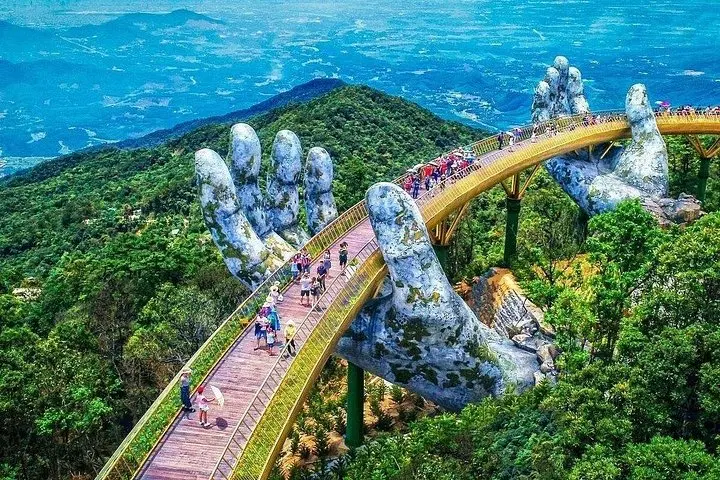
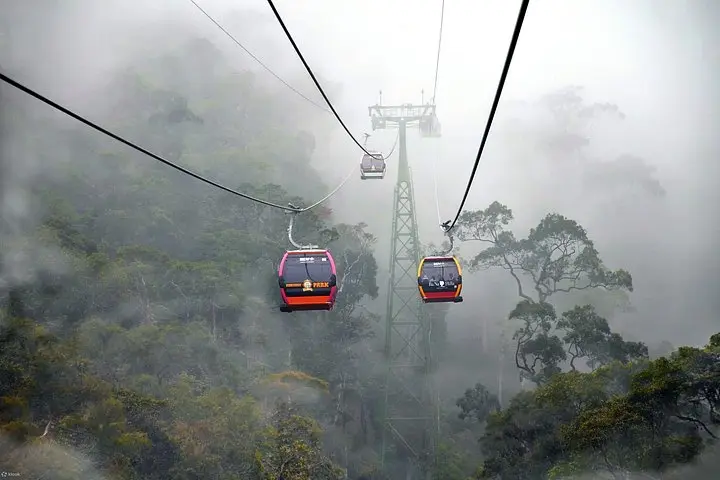
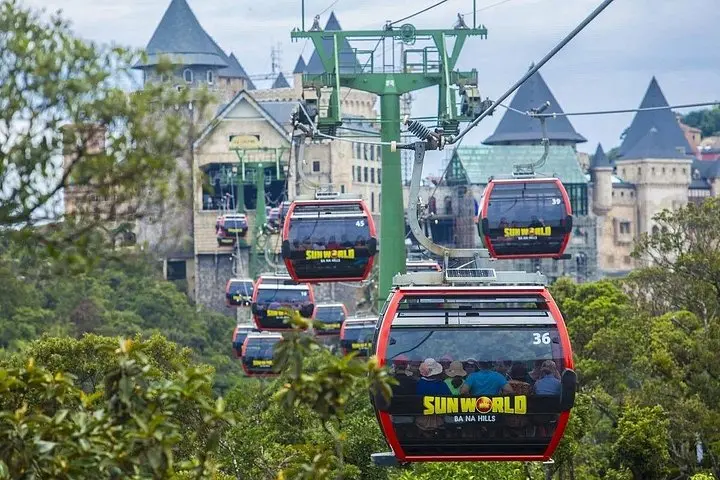
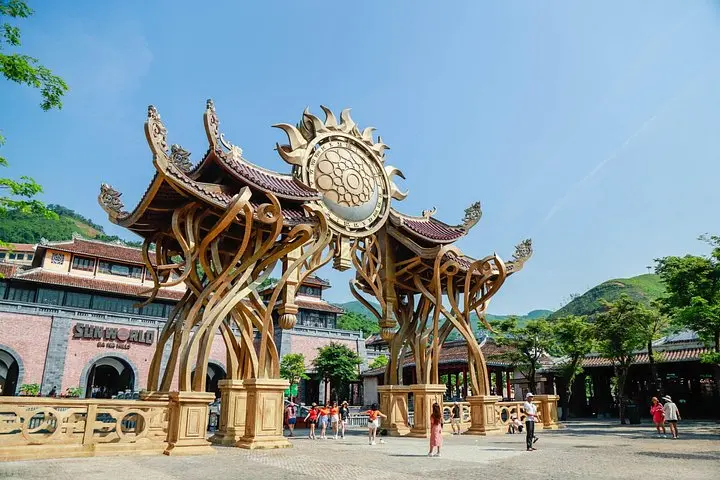
You step off an air-conditioned minivan into a cloud that moves like a slow river, and the coast’s humidity gives way to crisp, mountain air. The cable car pulls you up through emerald forest—an ascent of roughly 1,400–1,500 meters—over a span of about 5–6 km to a mountaintop where the Golden Hand Bridge arcs between ridgelines like a held breath.
You step off an air-conditioned minivan into a cloud that moves like a slow river, and the coast’s humidity gives way to crisp, mountain air. The cable car pulls you up through emerald forest—an ascent of roughly 1,400–1,500 meters—over a span of about 5–6 km to a mountaintop where the Golden Hand Bridge arcs between ridgelines like a held breath.
Ba Na Hills sits on the Annamite slopes west of Da Nang, a colonial-era resort reimagined in recent decades as a leisure complex. Geologically the area is ancient highland, weathered into rounded ridges and steep valleys that fog and wind shape daily. Culturally you move from Vietnamese pagodas to a reconstructed French Village whose shuttered facades recall a brief 20th-century European presence on the coast.
Expect manicured gardens, pagodas, and a large indoor amusement center; wildlife is subtle—forest songbirds and occasional macaques watch from the treeline. Weather changes fast: sun one hour, mist the next, which is part of the place’s personality.
Practical guidance: plan 6–8 hours from Hoi An, leave early to avoid mid-day crowds, and buy a tour that includes cable car and round-trip transport to skip ticket lines. Terrain on-site is paved with steps and short climbs; comfortable, grippy shoes and layered clothing matter more than peak fitness. Hydrate—the altitude is mild but the walk and stair sections add up.
Manage expectations: the bridge is photogenic and often busy; aim for morning light for clearer views, and leave room in the afternoon for slower exploration of gardens and the French Village before the descent.