THE ADVENTURE COLLECTIVE® · Independent discovery and booking for outdoor travel

Ride one of the world’s record-setting cable cars to the Golden Bridge, stroll the French Village, photograph Da Nang’s Dragon Bridge, and explore the caves and pagodas of Marble Mountains in a single day. Expect panoramic viewpoints, stairs, and quick weather changes—plan accordingly.
Ride one of the world’s record-setting cable cars to the Golden Bridge, stroll the French Village, photograph Da Nang’s Dragon Bridge, and explore the caves and pagodas of Marble Mountains in a single day. Expect panoramic viewpoints, stairs, and quick weather changes—plan accordingly.
Dawn breaks over the Annamite foothills as the cable car lifts you out of humid lowland air and into a cooler band of pine and cloud. Wind pushes across the open decks; below, rice paddies and the East Sea shrink to ribbons. At the Golden Bridge, two sculpted hands seem to hold the walkway aloft, and the city of Da Nang spreads toward the coast like a modern map.
Verified experiences and guided adventures in the surrounding area.
Operated by Private Tourguides in Da Nang Hoi An Hue · Da Nang, Da Nang
Dawn breaks over the Annamite foothills as the cable car lifts you out of humid lowland air and into a cooler band of pine and cloud. Wind pushes across the open decks; below, rice paddies and the East Sea shrink to ribbons. At the Golden Bridge, two sculpted hands seem to hold the walkway aloft, and the city of Da Nang spreads toward the coast like a modern map.
Ba Na Hills began as a French hill station in the 1920s, chosen for its temperate climate and views. The site’s geology is volcanic and hilly, with granite and weathered basalt forming caves and cliffs that have been shaped by seasonal monsoons. Marble Mountains, named for the five elements, are limestone and marble outcrops pocked with caverns and pagodas—places once used as sanctuaries during wartime and as carving workshops that still produce intricate marble pieces.
Culturally, this route threads colonial architecture in the French Village, Buddhist pagodas, and Da Nang’s modern skyline where the Dragon Bridge lights up at night. Expect built attractions and natural viewpoints in a single day.
Practical guidance: bring comfortable shoes for stair-heavy temple paths and uneven marble steps, and a light rain shell—weather changes quickly on the mountain. Start early to beat mid-day crowds at the Golden Bridge and schedule time for the cable-car queues; the line itself provides panoramic views, but waits can add 30–60 minutes. Hydrate; bottled water is often provided, but carry a refillable bottle. Respect pagoda etiquette—remove hats and speak quietly—and follow marked trails to protect fragile cave interiors and marble carvings.
Yes—this tour includes Ba Na cable car tickets and entrance fees as noted in the itinerary.
Pickup is available from hotels in Hoi An and Da Nang; confirm your pickup point when booking.
The bridge is reachable by cable car but there are steps and crowded walkways; travelers with serious mobility concerns should check accessibility details with the operator.
Yes—a local restaurant lunch is included in the tour price.
Private Tourguides in Da Nang Hoi An Hue operates guided outdoor trips and adventures with an emphasis on safety, stewardship, and memorable experiences.
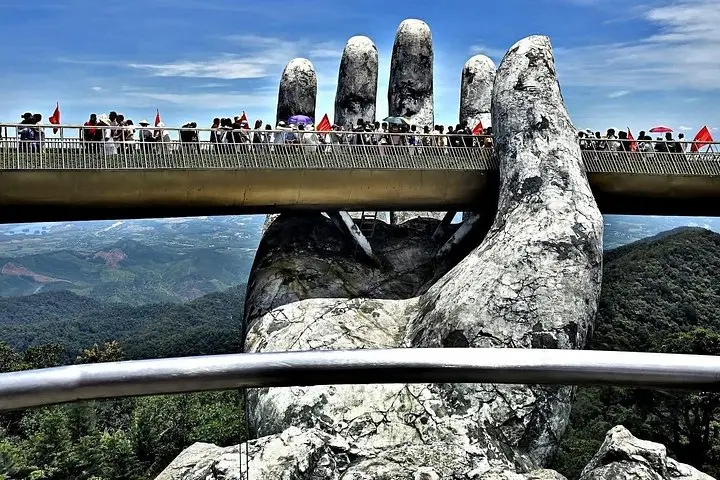
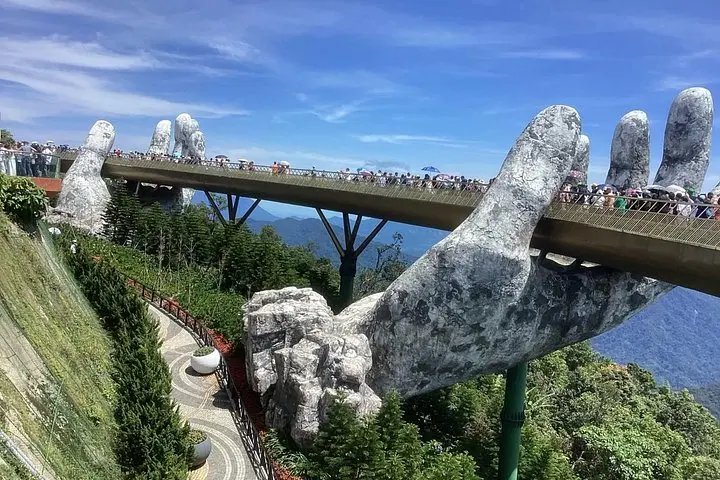
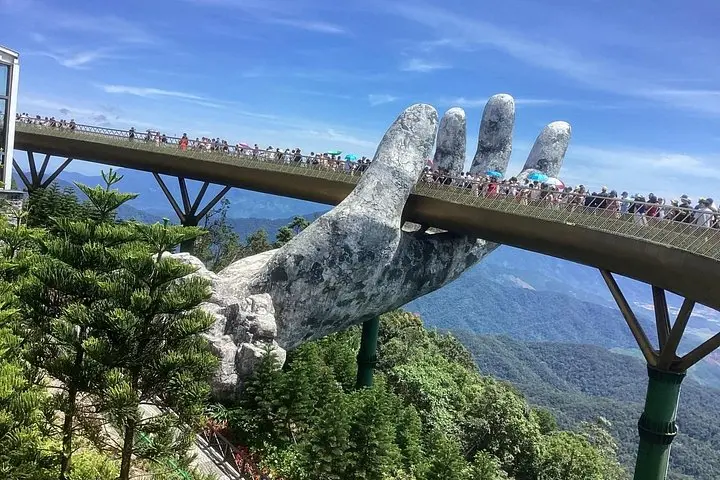
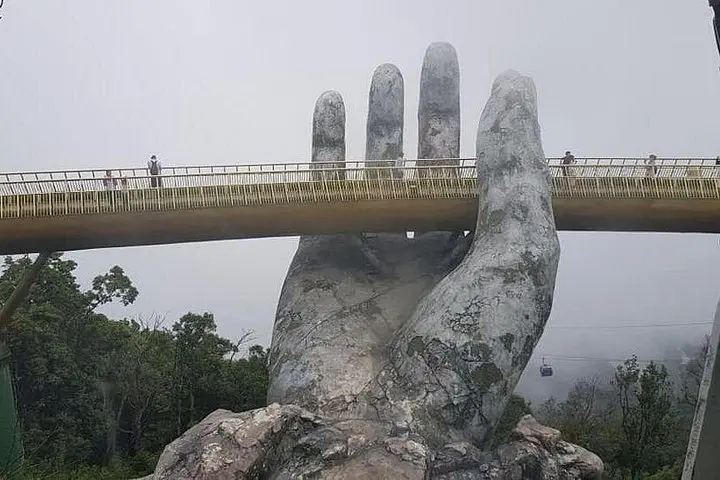
Dawn breaks over the Annamite foothills as the cable car lifts you out of humid lowland air and into a cooler band of pine and cloud. Wind pushes across the open decks; below, rice paddies and the East Sea shrink to ribbons. At the Golden Bridge, two sculpted hands seem to hold the walkway aloft, and the city of Da Nang spreads toward the coast like a modern map.
Dawn breaks over the Annamite foothills as the cable car lifts you out of humid lowland air and into a cooler band of pine and cloud. Wind pushes across the open decks; below, rice paddies and the East Sea shrink to ribbons. At the Golden Bridge, two sculpted hands seem to hold the walkway aloft, and the city of Da Nang spreads toward the coast like a modern map.
Ba Na Hills began as a French hill station in the 1920s, chosen for its temperate climate and views. The site’s geology is volcanic and hilly, with granite and weathered basalt forming caves and cliffs that have been shaped by seasonal monsoons. Marble Mountains, named for the five elements, are limestone and marble outcrops pocked with caverns and pagodas—places once used as sanctuaries during wartime and as carving workshops that still produce intricate marble pieces.
Culturally, this route threads colonial architecture in the French Village, Buddhist pagodas, and Da Nang’s modern skyline where the Dragon Bridge lights up at night. Expect built attractions and natural viewpoints in a single day.
Practical guidance: bring comfortable shoes for stair-heavy temple paths and uneven marble steps, and a light rain shell—weather changes quickly on the mountain. Start early to beat mid-day crowds at the Golden Bridge and schedule time for the cable-car queues; the line itself provides panoramic views, but waits can add 30–60 minutes. Hydrate; bottled water is often provided, but carry a refillable bottle. Respect pagoda etiquette—remove hats and speak quietly—and follow marked trails to protect fragile cave interiors and marble carvings.