THE ADVENTURE COLLECTIVE® · Independent discovery and booking for outdoor travel

Watch newly hatched sea turtles make their first run to the Pacific on Juluchuca beach. This conservation-minded 3.5-hour tour combines a guided hatchery visit, an explanation of local turtle biology, and a hands-on release experience.
Watch newly hatched sea turtles make their first run to the Pacific on Juluchuca beach. This conservation-minded 3.5-hour tour combines a guided hatchery visit, an explanation of local turtle biology, and a hands-on release experience.
Dawn on Juluchuca’s long, quiet beach feels deliberate: the surf pushes and pulls like a patient hand, and the sand cools beneath your feet as small heads break the earth. On this 3.5-hour tour you stand close enough to hear the scrape of tiny flippers and watch neon-bright hatchlings orient toward the Pacific — the ocean seeming to dare them forward.
Verified experiences and guided adventures in the surrounding area.
Operated by Luis de la Maza Ixtapa Zihuatanejo tours · Zihuatanejo, Guerrero
Dawn on Juluchuca’s long, quiet beach feels deliberate: the surf pushes and pulls like a patient hand, and the sand cools beneath your feet as small heads break the earth. On this 3.5-hour tour you stand close enough to hear the scrape of tiny flippers and watch neon-bright hatchlings orient toward the Pacific — the ocean seeming to dare them forward.
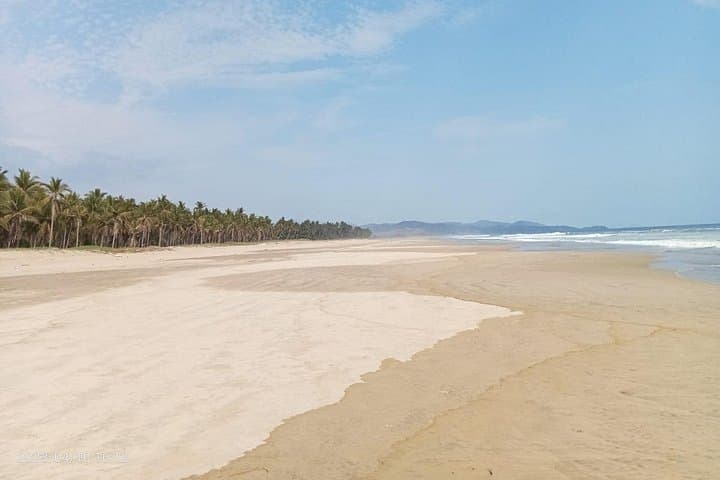
The Guerrero coast has long been a nesting ground for olive ridley and green turtles; local communities historically harvested eggs, but conservation efforts in recent decades have shifted practices toward protection and regulated monitoring. Geologically, Juluchuca is a broad, low-lying beach of wind-blown sand and storm-built berms, which offers hatchlings a long run to the surf and makes human access easier for guided releases.
Culturally, the village ties turtle protection to livelihoods: families that once collected eggs now run hatcheries and make coconut macaroons sold to visitors after releases. Expect straightforward interpretation from guides about incubation, predation, and survival odds, followed by a chance to observe a hatching nest and carry active turtles to the wet sand.
Practical guidance: arrive hydrated and with reef-safe sunscreen, wear sturdy sandals or water shoes for walking on hot or uneven sand, and bring a light layer for morning breeze. Follow the guide’s handling rules — minimal light, quiet voice, no flash photography, and no direct contact unless instructed. The experience lasts roughly 3–3.5 hours including hotel transfer, and it’s ideal for families and first-time wildlife observers seeking a direct, conservation-focused encounter.
Yes — the activity is family-friendly, but children should be supervised closely and follow guide instructions regarding touching and light use.
Handling is strictly controlled; the guide may allow brief, supervised contact for educational purposes but generally keeps interaction minimal to reduce stress on hatchlings.
Yes — round-trip pickup from hotels in Ixtapa or Zihuatanejo is included; confirm your pickup point when booking.
Do not use flash photography, bright lights, loud voices, or attempt to pick up hatchlings outside of guide supervision — these actions can disorient or injure turtles.
Luis de la Maza Ixtapa Zihuatanejo tours operates guided outdoor trips and adventures with an emphasis on safety, stewardship, and memorable experiences.


Dawn on Juluchuca’s long, quiet beach feels deliberate: the surf pushes and pulls like a patient hand, and the sand cools beneath your feet as small heads break the earth. On this 3.5-hour tour you stand close enough to hear the scrape of tiny flippers and watch neon-bright hatchlings orient toward the Pacific — the ocean seeming to dare them forward.
Dawn on Juluchuca’s long, quiet beach feels deliberate: the surf pushes and pulls like a patient hand, and the sand cools beneath your feet as small heads break the earth. On this 3.5-hour tour you stand close enough to hear the scrape of tiny flippers and watch neon-bright hatchlings orient toward the Pacific — the ocean seeming to dare them forward.
The Guerrero coast has long been a nesting ground for olive ridley and green turtles; local communities historically harvested eggs, but conservation efforts in recent decades have shifted practices toward protection and regulated monitoring. Geologically, Juluchuca is a broad, low-lying beach of wind-blown sand and storm-built berms, which offers hatchlings a long run to the surf and makes human access easier for guided releases.
Culturally, the village ties turtle protection to livelihoods: families that once collected eggs now run hatcheries and make coconut macaroons sold to visitors after releases. Expect straightforward interpretation from guides about incubation, predation, and survival odds, followed by a chance to observe a hatching nest and carry active turtles to the wet sand.
Practical guidance: arrive hydrated and with reef-safe sunscreen, wear sturdy sandals or water shoes for walking on hot or uneven sand, and bring a light layer for morning breeze. Follow the guide’s handling rules — minimal light, quiet voice, no flash photography, and no direct contact unless instructed. The experience lasts roughly 3–3.5 hours including hotel transfer, and it’s ideal for families and first-time wildlife observers seeking a direct, conservation-focused encounter.