THE ADVENTURE COLLECTIVE® · Independent discovery and booking for outdoor travel

Ride village lanes, hike limestone ridges and sleep in a traditional stilt house on this two-day Bac Son Valley tour. Expect rice terraces, karst panoramas, and simple rural hospitality paired with practical trail demands.
Ride village lanes, hike limestone ridges and sleep in a traditional stilt house on this two-day Bac Son Valley tour. Expect rice terraces, karst panoramas, and simple rural hospitality paired with practical trail demands.
Morning light spills across flat rice paddies and the valley holds it like a long, low basin—green reflecting green—while limestone ridges puncture the horizon. On a two-day Bac Son Valley tour you move between quiet stilt houses and rising karst slopes: pedaling on hard-packed village lanes, then trading the bike for boots to climb a ridge that opens onto a wide, agricultural bowl.
Verified experiences and guided adventures in the surrounding area.
Morning light spills across flat rice paddies and the valley holds it like a long, low basin—green reflecting green—while limestone ridges puncture the horizon. On a two-day Bac Son Valley tour you move between quiet stilt houses and rising karst slopes: pedaling on hard-packed village lanes, then trading the bike for boots to climb a ridge that opens onto a wide, agricultural bowl.
The valley sits within Lạng Sơn’s mosaic of upland farms and limestone outcrops shaped by millennia of uplift and monsoon erosion. Its villages preserve Tay and Kinh farming rhythms—stilt houses, water buffalo, and seasonal rice work—while local homestays offer windows into food, language, and village craft.
Expect mixed terrain: lowland dirt roads, short steep trails through secondary forest, and cultivated terraces that can be slippery in wet seasons. Weather follows the monsoon: heavy summer rains, cool dry winters, and fragrant, misty spring mornings.
Practical guidance: pack layered, quick-dry clothing and an overboot or grippy shoes for wet terraces. Start rides before mid-day heat, carry at least 1.5–2 liters of water, and bring a small first-aid kit for blisters and scrapes. Your homestay will be simple—shared bedrooms and squat toilets are common—so a lightweight travel towel and slip-on shoes are useful. Respect local customs: ask before photographing families, remove shoes entering homes, and offer small gifts like fruit or coffee as a courtesy.
This two-day loop balances movement and cultural exchange—enough challenge to feel earned, and enough calm to notice how the valley keeps its own slow pulse.
Homestays are traditional wooden stilt houses with simple bedding, shared facilities, and hearty home-cooked meals—expect basic comforts rather than hotel amenities.
No advanced skills are needed, but you should be comfortable riding on uneven, unpaved village lanes and managing short climbs.
Yes—many tours run as small-group departures from Hanoi with transport; travel time is around 3–4 hours depending on traffic.
Guides are typically local and bilingual to varying degrees—most tours include at least one English-speaking guide familiar with culture and route logistics.
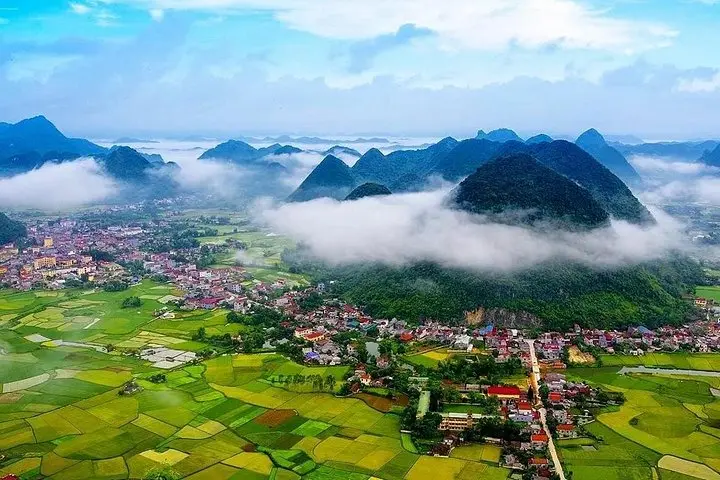
Morning light spills across flat rice paddies and the valley holds it like a long, low basin—green reflecting green—while limestone ridges puncture the horizon. On a two-day Bac Son Valley tour you move between quiet stilt houses and rising karst slopes: pedaling on hard-packed village lanes, then trading the bike for boots to climb a ridge that opens onto a wide, agricultural bowl.
Morning light spills across flat rice paddies and the valley holds it like a long, low basin—green reflecting green—while limestone ridges puncture the horizon. On a two-day Bac Son Valley tour you move between quiet stilt houses and rising karst slopes: pedaling on hard-packed village lanes, then trading the bike for boots to climb a ridge that opens onto a wide, agricultural bowl.
The valley sits within Lạng Sơn’s mosaic of upland farms and limestone outcrops shaped by millennia of uplift and monsoon erosion. Its villages preserve Tay and Kinh farming rhythms—stilt houses, water buffalo, and seasonal rice work—while local homestays offer windows into food, language, and village craft.
Expect mixed terrain: lowland dirt roads, short steep trails through secondary forest, and cultivated terraces that can be slippery in wet seasons. Weather follows the monsoon: heavy summer rains, cool dry winters, and fragrant, misty spring mornings.
Practical guidance: pack layered, quick-dry clothing and an overboot or grippy shoes for wet terraces. Start rides before mid-day heat, carry at least 1.5–2 liters of water, and bring a small first-aid kit for blisters and scrapes. Your homestay will be simple—shared bedrooms and squat toilets are common—so a lightweight travel towel and slip-on shoes are useful. Respect local customs: ask before photographing families, remove shoes entering homes, and offer small gifts like fruit or coffee as a courtesy.
This two-day loop balances movement and cultural exchange—enough challenge to feel earned, and enough calm to notice how the valley keeps its own slow pulse.