THE ADVENTURE COLLECTIVE® · Independent discovery and booking for outdoor travel

Traverse chalk towers of the White Desert, see the Black Desert’s iron-streaked dunes and camp beneath clear desert skies on this 3-day Bahariya–Fayoum loop. Expect 4x4 travel, short hikes, fossil sites and nights in vented dome tents.
Traverse chalk towers of the White Desert, see the Black Desert’s iron-streaked dunes and camp beneath clear desert skies on this 3-day Bahariya–Fayoum loop. Expect 4x4 travel, short hikes, fossil sites and nights in vented dome tents.
You step out of the air-conditioned vehicle and the desert exhales around you — a white plain of wind-sculpted chalk columns rising like weathered sculptures, and the Black Desert's iron-streaked foothills holding heat like a slow drum.
Verified experiences and guided adventures in the surrounding area.
Operated by Nile valley general supplies · Bawiti, Giza Governorate
You step out of the air-conditioned vehicle and the desert exhales around you — a white plain of wind-sculpted chalk columns rising like weathered sculptures, and the Black Desert's iron-streaked foothills holding heat like a slow drum.
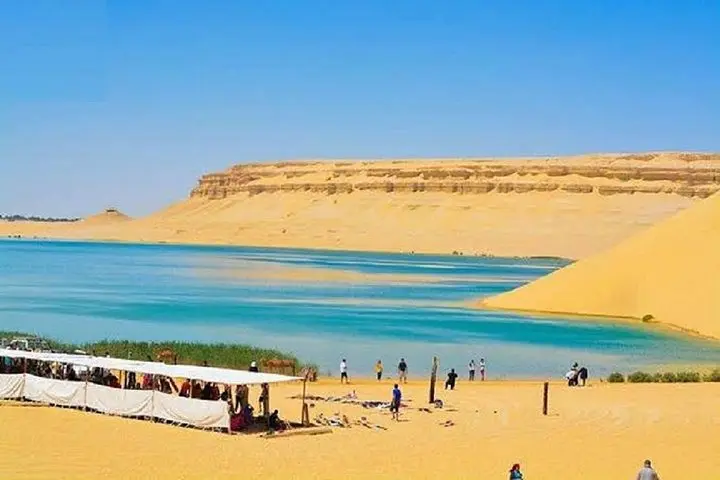
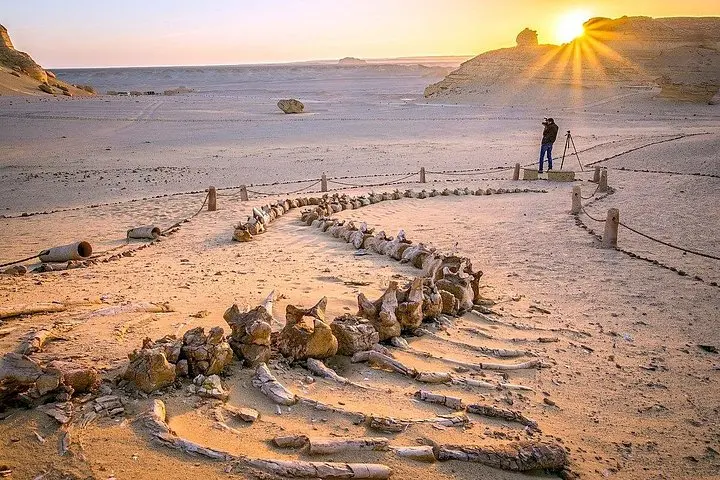
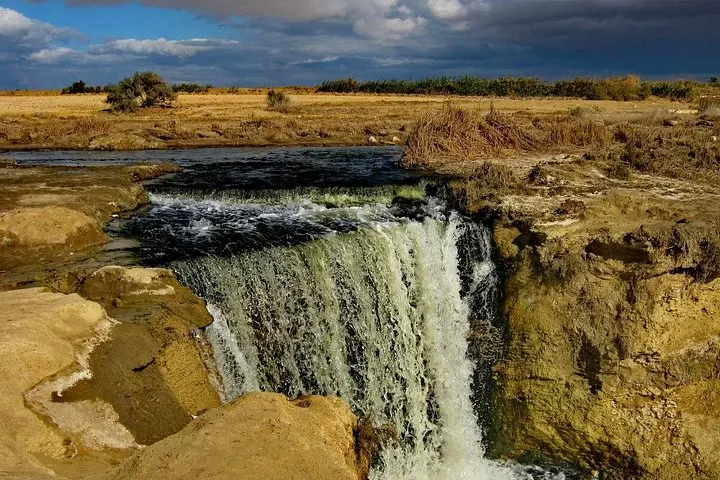
This three-day route threads Bahariya Oasis, the White and Black Deserts and Fayoum's lakes and dunes. Geology takes center stage: chalk deposits and wind erosion carve the White Desert's mushroom rocks; the Black Desert exhibits basalt and iron-caked sands; Crystal Mountain gleams with quartz veins. Culturally, the area is shaped by Bedouin and oasis settlements such as Bawiti, where traditional date palms and hot springs sustained communities for millennia. The Valley of the Whales (Wadi Al-Hitan) outside Fayoum reveals fossilized ancestors of modern whales, evidence of an ancient sea that once covered the region.
Practically, expect long drives from Cairo (about four hours to Bahariya), off-road 4x4 sections, short walks to viewpoints, and two nights in dome-style desert camps with mattresses, sleeping bags and shared facilities. Days are for exploring cold sulfur springs, sand-dune riding, and fossil hunting; nights are for stargazing and wind-whispered silence. Hydration and sun protection are non-negotiable; pack layered clothing for hot days and chilly desert nights. Guides are Egyptologists familiar with local history and terrain; follow their route choices, especially in soft sand and near fragile fossil sites.
Plan arrival in Cairo the night before, carry printed and mobile booking info, and leave extra time if you intend to swim in springs or take a felucca ride on Qarun Lake.
Camps are in protected desert areas with vehicle access; they offer dome tents with mattresses and shared facilities but limited services beyond guides and provided meals.
Children can participate but check physical requirements—moderate fitness is required and some activities like dune riding may have age limits.
Guides handle access and provide instructions; removing fossils is illegal and discouraged to protect scientific value.
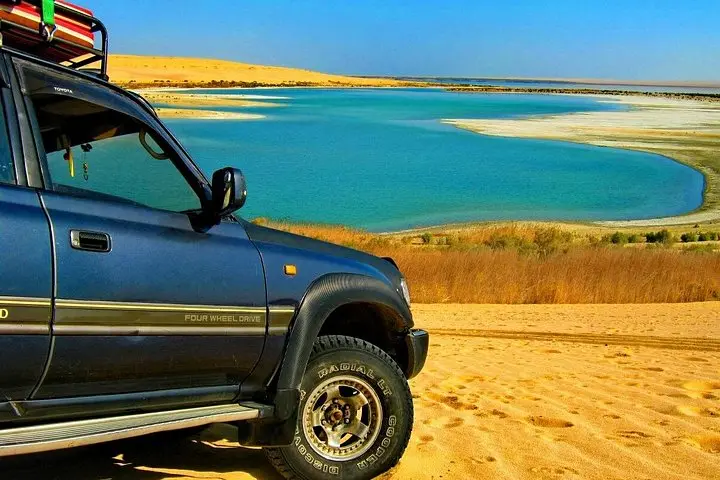
Travel includes long paved drives and off-road 4x4 sections over sand and rocky tracks—expect bumpy conditions and occasional short walks from parking to viewpoints.
Nile valley general supplies operates guided outdoor trips and adventures with an emphasis on safety, stewardship, and memorable experiences.
You step out of the air-conditioned vehicle and the desert exhales around you — a white plain of wind-sculpted chalk columns rising like weathered sculptures, and the Black Desert's iron-streaked foothills holding heat like a slow drum.
You step out of the air-conditioned vehicle and the desert exhales around you — a white plain of wind-sculpted chalk columns rising like weathered sculptures, and the Black Desert's iron-streaked foothills holding heat like a slow drum.
This three-day route threads Bahariya Oasis, the White and Black Deserts and Fayoum's lakes and dunes. Geology takes center stage: chalk deposits and wind erosion carve the White Desert's mushroom rocks; the Black Desert exhibits basalt and iron-caked sands; Crystal Mountain gleams with quartz veins. Culturally, the area is shaped by Bedouin and oasis settlements such as Bawiti, where traditional date palms and hot springs sustained communities for millennia. The Valley of the Whales (Wadi Al-Hitan) outside Fayoum reveals fossilized ancestors of modern whales, evidence of an ancient sea that once covered the region.
Practically, expect long drives from Cairo (about four hours to Bahariya), off-road 4x4 sections, short walks to viewpoints, and two nights in dome-style desert camps with mattresses, sleeping bags and shared facilities. Days are for exploring cold sulfur springs, sand-dune riding, and fossil hunting; nights are for stargazing and wind-whispered silence. Hydration and sun protection are non-negotiable; pack layered clothing for hot days and chilly desert nights. Guides are Egyptologists familiar with local history and terrain; follow their route choices, especially in soft sand and near fragile fossil sites.
Plan arrival in Cairo the night before, carry printed and mobile booking info, and leave extra time if you intend to swim in springs or take a felucca ride on Qarun Lake.