THE ADVENTURE COLLECTIVE® · Independent discovery and booking for outdoor travel

A 48-hour desert loop from Cairo that pairs the palm-lined Bahariya Oasis with the lunar sculptures of the White Desert. Expect long drives, 4x4 crossings, a night under canvas, and guided visits to crystal-strewn valleys and thermal springs.
A 48-hour desert loop from Cairo that pairs the palm-lined Bahariya Oasis with the lunar sculptures of the White Desert. Expect long drives, 4x4 crossings, a night under canvas, and guided visits to crystal-strewn valleys and thermal springs.
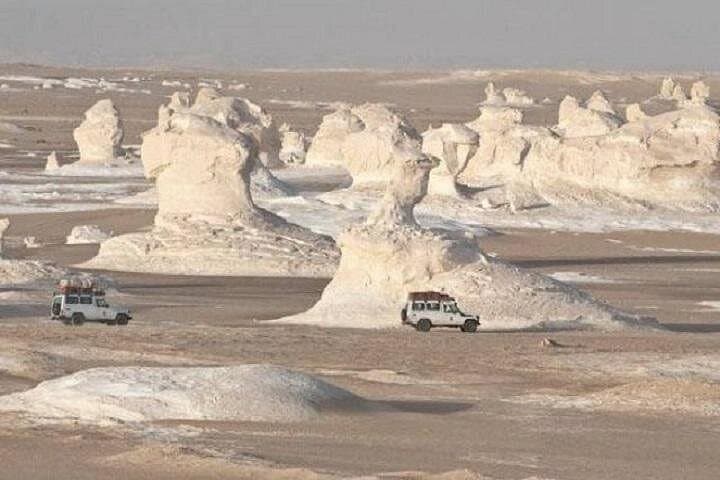
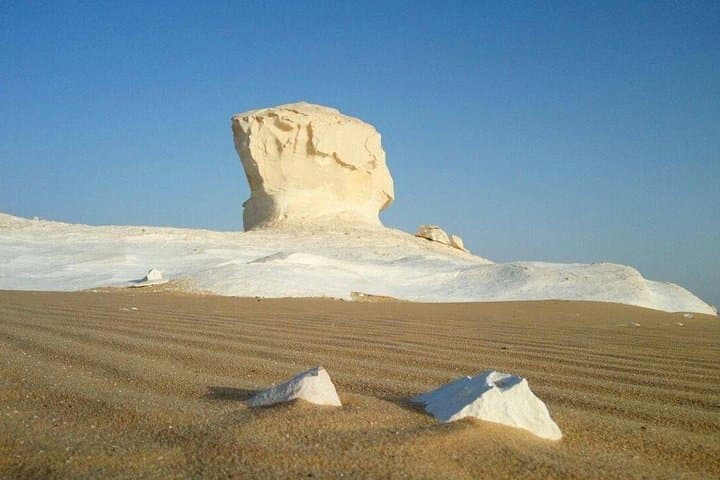
Dawn on the Western Desert arrives as a rim of cold light cutting across wind-scoured sand; the dunes stand like anonymous walls and the white chalk mushrooms of the White Desert look, briefly, like a ruined city. You step from a 4x4 into a silence shaped by wind—gravel crunches underfoot, and the air smells faintly mineral where quartz and sulphur rise near hot springs.
Verified experiences and guided adventures in the surrounding area.
Operated by Emo Tours Egypt · Bahariya Oasis, Giza Governorate
Dawn on the Western Desert arrives as a rim of cold light cutting across wind-scoured sand; the dunes stand like anonymous walls and the white chalk mushrooms of the White Desert look, briefly, like a ruined city. You step from a 4x4 into a silence shaped by wind—gravel crunches underfoot, and the air smells faintly mineral where quartz and sulphur rise near hot springs.
The route touches deep layers of history: Bahariya Oasis has supported settlements since Pharaonic times and yielded Roman-period tombs (the “Valley of the Golden Mummies”). Geologically, the White Desert’s surreal sculptures are wind-eroded chalk and limestone; the Black Desert nearby is volcanic tuff dotted with dark scoria. Culturally, the itinerary threads modern Bedouin hospitality—campfires, shared bread, late-night skywatching—onto landscapes that have guided caravan routes for millennia.
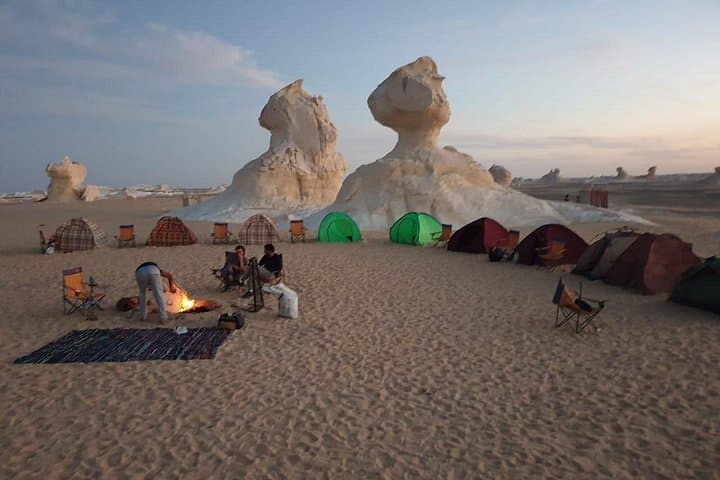
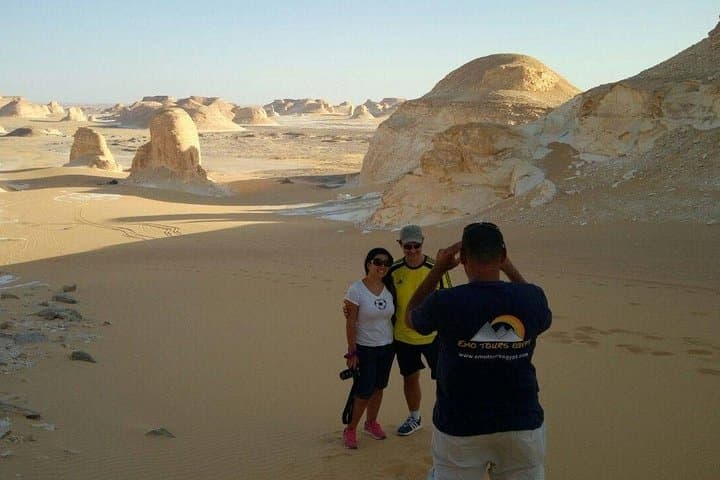
Practical guidance: the trip is mostly vehicle-supported—expect long highway transfers (about four hours each way from Cairo), then off-road 4x4 driving across sand and rock. Overnight is in a desert camp at Al Haiz (simple tents); facilities are basic, with communal washing and bottled water provided. Activities include short hikes, exploring Crystal Mountain and salt/sulphur springs, and guided sand-boarding on large dunes.
Plan for sun, wind, and temperature swings: sturdy shoes for rocky sections, layers for cold desert nights, and at least 2–3 liters of water on day hikes. Time visits for morning or late-afternoon light to avoid peak heat and to see the rock forms at their most dramatic.
Bahariya Oasis is about 350 km from Cairo; expect roughly a four-hour drive each way on paved roads before 4x4 desert sections.
Overnight is in a basic desert campsite with tents; facilities are simple and communal—bring personal toiletries and a small towel.
Yes—sand-boarding on large dunes is offered and generally suitable for beginners; guides will show basic technique and choose safe slopes.
The tour includes breakfast, lunch, dinner on day one, and bottled water; notify the operator in advance for dietary restrictions.
Emo Tours Egypt operates guided outdoor trips and adventures with an emphasis on safety, stewardship, and memorable experiences.
Dawn on the Western Desert arrives as a rim of cold light cutting across wind-scoured sand; the dunes stand like anonymous walls and the white chalk mushrooms of the White Desert look, briefly, like a ruined city. You step from a 4x4 into a silence shaped by wind—gravel crunches underfoot, and the air smells faintly mineral where quartz and sulphur rise near hot springs.
Dawn on the Western Desert arrives as a rim of cold light cutting across wind-scoured sand; the dunes stand like anonymous walls and the white chalk mushrooms of the White Desert look, briefly, like a ruined city. You step from a 4x4 into a silence shaped by wind—gravel crunches underfoot, and the air smells faintly mineral where quartz and sulphur rise near hot springs.
The route touches deep layers of history: Bahariya Oasis has supported settlements since Pharaonic times and yielded Roman-period tombs (the “Valley of the Golden Mummies”). Geologically, the White Desert’s surreal sculptures are wind-eroded chalk and limestone; the Black Desert nearby is volcanic tuff dotted with dark scoria. Culturally, the itinerary threads modern Bedouin hospitality—campfires, shared bread, late-night skywatching—onto landscapes that have guided caravan routes for millennia.
Practical guidance: the trip is mostly vehicle-supported—expect long highway transfers (about four hours each way from Cairo), then off-road 4x4 driving across sand and rock. Overnight is in a desert camp at Al Haiz (simple tents); facilities are basic, with communal washing and bottled water provided. Activities include short hikes, exploring Crystal Mountain and salt/sulphur springs, and guided sand-boarding on large dunes.
Plan for sun, wind, and temperature swings: sturdy shoes for rocky sections, layers for cold desert nights, and at least 2–3 liters of water on day hikes. Time visits for morning or late-afternoon light to avoid peak heat and to see the rock forms at their most dramatic.